

Enterprise sales teams are under pressure. Sales targets are higher, buying committees are larger, and generic outreach barely gets a response.
That is exactly why Best Tools for Account-Based Selling are now a core part of modern B2B sales operations. Instead of chasing thousands of cold leads, account-based selling focuses on a short list of high-value accounts and personalised engagement.
Research from ITSMA found that 87% of marketers say account-based strategies deliver higher ROI than any other B2B marketing tactic. Another study from Gartner reports that B2B buying groups often include 6 to 10 decision makers, making targeted engagement essential.
So the question becomes simple.
Which platforms actually support serious account-based selling software, ABM sales tools, and B2B account targeting platforms without wasting your team’s time?
We analysed dozens of platforms used by revenue teams, sales development reps, and enterprise sales leaders. After reviewing integrations, pricing, and workflow capability, we narrowed it down to the 20 Best Tools for Account-Based Selling used by sales teams, agencies, and SaaS companies.
This list is built for:
- B2B sales teams
- SDR teams
- revenue operations managers
- SaaS companies selling to enterprise accounts
- agencies running ABM campaigns
Below you will see the tools that consistently appear in account-based selling stacks, ABM platforms, and sales intelligence tools.
What Is Account-Based Selling?
Account-based selling is a B2B sales strategy where teams identify specific companies they want as clients and treat each one as a dedicated sales opportunity.
Instead of traditional lead generation, the process focuses on:
- identifying high-value target accounts
- researching buying committees
- personalising messaging
- coordinating sales and marketing activity
- building relationships with multiple stakeholders
This approach works particularly well for:
- enterprise SaaS companies
- B2B service providers
- agencies selling large retainers
- companies with complex sales cycles
In a typical account-based selling workflow, sales teams rely on several types of tools:
- sales intelligence platforms
- account targeting software
- ABM campaign tools
- contact data providers
- sales engagement platforms
Without these tools, managing large target accounts becomes difficult.
With the Best Tools for Account-Based Selling, teams can identify decision makers, monitor buying signals, and create personalised outreach campaigns across email, LinkedIn, and sales calls.
Quick Comparison Table
When sales teams evaluate the Best Tools for Account-Based Selling, they usually compare pricing, target account capability, integrations, and intent data availability. These metrics directly affect how effectively a team can run account-based outreach and manage complex sales.
| Tool | Best For | Starting Price (USD) | Free Trial | Key Feature | Rating | Platform |
| Demandbase | Enterprise ABM | 15,000 / year | No | account intent data | 4.6 | Web |
| 6sense | Predictive ABM | 12,000 / year | No | buying stage AI | 4.5 | Web |
| Terminus | ABM campaigns | 9,000 / year | Yes | account advertising | 4.4 | Web |
| ZoomInfo | Sales intelligence | 149 / month | No | B2B contact database | 4.5 | Web |
| Cognism | B2B prospecting | 99 / month | No | compliant contact data | 4.4 | Web |
| LinkedIn Sales Navigator | Social selling | 99 / month | Yes | account insights | 4.6 | Web |
| Apollo | Outreach plus data | 49 / month | Yes | lead database | 4.5 | Web |
| Outreach | Sales engagement | 100 / month | No | automation sequences | 4.4 | Web |
| Salesloft | Enterprise outreach | 125 / month | No | sales cadences | 4.4 | Web |
| HubSpot Sales Hub | CRM plus ABM | 45 / month | Yes | Sales management | 4.5 | Web |
| Clearbit | Account enrichment | 99 / month | No | company data enrichment | 4.3 | Web |
| RollWorks | ABM advertising | 975 / month | Yes | account targeting ads | 4.3 | Web |
| LeadIQ | Prospecting | 75 / month | Yes | LinkedIn capture | 4.3 | Web |
| Lusha | Contact database | 39 / month | Yes | email finder | 4.4 | Web |
| Seamless AI | Lead generation | 147 / month | Yes | AI contact search | 4.3 | Web |
| UserGems | Account tracking | 500 / month | No | job change alerts | 4.5 | Web |
| Metadata | ABM automation | 3,000 / month | No | campaign automation | 4.4 | Web |
| Bombora | Intent data | 1,000 / month | No | buyer intent signals | 4.4 | Web |
| Albacross | Website intent | 79 / month | Yes | visitor identification | 4.2 | Web |
| Madison Logic | Enterprise ABM | 3,500 / month | No | account targeting | 4.3 | Web |
These platforms form the backbone of many modern account-based selling technology stacks.
Best Tools for Account-Based Selling
Below are the 20 Best Tools for Account-Based Selling used by B2B revenue teams.
- Demandbase
- 6sense
- Terminus
- ZoomInfo
- Cognism
- LinkedIn Sales Navigator
- Apollo
- Outreach
- Salesloft
- HubSpot
- Clearbit
- RollWorks
- LeadIQ
- Lusha
- Seamless AI
- UserGems
- Metadata
- Bombora
- Albacross
- Madison Logic
Each tool plays a different role in the account-based selling process, including contact discovery, intent tracking, campaign automation, and sales engagement.
1: Demandbase
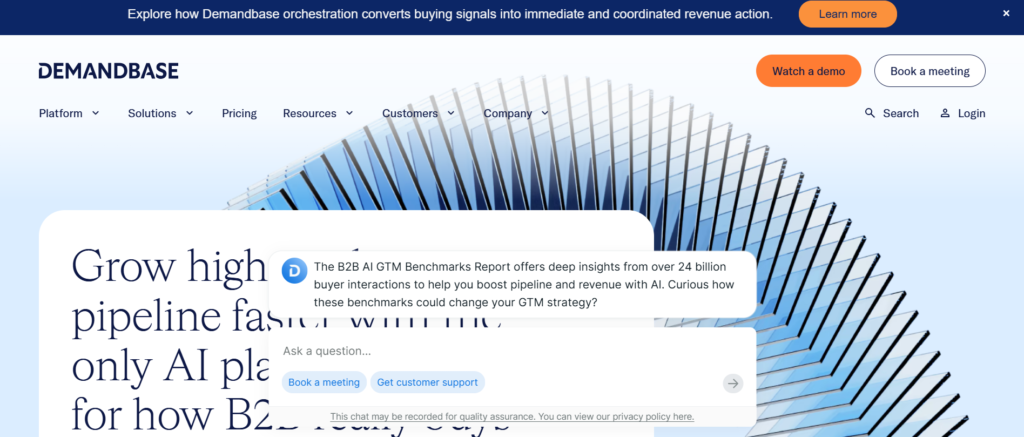
Demandbase is widely recognised among the Best Tools for Account-Based Selling, especially for enterprise sales teams targeting large B2B accounts. The platform combines account intelligence, buyer intent signals, and campaign management so sales and marketing teams can prioritise high-value companies. Many Demandbase review discussions mention its ability to show which organisations are actively researching a solution category.
Revenue teams often use Demandbase to identify target accounts, track engagement signals, and coordinate outreach across marketing and sales teams. Because of these capabilities, the platform frequently appears in comparisons such as Demandbase vs 6sense or Demandbase vs Terminus when companies evaluate ABM platforms.
Key Features
Demandbase offers several capabilities designed for enterprise account targeting and sales coordination. These features allow revenue teams to identify high-value companies, monitor buying behaviour, and coordinate marketing campaigns with sales outreach.
Account Intelligence Dashboard
The account intelligence dashboard provides a detailed view of each target company including firmographic information, engagement activity, and interaction history. Sales teams can see which accounts are interacting with marketing campaigns or researching related topics. This view helps prioritise outreach toward organisations that show active interest.
Intent Data and Buying Signals
Demandbase collects behavioural signals from thousands of business websites and content networks. These signals indicate when companies begin researching particular products or services. Sales teams can prioritise accounts showing increased interest and approach decision makers while evaluation activity is already happening.
Account-Based Advertising
Demandbase includes advertising capability designed specifically for account-based marketing programmes. Marketing teams can display targeted ads to employees inside selected organisations rather than broad audiences. This method keeps the brand visible to buying committees while sales teams conduct outreach.
CRM and Sales Platform Integrations
Demandbase integrates with major CRM systems such as Salesforce and HubSpot as well as common sales engagement platforms. These integrations allow account insights, engagement activity, and intent signals to appear directly inside the sales workflow. Sales teams can act quickly without switching between multiple platforms.
Account Engagement Analytics
The platform provides detailed reporting that tracks engagement across accounts and campaigns. Sales and marketing leaders can analyse which companies interact with content, respond to outreach, or show increased interest in specific topics. These insights allow revenue teams to refine account targeting strategies.
Pros and Cons
| Pros | Cons |
| Strong enterprise ABM platform | Expensive for small teams |
| Advanced account intelligence | Setup takes time |
| Powerful integrations | Learning curve |
| Detailed engagement insights | Enterprise focus |
Pricing
Demandbase pricing generally begins around 15000 USD per year depending on the number of accounts tracked and integrations included.
Enterprise implementations may exceed 40000 USD annually for organisations running large account-based selling programmes.
Best For Enterprise Sales Teams Managing High-Value Accounts
Demandbase works particularly well for organisations with complex B2B sales cycles and high contract values.
- Enterprise SaaS companies — targeting multiple stakeholders inside large organisations
- Revenue operations teams — centralised account intelligence and engagement data
- B2B marketing teams — account-focused advertising and campaign coordination
- Sales teams targeting large companies — monitoring buyer intent signals
Verdict
Demandbase remains one of the most advanced platforms among the Best Tools for Account-Based Selling, particularly for enterprise companies managing complex account targeting strategies.
Unique Tip
A useful tactic many teams overlook is combining intent signals with personalised outreach timing. When Demandbase detects increased research activity from a target account, sales teams can immediately begin personalised outreach to stakeholders while the buying interest is active.
Best Alternate Tool
6sense is often considered the closest alternative platform for organisations comparing Demandbase alternatives because it also focuses on predictive account intelligence and buying stage analysis.
2: 6sense
6sense is frequently listed among the Best Tools for Account-Based Selling because of its predictive analytics and buying stage intelligence. The platform focuses on identifying which target accounts are actively researching a solution and determining where those accounts are in the purchasing journey. Many 6sense review discussions highlight its ability to reveal anonymous buying activity before prospects submit forms or speak with sales.
Revenue teams use 6sense to prioritise accounts that show research behaviour, allowing sales representatives to focus outreach on organisations most likely to enter a buying cycle. Because of its predictive model and account intelligence capabilities, the platform often appears in comparisons such as 6sense vs Demandbase or 6sense vs Terminus when companies evaluate ABM software.
Key Features
6sense provides predictive account intelligence designed to identify purchase intent and prioritise outreach toward companies most likely to buy. These features allow sales teams to focus on high-value accounts and engage decision makers at the right time.
Predictive Buying Stage Intelligence
6sense analyses behavioural signals from multiple data sources to determine where a target account sits within the buying journey. The platform classifies accounts into stages such as awareness, consideration, and decision. Sales teams can then approach accounts that are already researching solutions, improving the timing and relevance of outreach.
Intent Data Monitoring
The platform continuously monitors content consumption across a large network of B2B websites. When companies begin researching specific topics related to your product category, 6sense records those signals. Sales teams can then identify which target accounts are showing strong research activity and focus prospecting efforts on those organisations.
Account Identification Technology
Many B2B buyers research vendors anonymously before filling out forms. 6sense identifies companies visiting your website even when individuals remain anonymous. This allows sales teams to understand which organisations are showing interest in products or services without requiring visitors to submit their contact information.
Sales Intelligence Integration
6sense integrates with major CRM platforms and sales engagement systems such as Salesforce and HubSpot. These integrations allow account insights, buying signals, and account engagement data to appear directly inside the existing sales workflow. Sales teams can track account activity without switching between different systems.
Account-Based Advertising
6sense includes advertising capabilities that allow marketing teams to run campaigns targeting specific companies. Ads are shown only to employees inside selected organisations, reinforcing brand awareness while sales teams conduct direct outreach to decision makers.
Pros and Cons
| Pros | Cons |
| Strong predictive analytics | High enterprise pricing |
| Detailed intent data | Implementation takes time |
| Accurate account identification | Requires training |
| Powerful CRM integrations | Smaller teams may not need full platform |
Pricing
6sense pricing typically begins around 12000 USD per year depending on account coverage and integrations.
Enterprise deployments can exceed 30000 USD annually for organisations running large account-based selling programmes.
Best For Enterprise Sales Teams Using Predictive Account Targeting
6sense works best for organisations that want predictive intelligence to prioritise target accounts and identify buying signals early.
- Enterprise SaaS companies — identifying organisations entering active research phases
- B2B sales teams — prioritising outreach toward accounts with purchase intent
- Marketing teams running ABM programmes — targeted advertising campaigns
- Revenue operations teams — monitoring account engagement and buying signals
Verdict
6sense remains one of the strongest platforms among the Best Tools for Account-Based Selling for organisations that want predictive intelligence and buying stage analysis.
Unique Tip
A useful strategy many teams overlook is using buying stage insights to prioritise sales outreach timing. When 6sense indicates that a target account has moved into the consideration stage, sales teams can initiate personalised outreach while the organisation is actively evaluating vendors.
Best Alternate Tool
Demandbase is often considered the closest alternative for organisations comparing 6sense alternatives, as both platforms provide account intelligence and intent data for enterprise ABM programmes.
3: Terminus
Terminus is widely recognised among the Best Tools for Account-Based Selling because it focuses on coordinating marketing and sales engagement across target accounts. The platform allows revenue teams to run account-focused campaigns through advertising, email, and sales outreach while tracking engagement at the company level.
Many Terminus review discussions highlight its strength in campaign orchestration and account targeting. Instead of treating prospects as individual leads, Terminus allows sales and marketing teams to manage entire accounts through structured ABM campaigns. Because of this capability, the platform frequently appears in comparisons such as Terminus vs Demandbase and Terminus vs 6sense when companies evaluate account-based marketing software.
Key Features
Terminus provides several tools designed specifically for companies running structured ABM programmes. These features allow teams to coordinate outreach across multiple channels while monitoring account engagement activity.
Account-Based Advertising
Terminus allows marketing teams to run digital advertising campaigns that target specific organisations rather than general audiences. Ads are delivered only to employees within selected companies. This keeps marketing campaigns focused on priority accounts that sales teams are actively pursuing.
Account Engagement Tracking
The platform tracks engagement activity across marketing campaigns and outreach efforts. Sales and marketing teams can see how target accounts interact with ads, emails, and website content. This information helps identify which companies show increased interest in a product or service.
Multi Channel Campaign Orchestration
Terminus enables companies to coordinate campaigns across several channels including display advertising, email marketing, and website personalisation. This allows revenue teams to maintain consistent messaging while engaging multiple stakeholders within the same organisation.
CRM Integration and Account Insights
The platform integrates with CRM systems such as Salesforce and HubSpot so account data and engagement activity remain visible inside the existing sales flow. Sales representatives can see which accounts interact with campaigns and adjust outreach accordingly.
Account Segmentation and Targeting
Terminus provides tools that allow teams to segment accounts based on industry, company size, engagement level, and other firmographic factors. This segmentation makes it easier to create targeted campaigns for different types of organisations within the ABM programme.
Pros and Cons
| Pros | Cons |
| Strong ABM campaign platform | Requires campaign setup |
| Good account targeting tools | Pricing higher for small teams |
| Multi channel engagement | Learning curve |
| CRM integrations available | Primarily marketing focused |
Pricing
Terminus pricing typically starts around 9000 USD per year depending on account volume and advertising features.
Enterprise plans may exceed 20000 USD annually for organisations running large ABM campaigns.
Best For B2B Teams Running Multi Channel ABM Campaigns
Terminus works well for organisations where marketing and sales teams collaborate on account targeting strategies.
- B2B SaaS companies — coordinating ABM advertising and outreach
- Marketing teams running account-focused campaigns
- Revenue operations teams managing engagement across accounts
- Sales teams targeting specific high-value organisations
Verdict
Terminus is one of the most recognised platforms among the Best Tools for Account-Based Selling for organisations that want structured campaign management around target accounts.
Unique Tip
A practical tactic many teams overlook is using Terminus engagement data to prioritise follow-up calls. When an account interacts repeatedly with advertising or website content, sales teams can reach out immediately while interest levels remain high.
Best Alternate Tool
Demandbase is often considered a strong alternative for organisations comparing Terminus alternatives because both platforms provide account targeting and engagement tracking.
4: ZoomInfo
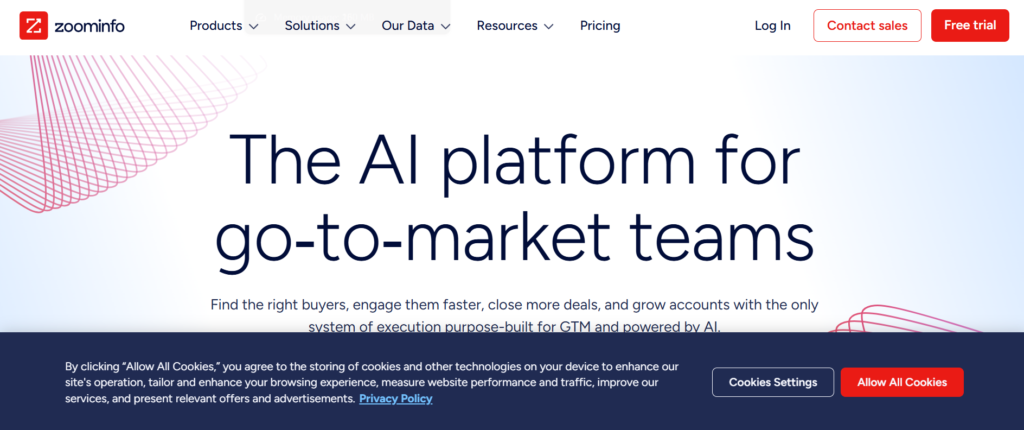
ZoomInfo is widely recognised among the Best Tools for Account-Based Selling because it provides one of the largest B2B contact databases available to sales teams. The platform gives access to company profiles, decision maker contact details, and firmographic insights that allow sales teams to identify and engage stakeholders within target organisations.
Many ZoomInfo review discussions highlight its strength in providing accurate contact data for outbound prospecting and account targeting. Sales teams often use ZoomInfo to build lists of companies, identify key stakeholders, and enrich CRM records with updated business information. Because of these capabilities, the platform frequently appears in comparisons such as ZoomInfo vs Cognism and ZoomInfo vs Apollo when companies evaluate sales intelligence tools.
Key Features
ZoomInfo focuses on providing detailed company intelligence and contact data to support account-based prospecting. These capabilities allow sales teams to identify decision makers and build outreach lists for high-value accounts.
B2B Contact and Company Database
ZoomInfo maintains a large database of company profiles and professional contacts across many industries. Sales teams can search for organisations by industry, revenue, employee count, or location. Once a target company is identified, the platform provides contact details for executives and decision makers within that organisation.
Advanced Prospecting Filters
The platform includes powerful search filters that allow sales teams to narrow down target accounts based on specific criteria. Users can filter by job title, department, company size, industry category, and technology usage. This makes it easier to build targeted prospect lists aligned with account-based selling strategies.
Intent Data and Buying Signals
ZoomInfo also provides intent data that identifies organisations researching certain business solutions. These signals indicate when companies may be preparing to evaluate vendors. Sales teams can use this information to prioritise outreach toward accounts that show interest in relevant topics.
CRM Data Enrichment
ZoomInfo integrates with CRM systems such as Salesforce and HubSpot to automatically enrich company and contact records. When new information becomes available, the platform updates existing CRM data. This keeps account records accurate and keeps sales teams working with current contact information.
Sales Workflow Integrations
The platform connects with several sales engagement tools including Outreach, Salesloft, and marketing automation systems. These integrations allow sales teams to export prospect lists directly into outreach campaigns without manual data entry.
Pros and Cons
| Pros | Cons |
| Large B2B contact database | Higher pricing |
| Strong company search filters | Data accuracy varies |
| CRM enrichment capability | Credit system limits |
| Useful intent signals | Setup required |
Pricing
ZoomInfo pricing typically starts around 149 USD per month per user depending on the number of contacts and data credits included.
Larger sales teams may require enterprise packages that exceed 10000 USD annually depending on database access and integrations.
Best For Sales Teams Building Target Account Lists
ZoomInfo works well for organisations that need accurate contact information and company intelligence to support account-based outreach.
- B2B sales teams — building targeted prospect lists
- SaaS companies — identifying decision makers within enterprise accounts
- SDR teams — outbound prospecting and contact discovery
- Revenue operations teams — CRM data enrichment and account research
Verdict
ZoomInfo remains one of the most widely used platforms among the Best Tools for Account-Based Selling, particularly for companies that rely on high-quality B2B contact data.
Unique Tip
A useful tactic is combining intent data with prospect filters. When ZoomInfo shows increased research activity from a company, sales teams can quickly identify decision makers within that organisation and begin personalised outreach.
Best Alternate Tool
Cognism is often considered a strong alternative when companies compare ZoomInfo alternatives, particularly for organisations that prioritise compliant B2B contact data.
5: Cognism
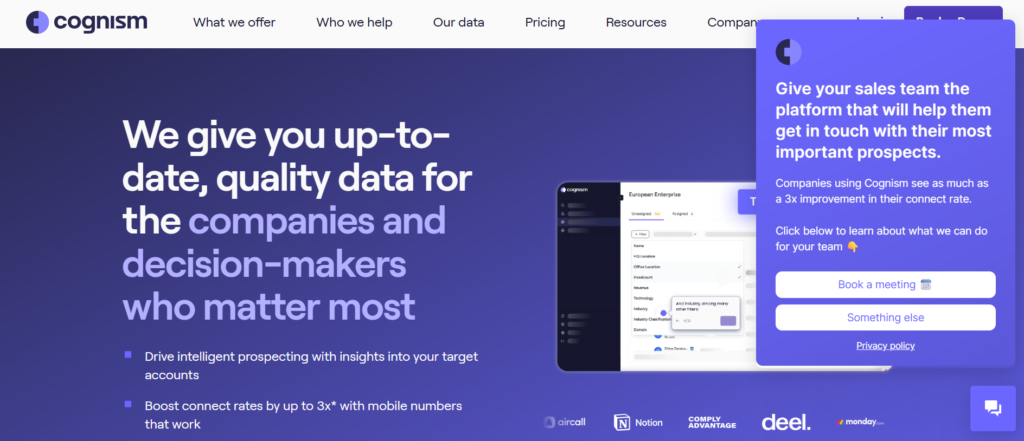
Cognism is frequently listed among the Best Tools for Account-Based Selling because of its strong global contact database and compliance-focused data sourcing. The platform provides verified business emails, phone numbers, and company intelligence that sales teams use to identify decision makers inside target accounts.
Many Cognism review discussions highlight the platform’s strength in delivering GDPR-compliant contact data, which makes it popular with organisations running international B2B outreach. Sales teams often use Cognism to build targeted account lists, enrich CRM data, and identify stakeholders involved in buying decisions. Because of these capabilities, the platform often appears in comparisons such as Cognism vs ZoomInfo and Cognism vs Apollo when companies evaluate sales intelligence software.
Key Features
Cognism provides tools designed to support account-based prospecting by giving sales teams access to verified contact data and company intelligence. These capabilities allow teams to identify decision makers and approach target organisations with personalised outreach.
Global B2B Contact Database
Cognism maintains a large database of company profiles and professional contacts across multiple industries and regions. Sales teams can search for organisations using filters such as industry category, employee count, company revenue, or location. Once a target company is identified, the platform provides contact details for relevant stakeholders including executives and department leaders.
Verified Mobile Numbers and Emails
One of Cognism’s key advantages is its verified contact information, including direct phone numbers and business email addresses. The platform regularly updates and validates this data to reduce the number of inaccurate contacts. This allows sales teams to reach decision makers more efficiently when running outbound account-based selling campaigns.
Advanced Prospecting Filters
The platform includes detailed filtering tools that allow users to build targeted prospect lists. Sales teams can filter contacts by job title, department, seniority level, industry, and company size. These filters make it easier to identify the right stakeholders inside target organisations.
CRM and Sales Platform Integration
Cognism integrates with common CRM platforms such as Salesforce and HubSpot. When integrated, contact data and company information can automatically sync into CRM records. This keeps account data current and reduces manual data entry for sales teams managing multiple target accounts.
Intent Data Integration
Cognism also provides access to intent data signals that indicate when companies are researching certain business topics or technologies. Sales teams can use these signals to prioritise outreach toward organisations that may be preparing to evaluate vendors.
Pros and Cons
| Pros | Cons |
| Strong global contact database | Higher pricing tiers |
| Verified phone numbers | Credit based usage |
| GDPR compliant data | Learning curve |
| Useful CRM integrations | Setup required |
Pricing
Cognism pricing generally begins around 99 USD per month per user depending on the number of contacts and data access limits.
Enterprise plans can exceed 12000 USD per year depending on database access and additional features.
Best For International B2B Sales Teams Running Account Targeting
Cognism works particularly well for companies targeting international markets and needing compliant contact data.
- B2B sales teams — building targeted prospect lists
- SaaS companies — identifying decision makers inside enterprise accounts
- SDR teams — outbound prospecting with verified phone numbers
- Revenue operations teams — CRM data enrichment and contact discovery
Verdict
Cognism remains one of the most reliable platforms among the Best Tools for Account-Based Selling, especially for companies that prioritise verified contact data and compliance with international data regulations.
Unique Tip
A useful tactic is combining Cognism contact filters with intent data signals. When the platform identifies companies researching a topic related to your product, sales teams can quickly locate decision makers inside that organisation and begin personalised outreach.
Best Alternate Tool
ZoomInfo is often considered a strong alternative when companies compare Cognism alternatives, especially for organisations needing a larger contact database for account-based prospecting.
6: LinkedIn Sales Navigator
Tagline: Social Selling Platform for Target Account Engagement
LinkedIn Sales Navigator is consistently listed among the Best Tools for Account-Based Selling because it allows sales teams to identify decision makers and build relationships inside target organisations. Built directly on the LinkedIn professional network, the platform provides account insights, lead recommendations, and engagement tools designed for B2B sales prospecting.
Many LinkedIn Sales Navigator review discussions highlight its ability to reveal organisational structures within companies. Sales teams can identify executives, department leaders, and key stakeholders involved in buying decisions. Because of its access to professional profiles and company updates, the platform often appears in comparisons such as LinkedIn Sales Navigator vs ZoomInfo and LinkedIn Sales Navigator vs Apollo when organisations evaluate prospecting tools for account-based selling
Key Features
LinkedIn Sales Navigator focuses on relationship-based prospecting and account research. These capabilities allow sales teams to identify stakeholders within target organisations and maintain consistent engagement with decision makers.
Advanced Lead and Account Search
Sales Navigator provides detailed search filters that allow users to identify prospects based on job title, seniority level, industry, company size, and geographic location. Sales teams can quickly locate decision makers within target companies and create prospect lists aligned with their account-based selling strategy.
Account and Lead Recommendations
The platform automatically suggests relevant leads and accounts based on the user’s search activity and saved preferences. These recommendations help sales teams identify additional stakeholders within target organisations who may influence purchasing decisions.
Real Time Company and Contact Updates
Sales Navigator provides updates when prospects change roles, share posts, or interact with content on LinkedIn. These updates give sales teams opportunities to initiate conversations with relevant context, making outreach more personalised and timely.
Direct Messaging with InMail
The platform includes InMail messaging, which allows sales professionals to send messages directly to LinkedIn members outside their immediate network. This feature is particularly useful when reaching executives or decision makers who are not already connected with the sales representative.
CRM and Sales Tool Integration
Sales Navigator integrates with CRM platforms such as Salesforce and HubSpot. When integrated, sales teams can sync LinkedIn prospect activity with their CRM records and maintain a complete view of account engagement across platforms.
Pros and Cons
| Pros | Cons |
| Access to large professional network | Contact data limited |
| Strong account research capability | Messaging response varies |
| Useful lead recommendations | Requires LinkedIn activity |
| CRM integrations available | Limited email data |
Pricing
LinkedIn Sales Navigator pricing generally starts around 99 USD per month per user for the Core plan.
Advanced packages designed for larger sales teams can reach 149 USD per month per user depending on features and integrations.
Best For Sales Teams Using Social Selling for Account Engagement
LinkedIn Sales Navigator works best for organisations that rely on relationship building and professional networking when targeting enterprise accounts.
- B2B sales representatives — identifying stakeholders inside target companies
- SDR teams — prospect research and outreach preparation
- SaaS companies — engaging decision makers through LinkedIn conversations
- Revenue teams targeting enterprise accounts — tracking organisational changes
Verdict
LinkedIn Sales Navigator remains one of the most widely used platforms among the Best Tools for Account-Based Selling, particularly for sales teams that rely on professional networking and relationship-based prospecting.
Unique Tip
A useful strategy many sales teams overlook is monitoring job change notifications. When a contact inside a target account changes roles or moves to another company, it creates an opportunity to reconnect and reopen sales conversations.
Best Alternate Tool
Apollo is often considered a strong alternative when organisations compare LinkedIn Sales Navigator alternatives, especially for companies that want both contact data and outreach capabilities in the same platform.
7: Apollo
Apollo is frequently included among the Best Tools for Account-Based Selling because it combines a B2B contact database with sales engagement capabilities. Instead of using separate tools for prospecting and outreach, Apollo allows sales teams to identify decision makers and launch email campaigns from the same platform.
Many Apollo review discussions highlight its affordability compared with larger enterprise sales intelligence platforms. Sales teams often use Apollo to build target account lists, find decision makers, and start personalised outreach campaigns. Because of its dual functionality, the platform commonly appears in comparisons such as Apollo vs ZoomInfo and Apollo vs Cognism when companies evaluate prospecting tools for account-based selling.
Key Features
Apollo combines contact discovery, prospecting filters, and outreach automation to support account-based prospecting. These capabilities allow sales teams to identify stakeholders within target organisations and begin direct communication.
B2B Contact and Company Database
Apollo provides access to a large database of business contacts and company profiles across many industries. Sales teams can search for organisations based on revenue, employee count, technology stack, and industry category. Once a company is identified, Apollo shows relevant stakeholders and their contact details.
Advanced Prospecting Filters
The platform includes detailed search filters that allow users to narrow down target accounts and decision makers. Sales teams can filter contacts by job title, department, seniority level, industry, and geographic location. These filters make it easier to identify the right people inside a target organisation.
Email Outreach Automation
Apollo includes built-in email sequencing tools that allow sales teams to create outreach campaigns directly inside the platform. Users can schedule follow-up messages, personalise email templates, and track engagement metrics such as open rates and replies.
CRM Integration
Apollo integrates with popular CRM platforms including Salesforce and HubSpot. When integrated, contacts discovered in Apollo can be exported directly into the CRM. This allows sales teams to maintain organised account records while running prospecting campaigns.
Engagement Tracking
The platform tracks prospect engagement with outreach campaigns. Sales representatives can see when contacts open emails, click links, or respond to messages. These signals allow sales teams to prioritise follow-up conversations with prospects who show interest.
Pros and Cons
| Pros | Cons |
| Affordable prospecting platform | Smaller database than ZoomInfo |
| Outreach automation included | Data accuracy varies |
| Good prospect search filters | Learning curve for campaigns |
| CRM integrations available | Limited enterprise features |
Pricing
Apollo pricing generally begins around 49 USD per month per user for the basic plan.
Advanced packages with expanded contact data and automation capabilities can reach 99 USD per month per user depending on features.
Best For Small and Mid Size Sales Teams Running Outbound Campaigns
Apollo works particularly well for organisations that want prospecting data and outreach automation in a single platform.
- SDR teams — building prospect lists and running outreach campaigns
- SaaS startups — outbound prospecting for target accounts
- B2B sales teams — identifying decision makers inside companies
- Agencies selling services — building targeted outreach lists
Verdict
Apollo remains one of the most practical platforms among the Best Tools for Account-Based Selling for companies that want both contact data and outreach capability without paying enterprise pricing.
Unique Tip
A useful tactic many teams overlook is combining prospecting filters with engagement tracking. Sales teams can build a list of decision makers inside a target account and monitor which contacts open emails or respond to outreach, allowing them to prioritise follow-up conversations.
Best Alternate Tool
ZoomInfo is often considered a strong alternative when companies compare Apollo alternatives, especially for organisations that need a larger contact database for enterprise account targeting.
8: Outreach
Outreach is widely recognised among the Best Tools for Account-Based Selling because it focuses on structured sales engagement and outreach automation. The platform allows sales teams to manage communication across multiple channels including email, phone calls, and LinkedIn activities while tracking engagement across target accounts.
Many Outreach review discussions highlight its strength in managing outbound sales workflows and improving consistency across sales teams. Organisations often use Outreach to create communication sequences that guide sales representatives through outreach activities with target accounts. Because of these capabilities, the platform frequently appears in comparisons such as Outreach vs Salesloft and Outreach vs Apollo when companies evaluate sales engagement software.
Key Features
Outreach provides tools designed to organise communication workflows and coordinate sales outreach across target accounts. These capabilities allow revenue teams to maintain structured engagement with decision makers throughout the sales cycle.
Sales Sequence Automation
Outreach allows sales teams to build automated communication sequences that include emails, follow-up tasks, and call reminders. These sequences guide sales representatives through outreach steps when contacting decision makers within target accounts. This structured workflow keeps consistent follow-up across prospects.
Multi Channel Engagement
The platform supports communication across several channels including email, phone calls, LinkedIn activities, and task reminders. Sales teams can maintain organised communication with multiple stakeholders inside the same organisation while tracking all activity from a central dashboard.
Engagement Analytics
Outreach tracks prospect engagement across campaigns including email opens, replies, and meeting bookings. Sales teams can analyse which contacts are interacting with outreach messages and prioritise follow-up with the most responsive prospects.
CRM Integration
Outreach integrates with major CRM systems such as Salesforce and HubSpot. When integrated, all communication activities automatically sync with the CRM. This keeps account records remain accurate while sales teams manage outreach campaigns.
Sales Workflow Management
The platform provides dashboards that organise tasks, communication schedules, and account engagement activity. Sales managers can monitor team performance, review outreach activity, and keep sales representatives following structured prospecting processes.
Pros and Cons
| Pros | Cons |
| Strong outreach automation | Higher pricing |
| Multi channel communication | Setup required |
| Detailed engagement tracking | Learning curve |
| CRM integrations available | Focused on outreach only |
Pricing
Outreach pricing generally begins around 100 USD per user per month depending on features and integrations.
Enterprise sales teams may pay higher pricing depending on team size and automation capabilities.
Best For Sales Teams Managing Structured Outbound Campaigns
Outreach works well for organisations that rely heavily on outbound prospecting and structured communication sequences.
- SDR teams — managing outbound prospecting campaigns
- B2B sales teams — coordinating outreach across decision makers
- SaaS companies — managing complex outbound sales workflows
- Revenue leaders — monitoring sales engagement activity
Verdict
Outreach remains one of the most widely adopted platforms among the Best Tools for Account-Based Selling, particularly for companies that want structured communication workflows and detailed engagement tracking.
Unique Tip
A useful strategy many teams overlook is creating account level sequences rather than individual contact campaigns. By building outreach sequences for entire target accounts, sales teams can coordinate communication across several stakeholders within the same organisation.
Best Alternate Tool
Salesloft is often considered a strong alternative when companies compare Outreach alternatives, as both platforms specialise in sales engagement and outreach automation.
9: Salesloft
Salesloft is widely recognised among the Best Tools for Account-Based Selling because it allows revenue teams to organise communication with multiple stakeholders inside target accounts. The platform focuses on sales engagement, providing structured outreach workflows that guide sales representatives through prospect communication.
Many Salesloft review discussions highlight its ability to organise outbound sales activity and maintain consistent follow-up with prospects. Sales teams frequently use Salesloft to manage communication sequences, monitor prospect engagement, and track outreach performance. Because of these capabilities, the platform often appears in comparisons such as Salesloft vs Outreach and Salesloft vs Apollo when companies evaluate sales engagement software.
Key Features
Salesloft focuses on organising sales communication and maintaining consistent outreach across target accounts. These capabilities allow revenue teams to engage multiple decision makers while tracking interaction history throughout the sales cycle.
Sales Cadence Automation
Salesloft allows sales teams to create structured cadences that guide representatives through outreach steps such as emails, calls, and follow-up tasks. These cadences keep that communication remains organised and that prospects receive timely follow-ups throughout the sales process.
Multi Channel Communication
The platform supports several communication channels including email, phone calls, and social engagement activities. Sales representatives can maintain contact with multiple stakeholders inside a target account while tracking communication history from a central dashboard.
Engagement Tracking and Analytics
Salesloft tracks prospect interaction with outreach messages including email opens, replies, and meeting bookings. Sales teams can review engagement metrics to identify which prospects show interest and require follow-up communication.
CRM Integration
Salesloft integrates with CRM systems such as Salesforce and HubSpot. These integrations allow communication activity, meeting notes, and engagement signals to appear directly within CRM account records. Sales teams can maintain organization while running outreach campaigns.
Conversation Intelligence
The platform includes conversation analysis tools that review sales calls and identify discussion trends. Sales leaders can analyse recorded calls to understand how prospects respond during conversations and identify patterns that lead to successful outcomes.
Pros and Cons
| Pros | Cons |
| Structured outreach cadences | Premium pricing |
| Multi channel engagement | Implementation time |
| Good analytics dashboards | Learning curve |
| Strong CRM integrations | Focused on outreach only |
Pricing
Salesloft pricing generally begins around 125 USD per user per month depending on team size and feature access.
Enterprise packages may increase depending on automation features and conversation intelligence capabilities.
Best For Sales Teams Managing Complex Outreach Campaigns
Salesloft works particularly well for organisations that run structured outbound campaigns targeting multiple stakeholders inside enterprise accounts.
- SDR teams — managing outbound prospecting workflows
- B2B sales teams — coordinating outreach across decision makers
- SaaS companies — managing structured communication cadences
- Sales leaders — monitoring team outreach activity and engagement
Verdict
Salesloft remains one of the most recognised platforms among the Best Tools for Account-Based Selling, especially for organisations that rely on structured communication workflows and consistent follow-up.
Unique Tip
A practical tactic many teams overlook is analysing conversation recordings from successful deals. By reviewing these recordings, sales teams can identify messaging patterns that resonate with buyers and apply those insights to future outreach campaigns.
Best Alternate Tool
Outreach is often considered the closest alternative when companies compare Salesloft alternatives, as both platforms specialise in sales engagement and outreach automation.
10: HubSpot Sales Hub
HubSpot Sales Hub is often included among the Best Tools for Account-Based Selling because it combines CRM functionality, sales automation, and account tracking in a single platform. The system allows sales teams to organise target accounts, track communication history, and manage deal sales without relying on several disconnected tools.
Many HubSpot Sales Hub review discussions highlight its simplicity compared with enterprise sales platforms. Sales teams commonly use HubSpot to manage account records, monitor engagement activity, and coordinate communication with decision makers. Because of these capabilities, the platform frequently appears in comparisons such as HubSpot vs Salesforce and HubSpot vs Outreach when organisations evaluate CRM systems for account-based selling.
Key Features
HubSpot Sales Hub provides tools that organise account data, sales communication, and deal flow. These capabilities allow revenue teams to track engagement across target organisations and maintain structured communication with prospects.
CRM Account Management
HubSpot includes a built-in CRM system where sales teams can store company profiles, contact details, and deal information. Each account record contains communication history, meeting notes, and engagement activity. This structure allows sales representatives to maintain a clear view of every interaction with target organisations.
Deals Flow Tracking
The platform includes visual dashboards that display the progress of deals across different stages. Sales teams can track opportunities from initial outreach through to contract signing. This feature helps revenue teams manage multiple accounts while monitoring the progress of each sales opportunity.
Email Tracking and Notifications
HubSpot allows sales representatives to send emails directly from the platform while tracking engagement activity. When a prospect opens an email or clicks a link, the system records that interaction. These notifications allow sales teams to follow up at the right moment.
Workflow Automation
HubSpot includes workflow automation tools that allow teams to create automated follow-ups, reminders, and task assignments. These workflows reduce manual administrative work and keep prospects receiving consistent communication throughout the sales cycle.
Integration with Marketing Tools
The platform connects with HubSpot’s marketing tools, allowing sales and marketing teams to coordinate campaigns around target accounts. Marketing engagement activity such as website visits or content downloads can appear inside the CRM account record.
Pros and Cons
| Pros | Cons |
| Easy CRM interface | Advanced features cost more |
| Good automation tools | Limited enterprise analytics |
| Email tracking capability | Customisation limits |
| Marketing integration | Requires setup |
Pricing
HubSpot Sales Hub pricing generally starts around 45 USD per month per user for the basic plan.
Professional packages with advanced automation and reporting features can reach 450 USD per month depending on the number of users and functionality.
Best For Small and Mid Size Sales Teams Managing Account
HubSpot Sales Hub works well for organisations that want a CRM system combined with sales automation for account management.
- B2B sales teams — organising account data and communication history
- SaaS startups — managing deal and outreach activity
- SDR teams — tracking engagement across target accounts
- Agencies selling services — monitoring sales opportunities and client prospects
Verdict
HubSpot Sales Hub remains one of the most practical platforms among the Best Tools for Account-Based Selling, particularly for companies that want a CRM system combined with sales workflow automation.
Unique Tip
A useful tactic many teams overlook is linking marketing engagement signals with CRM account records. When a target company interacts with marketing content, sales representatives can see that activity in the CRM and follow up with relevant messaging.
Best Alternate Tool
Salesforce Sales Cloud is often considered a strong alternative when companies compare HubSpot alternatives, especially for organisations that require advanced enterprise CRM capabilities.
11: Clearbit
Clearbit is frequently included among the Best Tools for Account-Based Selling because it focuses on company intelligence and contact data enrichment. The platform collects firmographic and technographic data about organisations and automatically enriches CRM records with updated company insights.
Many Clearbit review discussions highlight its ability to reveal detailed company information such as industry classification, employee count, revenue range, and technology usage. Sales teams often use Clearbit to research target accounts, improve CRM data accuracy, and identify decision makers inside organisations. Because of these capabilities, the platform often appears in comparisons such as Clearbit vs ZoomInfo and Clearbit vs Cognism when companies evaluate sales intelligence tools.
Key Features
Clearbit provides company intelligence and data enrichment tools that allow sales teams to maintain accurate account records and identify target organisations. These capabilities are particularly useful for organisations running account-based selling campaigns that rely on accurate company information.
Company Data Enrichment
Clearbit automatically enriches company records inside CRM systems by adding firmographic information such as company size, industry category, revenue range, and headquarters location. This keeps that sales teams have detailed information about each target account without manually researching company profiles.
Contact Data Identification
The platform identifies potential decision makers within companies and provides professional contact details including business email addresses. Sales teams can use this information to identify relevant stakeholders involved in purchasing decisions within target organisations.
Technology Stack Insights
Clearbit provides technographic data that shows which software tools and technologies companies use. Sales teams can identify organisations already using related technologies, making it easier to prioritise accounts that may benefit from a particular product or service.
Website Visitor Identification
Clearbit can identify companies visiting a website even if visitors do not submit contact forms. When an organisation visits the website, Clearbit records the company name and associated business information. Sales teams can then research the account and begin outreach activities.
CRM and Marketing Platform Integration
Clearbit integrates with several CRM systems and marketing platforms including HubSpot and Salesforce. These integrations allow enriched company data to appear automatically within account records, giving revenue teams better visibility into target organisations.
Pros and Cons
| Pros | Cons |
| Strong company enrichment data | Smaller contact database |
| Useful technographic insights | Premium pricing |
| CRM integrations available | Requires setup |
| Website visitor identification | Limited outreach tools |
Pricing
Clearbit pricing typically begins around 99 USD per month depending on the number of records enriched and integrations used.
Larger organisations using high volumes of data enrichment may require enterprise plans with higher monthly costs.
Best For Sales Teams Improving Account Data Accuracy
Clearbit works particularly well for organisations that want deeper company insights and more accurate CRM records when targeting accounts.
- B2B sales teams — researching company information before outreach
- SaaS companies — identifying organisations using relevant technologies
- Marketing teams — enriching account data inside CRM systems
- Revenue operations teams — maintaining accurate company records
Verdict
Clearbit remains one of the most useful platforms among the Best Tools for Account-Based Selling, particularly for organisations that need detailed company intelligence and automated CRM data enrichment.
Unique Tip
A practical tactic many teams overlook is using website visitor identification to trigger outreach. When Clearbit identifies a company visiting the website multiple times, sales teams can research that account and begin personalised communication with decision makers.
Best Alternate Tool
ZoomInfo is often considered a strong alternative when companies compare Clearbit alternatives, especially for organisations that require a larger contact database along with company intelligence.
12: RollWorks
RollWorks is commonly listed among the Best Tools for Account-Based Selling because it focuses on advertising and account engagement for B2B sales teams. The platform allows organisations to identify target companies and run advertising campaigns aimed specifically at employees inside those organisations.
Many RollWorks review discussions highlight its usefulness for aligning marketing campaigns with account targeting strategies. Sales and marketing teams often use RollWorks to maintain brand visibility with high-value accounts while running direct outreach campaigns. Because of its focus on advertising and account targeting, the platform frequently appears in comparisons such as RollWorks vs Terminus and RollWorks vs Demandbase when companies evaluate ABM advertising platforms.
Key Features
RollWorks provides several tools designed to support account-based marketing campaigns and maintain engagement with target companies. These capabilities allow revenue teams to run focused advertising campaigns and monitor how target accounts interact with marketing activity.
Account Targeting and Segmentation
RollWorks allows organisations to build lists of target accounts based on firmographic data such as industry category, company size, and revenue range. Sales and marketing teams can segment accounts into groups and create campaigns designed for specific industries or business profiles.
Account-Based Advertising
The platform allows marketing teams to run digital advertising campaigns that target employees inside selected companies. Ads appear across multiple websites and advertising networks, keeping that employees within target organisations regularly see relevant messaging during the buying journey.
Website Visitor Identification
RollWorks can identify companies that visit a website even if visitors do not fill out contact forms. When an organisation visits the website, the platform records the company identity and associated business information. This allows sales teams to identify accounts showing interest in their services.
Account Engagement Insights
The platform tracks engagement signals such as ad interactions, website visits, and campaign responses from target accounts. Sales and marketing teams can monitor which organisations interact with advertising campaigns and prioritise outreach accordingly.
CRM Integration
RollWorks integrates with CRM systems such as HubSpot and Salesforce. When integrated, account engagement signals and campaign activity appear directly inside CRM records, allowing sales teams to monitor marketing engagement before initiating outreach.
Pros and Cons
| Pros | Cons |
| Strong account-based advertising | Limited prospect contact data |
| Good targeting capabilities | Requires marketing budget |
| CRM integrations available | Learning curve |
| Useful engagement insights | Primarily marketing focused |
Pricing
RollWorks pricing generally starts around 975 USD per month depending on advertising spend and platform features.
Enterprise campaigns targeting large numbers of accounts may require higher monthly budgets.
Best For Marketing Teams Running Account-Based Campaigns
RollWorks works particularly well for organisations that combine marketing campaigns with account-based selling strategies.
- B2B marketing teams — running account-targeted advertising campaigns
- SaaS companies — increasing brand visibility among enterprise accounts
- Revenue operations teams — tracking engagement across target companies
- Sales teams targeting enterprise organisations — identifying engaged accounts
Verdict
RollWorks remains a valuable platform among the Best Tools for Account-Based Selling, particularly for organisations that want advertising campaigns focused on specific target accounts.
Unique Tip
A useful tactic many teams overlook is combining account advertising with direct sales outreach. When RollWorks engagement data shows increased ad interaction from a company, sales teams can initiate personalised outreach while the organisation is already engaging with campaign messaging.
Best Alternate Tool
Terminus is often considered a strong alternative when companies compare RollWorks alternatives, especially for organisations that want additional campaign orchestration capabilities.
13: LeadIQ
LeadIQ is often included among the Best Tools for Account-Based Selling because it focuses on capturing contact information directly from professional networks and company websites. The platform helps sales teams identify decision makers inside target organisations and quickly add them to outreach campaigns.
Many LeadIQ review discussions highlight how useful it is for sales representatives who prospect through LinkedIn. Instead of manually collecting contact details, LeadIQ allows users to capture verified email addresses and add them to prospect lists instantly. Because of these capabilities, the platform often appears in comparisons such as LeadIQ vs Apollo and LeadIQ vs Lusha when companies evaluate prospecting tools for account-based selling.
Key Features
LeadIQ focuses on making prospect research and contact collection easier for sales teams targeting specific companies. These capabilities allow sales representatives to quickly capture decision maker details and add them to outreach campaigns.
LinkedIn Prospect Capture
LeadIQ integrates with LinkedIn and allows users to capture contact information while viewing professional profiles. Sales representatives can save decision makers directly into prospect lists without manually copying company or contact details. This significantly speeds up the process of building target account contact lists.
Verified Email Discovery
The platform identifies business email addresses associated with decision makers inside companies. LeadIQ verifies these email addresses to reduce the likelihood of bounced messages during outreach campaigns. This helps sales teams maintain higher deliverability when running outbound communication.
Prospect List Management
LeadIQ allows users to organise captured contacts into prospect lists aligned with account-based selling campaigns. Sales teams can group contacts by company, industry, or campaign objective. This organisation makes it easier to manage communication with multiple stakeholders inside a target organisation.
CRM Integration
The platform integrates with CRM systems such as Salesforce and HubSpot. Once a prospect is captured in LeadIQ, their information can be exported directly into the CRM account record. This keeps account data organised and prevents duplicate entries.
Sales Engagement Integration
LeadIQ connects with outreach tools such as Outreach and Salesloft. After capturing contacts, sales teams can immediately move those prospects into email sequences or communication workflows.
Pros and Cons
| Pros | Cons |
| Easy LinkedIn prospect capture | Smaller contact database |
| Verified email discovery | Limited company intelligence |
| CRM integrations available | Credit based usage |
| Simple prospect list management | Limited automation |
Pricing
LeadIQ pricing generally begins around 75 USD per month per user depending on the number of contact credits and integrations included.
Advanced plans with higher contact limits may cost more depending on team size.
Best For Sales Representatives Prospecting Through LinkedIn
LeadIQ works particularly well for sales teams that rely on LinkedIn prospecting and direct outreach to decision makers.
- SDR teams — capturing prospect contact data quickly
- B2B sales representatives — building prospect lists from LinkedIn
- SaaS startups — identifying decision makers in target accounts
- Agencies running outbound campaigns — collecting verified email contacts
Verdict
LeadIQ remains a useful platform among the Best Tools for Account-Based Selling, particularly for teams that rely heavily on LinkedIn prospecting and need a fast way to capture decision maker contact details.
Unique Tip
A practical tactic many teams overlook is building multi stakeholder contact lists inside a single account. Instead of contacting one decision maker, LeadIQ allows sales teams to capture several stakeholders inside the same organisation before starting outreach.
Best Alternate Tool
Lusha is often considered a strong alternative when companies compare LeadIQ alternatives, especially for organisations that want simple contact discovery and email lookup capabilities.
14: Lusha
Lusha is frequently listed among the Best Tools for Account-Based Selling because it provides quick access to business contact data for sales teams targeting specific organisations. The platform focuses on identifying decision makers within companies and supplying verified contact information such as email addresses and direct phone numbers.
Many Lusha review discussions highlight its simplicity and speed when building prospect lists. Sales teams often use Lusha while researching companies on LinkedIn or corporate websites, allowing them to capture contact information quickly. Because of these capabilities, the platform often appears in comparisons such as Lusha vs ZoomInfo and Lusha vs LeadIQ when organisations evaluate contact discovery tools.
Key Features
Lusha focuses on helping sales teams identify decision makers within target companies and obtain reliable contact details for outreach campaigns. These features allow organisations to build prospect lists quickly and begin direct communication with stakeholders.
Business Contact Discovery
Lusha provides access to business email addresses and phone numbers for professionals across many industries. Sales teams can search for contacts using job titles, departments, company names, or industries. Once a contact is identified, the platform displays available email addresses and phone numbers associated with that professional.
LinkedIn Prospecting Integration
The platform integrates with LinkedIn so sales representatives can capture contact information while viewing professional profiles. This feature allows users to build prospect lists while researching companies and identifying decision makers within target organisations.
Prospect List Building
Lusha allows users to organise discovered contacts into structured prospect lists. Sales teams can group contacts by company, campaign, or industry. This structure makes it easier to manage communication with multiple stakeholders inside the same organisation.
CRM Synchronisation
Lusha integrates with CRM platforms such as Salesforce and HubSpot. When a contact is captured, their information can automatically sync with the CRM account record. This prevents duplicate entries and keeps company records organised.
Data Compliance and Verification
The platform maintains data compliance with international privacy regulations and verifies contact information before it becomes available in the database. This process helps reduce invalid contacts and improves outreach reliability.
Pros and Cons
| Pros | Cons |
| Simple contact discovery | Smaller database |
| LinkedIn integration | Credit based pricing |
| Phone number availability | Limited company insights |
| CRM integrations available | Limited automation |
Pricing
Lusha pricing typically starts around 39 USD per month per user depending on the number of contact credits included.
Higher plans with additional contact data and integrations can reach 99 USD per month per user.
Best For Sales Teams Finding Contact Details Quickly
Lusha works particularly well for organisations that want a simple platform for discovering decision maker contact information.
- SDR teams — identifying decision makers inside target companies
- B2B sales representatives — building prospect lists quickly
- SaaS startups — outbound prospecting for enterprise accounts
- Agencies running sales campaigns — collecting contact details for outreach
Verdict
Lusha remains one of the practical platforms among the Best Tools for Account-Based Selling, particularly for teams that want quick access to contact information without complex setup.
Unique Tip
A useful tactic many sales teams overlook is combining LinkedIn research with direct phone outreach. When Lusha provides verified phone numbers for decision makers, sales representatives can begin conversations through direct calls rather than relying only on email campaigns.
Best Alternate Tool
LeadIQ is often considered a strong alternative when organisations compare Lusha alternatives, especially for teams that want stronger LinkedIn prospect capture features.
15: Seamless AI
Seamless AI is commonly included among the Best Tools for Account-Based Selling because it focuses on identifying decision makers and delivering verified business contact information for sales teams. The platform uses artificial intelligence to search the web for company data, professional profiles, and contact details related to target accounts.
Many Seamless AI review discussions highlight its ability to generate prospect lists quickly. Sales teams often use the platform to find stakeholders inside organisations, gather contact details, and build targeted outreach campaigns. Because of these capabilities, the platform frequently appears in comparisons such as Seamless AI vs ZoomInfo and Seamless AI vs Apollo when companies evaluate sales intelligence software.
Key Features
Seamless AI provides tools designed to support account-based prospecting by identifying decision makers and collecting business contact data. These capabilities allow sales teams to locate stakeholders inside target organisations and begin outreach campaigns efficiently.
AI Powered Contact Search
Seamless AI uses automated search technology to scan online sources and identify professionals associated with specific companies. Sales teams can search by company name, job title, industry category, or location. The platform then returns a list of potential contacts connected to the target organisation.
Business Email and Phone Discovery
The platform identifies professional email addresses and phone numbers linked to decision makers. This contact information allows sales representatives to reach stakeholders directly when running outbound prospecting campaigns.
Prospect List Generation
Seamless AI allows users to build prospect lists based on specific targeting criteria. Sales teams can create lists of decision makers within a particular industry, company size range, or geographic region. These lists can then be exported for outreach campaigns.
CRM Integration
The platform integrates with CRM systems such as Salesforce and HubSpot. When contacts are discovered through Seamless AI, their information can be exported directly into CRM account records. This keeps prospect information organised and accessible for sales teams.
Sales Workflow Integration
Seamless AI connects with several sales engagement platforms, allowing users to move contacts directly into outreach campaigns. Sales teams can identify prospects, export their details, and begin communication within the same workflow.
Pros and Cons
| Pros | Cons |
| AI driven contact discovery | Data accuracy varies |
| Prospect list generation | Credit based usage |
| CRM integrations available | Learning curve |
| Useful for outbound prospecting | Limited account intelligence |
Pricing
Seamless AI pricing generally begins around 147 USD per month per user depending on contact credits and features included.
Higher tier plans with expanded data access and integrations may cost more depending on team size.
Best For Sales Teams Generating Prospect Lists Quickly
Seamless AI works particularly well for organisations that need a fast way to identify decision makers and gather contact details within target accounts.
- SDR teams — generating prospect lists for outbound campaigns
- B2B sales teams — identifying decision makers inside organisations
- SaaS startups — building contact lists for account-based outreach
- Agencies running prospecting campaigns — collecting contact information for outreach
Verdict
Seamless AI remains a useful platform among the Best Tools for Account-Based Selling, particularly for companies that want AI-assisted prospect discovery and quick access to contact information.
Unique Tip
A useful tactic many teams overlook is combining industry filters with company size targeting. By narrowing searches to specific industries and employee ranges, sales teams can generate more accurate prospect lists aligned with their ideal customer profile.
Best Alternate Tool
Apollo is often considered a strong alternative when companies compare Seamless AI alternatives, especially for organisations that want prospecting data combined with outreach automation.
16: UserGems
UserGems is often included among the Best Tools for Account-Based Selling because it focuses on tracking job changes and identifying new sales opportunities within existing networks. The platform monitors professional movements such as when contacts change companies or when former customers join new organisations.
Many UserGems review discussions highlight its ability to reveal warm sales opportunities that many teams overlook. Instead of starting outreach from scratch, sales teams can reconnect with contacts who already know their product or service. Because of this approach, the platform often appears in comparisons such as UserGems vs ZoomInfo and UserGems vs Apollo when companies evaluate account intelligence tools.
Key Features
UserGems focuses on identifying hidden sales opportunities by tracking professional movement across organisations. These capabilities allow sales teams to reconnect with existing relationships and identify new target accounts.
Job Change Tracking
UserGems continuously monitors professional networks and identifies when contacts move to new companies or receive promotions. When a known contact joins another organisation, the platform alerts the sales team. This allows representatives to reconnect with someone already familiar with their solution.
Relationship Based Prospecting
The platform analyses CRM records to identify contacts who previously interacted with the company. When those contacts move to new organisations, UserGems identifies the opportunity and recommends outreach. This approach helps sales teams prioritise warm leads instead of relying only on cold outreach.
Account Opportunity Identification
UserGems identifies new target accounts based on professional movement within industries. If a former customer or contact joins a company that matches the organisation’s ideal customer profile, the platform highlights that company as a potential opportunity.
CRM Integration
The platform integrates with CRM systems such as Salesforce and HubSpot. These integrations allow UserGems to analyse historical customer relationships and monitor contacts already stored in the CRM database.
Automated Alerts and Notifications
UserGems sends alerts when contacts move to new companies or when new opportunities appear within target industries. Sales teams receive notifications so they can initiate outreach quickly while relationships remain relevant.
Pros and Cons
| Pros | Cons |
| Tracks job changes automatically | Niche use case |
| Identifies warm sales opportunities | Requires CRM data |
| CRM integrations available | Limited contact discovery |
| Useful relationship intelligence | Enterprise pricing |
Pricing
UserGems pricing generally begins around 500 USD per month depending on CRM integrations and monitoring capabilities.
Enterprise deployments with advanced analytics and larger contact databases may cost more.
Best For Sales Teams Reconnecting with Former Contacts
UserGems works particularly well for organisations that want to identify opportunities through existing professional relationships.
- B2B sales teams — reconnecting with former customers
- SaaS companies — identifying warm prospects at new organisations
- Account managers — monitoring customer career movement
- Revenue teams — discovering opportunities through past relationships
Verdict
UserGems remains a specialised platform among the Best Tools for Account-Based Selling, particularly for companies that want to identify warm opportunities through professional relationship tracking.
Unique Tip
A useful tactic many teams overlook is combining job change alerts with personalised outreach. When a former contact moves to a new organisation, sales teams can reach out to congratulate them on the new role while introducing relevant solutions for their new company.
Best Alternate Tool
LinkedIn Sales Navigator is often considered a practical alternative when companies compare UserGems alternatives, especially for organisations that want to track professional updates and maintain relationships with decision makers.
17: Metadata
Metadata is often included among the Best Tools for Account-Based Selling because it focuses on automating B2B advertising campaigns targeted at specific companies and buyer segments. The platform helps marketing and revenue teams run structured campaigns that reach decision makers within selected organisations.
Many Metadata review discussions highlight its strength in automating campaign management across multiple advertising channels. Instead of manually managing campaigns, the platform automatically tests audiences, creatives, and targeting combinations to identify which campaigns generate engagement from target accounts. Because of this capability, the platform frequently appears in comparisons such as Metadata vs RollWorks and Metadata vs Terminus when organisations evaluate ABM campaign platforms.
Key Features
Metadata provides campaign automation tools that allow revenue teams to reach specific organisations through targeted advertising. These capabilities support account-based selling strategies by increasing visibility among selected companies.
Account Based Campaign Targeting
Metadata allows marketing teams to build advertising campaigns focused on specific companies and buyer profiles. Users can define audience segments based on industry, job titles, company size, and geographic region. This targeting keeps that advertising campaigns reaching employees inside the most relevant organisations.
Campaign Experimentation and Testing
The platform automatically tests different campaign variations to determine which audience segments and messaging combinations produce the strongest engagement. Marketing teams can run several campaign experiments at the same time and analyse which variations attract attention from target accounts.
Multi Channel Advertising Integration
Metadata integrates with several advertising platforms such as LinkedIn Ads and Google Ads. This integration allows companies to manage account-focused campaigns across multiple channels from one platform.
Lead and Account Data Synchronisation
The platform connects with CRM systems such as Salesforce and HubSpot. When prospects interact with advertising campaigns, the engagement signals can sync with CRM records so sales teams can identify accounts showing interest.
Campaign Performance Analytics
Metadata provides detailed analytics dashboards showing campaign performance, engagement rates, and account level interaction. Revenue teams can analyse which campaigns generate interest from target companies and adjust their advertising strategy accordingly.
Pros and Cons
| Pros | Cons |
| Automated campaign testing | Premium pricing |
| Strong ABM advertising features | Marketing focused |
| CRM integrations available | Setup complexity |
| Multi channel campaign support | Learning curve |
Pricing
Metadata pricing generally begins around 3000 USD per month depending on campaign scale and integrations.
Larger organisations running multiple campaigns may require enterprise plans with higher monthly budgets.
Best For Marketing Teams Running Automated ABM Campaigns
Metadata works particularly well for organisations that combine account-based advertising with outbound sales outreach.
- B2B marketing teams — running targeted advertising campaigns
- SaaS companies — promoting products to enterprise accounts
- Revenue operations teams — monitoring campaign performance
- Sales teams targeting large organisations — identifying engaged accounts
Verdict
Metadata remains a specialised platform among the Best Tools for Account-Based Selling, particularly for companies that want automated advertising campaigns focused on target accounts.
Unique Tip
A practical tactic many teams overlook is combining campaign engagement signals with direct sales outreach. When Metadata identifies accounts interacting with advertising campaigns, sales teams can begin personalised communication with stakeholders inside those organisations.
Best Alternate Tool
RollWorks is often considered a strong alternative when organisations compare Metadata alternatives, especially for companies that want account-targeted advertising without complex campaign experimentation features.
18: Bombora
Bombora is frequently included among the Best Tools for Account-Based Selling because it focuses on identifying companies that are actively researching specific products or services. The platform collects intent signals from a large network of B2B websites and reveals which organisations are showing increased interest in particular business topics.
Many Bombora review discussions highlight its ability to reveal early buying signals before prospects contact vendors directly. Sales and marketing teams often use Bombora to prioritise target accounts that are researching solutions related to their product category. Because of these capabilities, the platform often appears in comparisons such as Bombora vs 6sense and Bombora vs ZoomInfo when organisations evaluate intent data platforms.
Key Features
Bombora focuses on buyer intent intelligence that helps sales teams identify which companies are researching solutions. These capabilities allow revenue teams to prioritise outreach toward accounts showing strong research activity.
Company Surge Intent Data
Bombora tracks content consumption across a large network of B2B publishers and identifies when organisations begin researching certain topics. When a company shows a significant increase in research activity, the platform flags it as a surge account. Sales teams can then prioritise outreach toward these organisations.
Topic Based Research Monitoring
The platform allows users to track research activity around specific business topics related to their product or service. When companies read articles, whitepapers, or other content related to those topics, Bombora records that activity and attributes it to the organisation.
Account Prioritisation Insights
Bombora ranks companies based on the intensity of their research activity. Sales teams can review these rankings to identify which target accounts are most likely to enter a buying cycle. This prioritisation helps teams focus their outreach on companies that are already evaluating solutions.
CRM and Marketing Platform Integration
Bombora integrates with several CRM systems and marketing platforms including Salesforce, HubSpot, and advertising platforms. Intent signals can automatically appear inside account records so sales representatives can identify which companies are showing interest.
Data Partnerships with ABM Platforms
Bombora’s intent data is widely used by several account-based marketing platforms. Many ABM tools integrate Bombora signals directly into their targeting systems, allowing organisations to combine intent data with advertising campaigns and outreach strategies.
Pros and Cons
| Pros | Cons |
| Strong buyer intent data | Requires integration |
| Early research signal detection | Premium pricing |
| Useful account prioritisation | No outreach tools |
| Integrates with ABM platforms | Setup required |
Pricing
Bombora pricing generally begins around 1000 USD per month depending on the number of topics tracked and integrations used.
Enterprise organisations monitoring large numbers of accounts may require higher subscription plans.
Best For Sales Teams Prioritising Accounts Showing Buying Signals
Bombora works particularly well for organisations that want to identify companies actively researching their product category.
- B2B sales teams — identifying organisations preparing to buy
- SaaS companies — prioritising target accounts with research activity
- Marketing teams — aligning campaigns with buyer intent signals
- Revenue operations teams — improving account targeting strategies
Verdict
Bombora remains a valuable platform among the Best Tools for Account-Based Selling, particularly for companies that want to identify early buying signals before prospects begin direct communication.
Unique Tip
A useful tactic many teams overlook is combining intent signals with outbound prospecting lists. When Bombora identifies companies researching a topic related to your solution, sales teams can immediately build prospect lists inside those organisations and start personalised outreach.
Best Alternate Tool
6sense is often considered a strong alternative when companies compare Bombora alternatives, especially for organisations that want predictive account intelligence combined with intent signals.
19: Albacross
Albacross is often listed among the Best Tools for Account-Based Selling because it helps sales teams identify companies visiting their website even when visitors do not submit forms. The platform reveals the organisations behind anonymous website traffic and provides company insights that sales teams can use for account outreach.
Many Albacross review discussions highlight its usefulness for identifying hidden sales opportunities. Instead of waiting for prospects to complete lead forms, sales teams can see which companies are already exploring their website. Because of this capability, the platform frequently appears in comparisons such as Albacross vs Clearbit and Albacross vs Leadfeeder when companies evaluate website visitor identification tools.
Key Features
Albacross focuses on identifying organisations interacting with a company website and providing company intelligence that sales teams can use for account outreach. These capabilities support account-based selling by revealing potential prospects that would otherwise remain anonymous.
Website Visitor Identification
Albacross identifies companies that visit a website by analysing IP data and matching it with company records. When an organisation browses website pages, the platform records the company name, location, and business information. Sales teams can then evaluate whether the company fits their ideal customer profile.
Account Level Visitor Insights
The platform provides insights about how organisations interact with website content. Sales teams can see which pages visitors explore, how frequently they return, and how long they remain on specific sections of the site. These signals indicate which companies may be researching a particular solution.
Target Account Monitoring
Albacross allows users to monitor specific companies that have been added to a target account list. When employees from those organisations visit the website, the platform records the interaction and alerts the sales team. This helps sales representatives identify moments when target accounts are actively researching solutions.
CRM Integration
The platform integrates with CRM systems such as Salesforce and HubSpot. When a company visits the website, the information can automatically appear in the CRM system. Sales teams can review the account activity and initiate outreach based on website behaviour.
Lead Qualification Insights
Albacross provides company data such as industry category, company size, and location. These insights allow sales teams to determine whether a website visitor fits their target account criteria before beginning outreach.
Pros and Cons
| Pros | Cons |
| Identifies anonymous website visitors | Limited contact data |
| Useful account behaviour insights | Requires website traffic |
| CRM integrations available | Accuracy varies |
| Good account monitoring | No outreach automation |
Pricing
Albacross pricing generally starts around 79 USD per month depending on website traffic volume and integrations.
Higher tier plans may cost more depending on visitor tracking limits and advanced reporting features.
Best For Sales Teams Identifying Hidden Website Prospects
Albacross works particularly well for organisations that want to identify companies researching their services through website visits.
- B2B sales teams — identifying companies visiting the website
- SaaS companies — tracking product page visitors
- Marketing teams — analysing website engagement from target accounts
- Revenue teams — identifying organisations showing research activity
Verdict
Albacross remains a useful platform among the Best Tools for Account-Based Selling, particularly for companies that want visibility into anonymous website visitors from target organisations.
Unique Tip
A practical tactic many teams overlook is tracking repeat website visits from the same organisation. When a company returns several times to key product or pricing pages, sales teams can prioritise outreach to that organisation.
Best Alternate Tool
Clearbit is often considered a strong alternative when companies compare Albacross alternatives, especially for organisations that want company identification combined with CRM data enrichment.
20: Madison Logic
Madison Logic is widely recognised among the Best Tools for Account-Based Selling because it focuses on identifying high-value accounts and delivering targeted content to buying committees inside those organisations. The platform combines account targeting, intent data, and content distribution so marketing and sales teams can engage decision makers during early research stages.
Many Madison Logic review discussions highlight its strong capability in reaching enterprise buyers through targeted content campaigns. Organisations often use Madison Logic to distribute whitepapers, reports, and industry resources directly to professionals within target accounts. Because of this capability, the platform frequently appears in comparisons such as Madison Logic vs Demandbase and Madison Logic vs Terminus when companies evaluate enterprise ABM platforms.
Key Features
Madison Logic provides tools designed to support account-based selling by identifying high-value accounts and delivering targeted content to the right stakeholders. These capabilities allow marketing and sales teams to engage buyers earlier in the purchasing process.
Account Targeting and Identification
Madison Logic allows companies to define target accounts based on firmographic criteria such as industry sector, company size, and revenue level. Once the target list is defined, the platform identifies professionals inside those organisations who may influence purchasing decisions.
Content Syndication for B2B Buyers
The platform distributes marketing content such as research reports, whitepapers, and product guides to professionals within selected accounts. By delivering relevant information during the research stage, organisations can introduce their solutions while buyers are gathering knowledge about available options.
Intent Signal Monitoring
Madison Logic collects behavioural data that indicates when companies begin researching certain topics related to a product or service category. Sales teams can monitor these signals to prioritise accounts showing increased research activity.
Lead and Account Data Integration
The platform integrates with CRM systems such as Salesforce and HubSpot. When prospects interact with distributed content, the engagement data automatically appears in CRM account records so sales teams can follow up with relevant contacts.
Campaign Performance Analytics
Madison Logic provides reporting dashboards that show engagement levels, account interactions, and campaign results. Revenue teams can evaluate which campaigns attract attention from target organisations and adjust their marketing strategy accordingly.
Pros and Cons
| Pros | Cons |
| Strong enterprise ABM platform | Premium pricing |
| Account targeting capability | Setup required |
| Intent data insights | Marketing focused |
| CRM integrations available | Learning curve |
Pricing
Madison Logic pricing generally begins around 3500 USD per month depending on campaign scale, account targeting features, and integrations.
Large enterprise programmes targeting multiple industries may require higher monthly investment.
Best For Enterprise Marketing and Sales Teams Targeting Large Accounts
Madison Logic works particularly well for organisations that want to reach buying committees inside enterprise companies through targeted content campaigns.
- Enterprise B2B companies — engaging decision makers across large organisations
- Marketing teams — distributing content to target accounts
- SaaS companies — identifying organisations researching solutions
- Revenue teams — combining content engagement with account outreach
Verdict
Madison Logic remains one of the enterprise-focused platforms among the Best Tools for Account-Based Selling, particularly for companies that want to engage target accounts through content distribution and intent signals.
Unique Tip
A useful tactic many teams overlook is aligning content distribution campaigns with outbound outreach. When Madison Logic shows that professionals inside a target account are interacting with distributed content, sales teams can follow up with personalised messaging while interest is active.
Best Alternate Tool
Demandbase is often considered a strong alternative when companies compare Madison Logic alternatives, especially for organisations that want deeper account intelligence and campaign orchestration.
Selecting the Right Account-Based Selling Platform for Your Revenue Strategy
Choosing from the Best Tools for Account-Based Selling depends on how your organisation approaches enterprise sales. Some platforms focus on sales intelligence and contact discovery, while others specialise in advertising, intent signals, or outreach automation. The most effective account-based selling strategy usually combines several tools that support the full sales workflow.
Sales teams building an account-based programme should evaluate tools based on several key factors:
- Account intelligence capability – visibility into company activity and buying signals
- Contact data accuracy – access to verified decision maker information
- CRM integration – ability to sync with sales and account records
- Intent data availability – identifying organisations researching solutions
- Outreach coordination – managing communication across multiple stakeholders
For early-stage teams, a combination of contact discovery tools and outreach platforms may be enough to begin account targeting. Larger organisations running enterprise ABM programmes often combine intent data platforms, account intelligence tools, advertising platforms, and sales engagement systems.
Ultimately, the right platform depends on your sales model, deal size, and the complexity of your buying committees.
How We Supports Account-Based Selling Programmes
Account-based selling requires more than software. It requires structured prospect research, targeted outreach, and consistent communication with multiple decision makers inside each account.
Pearl Lemon Sales works with B2B companies that want structured account-based selling programmes built around high-value prospects. Our team focuses on identifying the right organisations, researching key stakeholders, and executing targeted outreach campaigns.
Our services include:
- Target account research and prospect identification
- Decision maker discovery inside enterprise organisations
- Personalised outreach campaigns across email and LinkedIn
- SDR outreach management and sales development support
- CRM sales organisation and account tracking
For companies targeting enterprise clients or complex B2B deals, structured outreach and account research can make the difference between sporadic leads and predictable sales.
Businesses that want to implement account-based selling strategies often combine internal sales teams with specialised outbound support to scale prospecting and engagement.
FAQS
What are account-based selling tools?
Account-based selling tools are software platforms that help sales teams identify target accounts, locate decision makers, track buying signals, and manage outreach campaigns across multiple stakeholders.
Why do companies use account-based selling software?
Companies use these platforms to focus on high-value organisations instead of large volumes of unqualified leads. Account-based selling allows sales teams to build relationships with decision makers inside companies that match their ideal customer profile.
Which features matter most in account-based selling platforms?
The most important features usually include account intelligence, contact data discovery, buyer intent signals, CRM integration, and sales engagement tools for managing outreach.
Are account-based selling tools only for large companies?
No. While many enterprise organisations use these platforms, smaller B2B companies and startups also use account-based selling tools to identify decision makers and run targeted outreach campaigns.
How many tools are usually included in an ABM stack?
Many revenue teams combine several tools including a CRM system, a contact discovery platform, a sales engagement tool, and an intent data platform.
What is the difference between account-based selling and traditional lead generation?
Traditional lead generation focuses on attracting individual prospects through marketing campaigns. Account-based selling focuses on specific companies and builds personalised engagement strategies for those organisations.
Do account-based selling tools replace sales representatives?
No. These platforms support sales teams by providing account intelligence and outreach capabilities. Sales representatives still manage conversations, negotiations, and relationship building.
Which industries benefit most from account-based selling?
Industries with large contract values and long sales cycles often benefit the most. These include SaaS companies, B2B services, technology vendors, and enterprise consulting firms.
Can account-based selling work with small sales teams?
Yes. Small teams can use account-based selling to focus their efforts on a smaller number of high-value companies rather than managing large prospect lists.
How long does it take to see results from account-based selling?
Results depend on deal size and sales cycle length. Some organisations see engagement improvements within a few weeks, while larger enterprise deals may take several months to close.