
If outbound email reply rates keep sliding and cold calls go unanswered, SMS outreach has become the channel sales teams quietly rely on to start real conversations. Open rates regularly exceed 90 percent, response times are measured in minutes, and decision makers actually read messages instead of filtering them away.
We researched dozens of SMS outreach tools used by B2B sales teams, SDR groups, agencies, and founders running direct progress. This list narrows it down to the platforms that consistently support compliant messaging, CRM syncing, reporting, and scale. If your sales motion depends on fast replies and booked meetings, these SMS outreach tools for B2B sales deserve attention.
What Is SMS Outreach for B2B Sales
SMS outreach for B2B sales is the practice of using text messaging to start, manage, and progress sales conversations with prospects. It is commonly used for:
- Cold outreach to opted in leads
- Meeting confirmations and follow ups
- Progress reactivation
- Event and webinar reminders
- Account based sales touchpoints
Unlike bulk consumer messaging, B2B SMS outreach tools focus on one to one or small batch messaging, CRM context, and compliance controls. When used correctly, SMS sits alongside email and calling as a high intent channel rather than a replacement.
Quick Comparison Table of SMS Outreach Tools
The table below focuses on what sales teams actually care about when choosing SMS outreach tools for B2B sales: use case, pricing entry point, trials, and standout capability.
| Tool | Best For | Starting Price (USD) | Free Trial | Key Feature |
| Twilio | Custom SMS workflows | 0.0075 per SMS | Yes | API based control |
| Salesmsg | SDR and sales teams | 25 per user per month | Yes | CRM syncing |
| SimpleTexting | Small sales teams | 29 per month | Yes | Quick setup |
| SlickText | Campaign messaging | 29 per month | Yes | Message automation |
| Textline | Shared inbox sales | 20 per user per month | Yes | Team inbox |
| Podium | Local B2B sales | 249 per month | Demo | SMS plus reviews |
| EZ Texting | Bulk outreach | 20 per month | Yes | Mass texting |
| MessageBird | Global SMS delivery | 0.005 per SMS | Yes | International routing |
| Sakari | CRM based texting | 16 per month | Yes | Salesforce native |
| ClickSend | Multi channel sales | 0.045 per SMS | Yes | SMS plus email |
| TextMagic | Lead follow ups | 0.04 per SMS | Yes | Pay as you go |
| Plivo | Developer teams | 0.0065 per SMS | Yes | Voice and SMS |
| Sinch | Enterprise volume | 0.007 per SMS | Demo | High throughput |
| Burst SMS | Sales alerts | 0.04 per SMS | Yes | Local routing |
| FireText | Scheduled messages | 25 per month | Yes | Drip campaigns |
| SMSGlobal | International sales | 0.04 per SMS | Yes | Global coverage |
| Textedly | Appointment follow ups | 26 per month | Yes | Auto responses |
| JustCall | Calls plus SMS | 29 per user per month | Yes | Dialler |
| RingCentral | Unified messaging | 20 per user per month | Yes | Voice and SMS |
| Klaviyo | Lifecycle SMS | 20 per month | Yes | SMS automation |
Top SMS Outreach Tools for B2B Sales
Below is the full list of SMS outreach tools for B2B sales covered in this guide:
- Twilio
- Salesmsg
- SimpleTexting
- SlickText
- Textline
- Podium
- EZ Texting
- MessageBird
- Sakari
- ClickSend
- TextMagic
- Plivo
- Sinch
- Burst SMS
- FireText
- SMSGlobal
- Textedly
- JustCall
- RingCentral
- Klaviyo
Each tool is reviewed as a standalone decision page with features, pricing, best fit, and a practical usage tip.
1. Twilio
Enterprise-grade SMS infrastructure for serious B2B sales operations
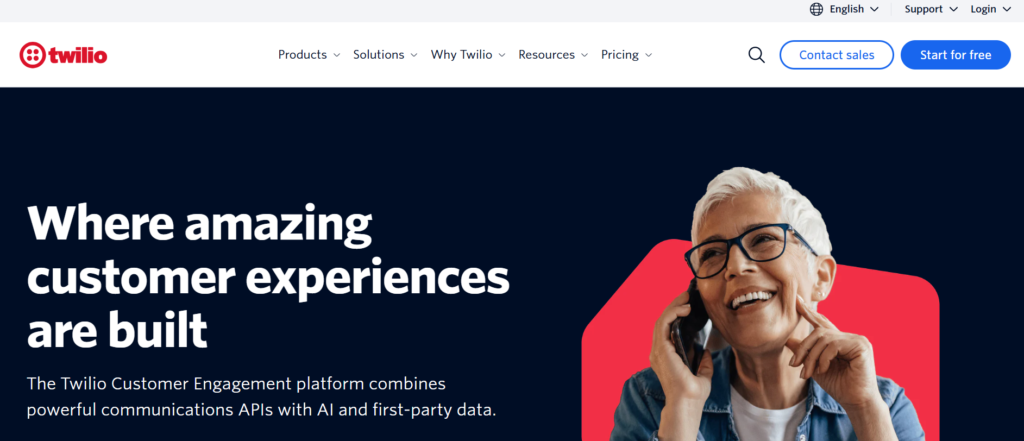
Twilio sits at the infrastructure layer of SMS outreach tools for B2B sales. It is not a plug-and-play sales inbox. It is a programmable communications platform used by sales led companies, SaaS firms, and revenue teams that need full control over how SMS fits into their outbound and inbound workflows.
Sales teams that use Twilio usually already have a CRM, a sales engagement platform, or an internal system they want SMS to connect with. Twilio becomes the messaging engine underneath everything else. That is why it is widely used by teams running high volume outbound sequences, account based sales motions, and multi-step follow ups that mix calls, email, and SMS.
Key Features
Twilio’s feature set is broad, but what matters for B2B SMS outreach is how those features support sales conversations at scale rather than basic text blasts.
Programmable SMS API
Twilio’s SMS API gives sales and engineering teams full control over how messages are sent, received, logged, and responded to. Instead of being locked into a fixed interface, teams decide when a text is triggered, who it is sent to, and what happens when a prospect replies.
This is particularly valuable for B2B sales teams running custom outbound logic. A reply can automatically update deal stages, assign tasks to SDRs, or trigger a follow up message based on intent. The API supports long codes, short codes, and toll free numbers, allowing sales teams to choose the right sending method based on volume and compliance needs.
Two Way Messaging at Scale
Twilio supports true two way SMS, which is critical for B2B sales conversations. Replies are not treated as one off responses. They can be routed to sales reps, pushed into a CRM timeline, or handled by a qualification workflow before a human ever steps in.
For teams managing hundreds or thousands of active conversations, this structure prevents replies from being missed. Messages can be assigned, tagged, and tracked based on opportunity status, making SMS a managed sales channel rather than an inbox nightmare.
Global Number Management
B2B sales teams selling across regions often struggle with deliverability and local presence. Twilio allows teams to purchase and manage phone numbers across multiple countries, including local sender IDs where supported.
This matters when outbound SMS is part of an international sales strategy. Messages sent from local numbers tend to receive higher reply rates and fewer carrier issues. Twilio also handles number rotation, helping sales teams spread volume across multiple senders to stay within carrier limits.
Compliance and Consent Controls
SMS outreach lives and dies by compliance. Twilio provides the tools needed to manage opt ins, opt outs, and message auditing. STOP handling, consent tracking, and message logs are built into the platform.
For B2B sales teams, this reduces risk when running outbound campaigns or follow ups. Consent status can be checked before a message is sent, and opt out requests are processed automatically. This is especially important for teams operating across multiple jurisdictions with different messaging rules.
Delivery Reporting and Message Status
Twilio provides detailed delivery data for every message sent. Sales operations teams can see whether a message was delivered, queued, failed, or blocked by a carrier.
This level of visibility helps teams diagnose reply drops, carrier filtering, or number reputation issues. When SMS is tied directly to revenue activity, knowing whether a message actually reached a prospect matters just as much as open rates do in email.
Pros and Cons
| Pros | Cons |
| Full control over SMS logic | Requires technical setup |
| Scales to very high volumes | No native sales inbox |
| Strong global delivery | Pricing varies by usage |
| Works with any CRM | Needs development resources |
Pricing
Twilio uses usage based pricing.
- SMS sending starts at 0.0075 per message
- Phone numbers are billed monthly
- Additional costs apply for inbound messages and advanced features
Total cost depends on volume, number types, and destination countries. Sales teams with predictable volume often negotiate custom rates.
Best For Revenue Teams with Custom Sales Workflows
Twilio is best suited for:
- B2B SaaS sales teams – needing SMS tied directly to product trials, demos, and progress stages
- Sales operations teams – managing complex outbound rules across regions
- High volume SDR teams – sending thousands of messages daily with strict control
- Engineering led organisations – building SMS into existing sales systems
If your sales process already relies on internal tools or advanced CRM logic, Twilio fits naturally underneath that stack.
Verdict: Twilio is not a lightweight SMS app. It is sales infrastructure. Teams that invest in proper setup gain long term control, reliability, and scale that simpler tools cannot match.
How Sales Teams Use Twilio for progress Follow Ups
A common high performing use case is automated SMS follow ups after sales calls or demo no shows. When a meeting ends without a clear next step, Twilio can send a personalised message within minutes, routed from the assigned rep’s number, and logged back into the CRM. This timing often recovers deals that would otherwise go cold.
Best Alternate Tool
If you want a ready made sales inbox with CRM syncing and minimal setup, Salesmsg is the closest alternative.
2. Salesmsg
Sales focused SMS inbox built for B2B teams that want speed without technical setup
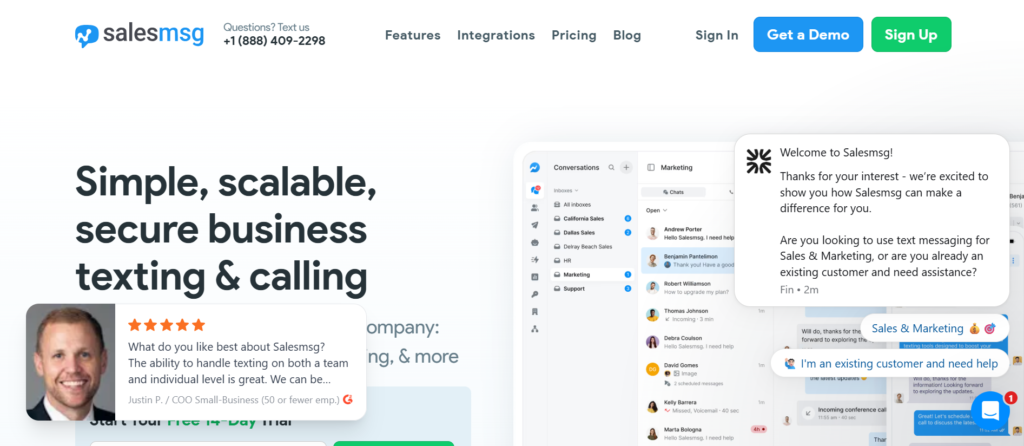
Salesmsg is built specifically for SMS outreach inside B2B sales motions. Unlike infrastructure platforms, this tool is designed for SDRs, account executives, and sales managers who want SMS running inside their existing workflow without engineering involvement.
Teams usually choose Salesmsg when email sequences stall and calling alone cannot carry progress targets. It plugs directly into CRMs and sales engagement tools, turning SMS into a managed channel that reps can use daily without breaking compliance or losing message history.
Key Features
Salesmsg focuses on usability for revenue teams, but the depth shows once it is rolled out across multiple reps and progress.
Shared and Personal SMS Inboxes
Salesmsg provides both shared team inboxes and personal rep inboxes. Each rep can send messages from their own number while managers retain visibility across conversations.
This setup matters in B2B sales where ownership and accountability are critical. Conversations stay tied to the right rep, replies are never lost, and managers can step in when deals stall. Shared inboxes are often used for inbound leads, demo requests, or account based campaigns where multiple reps collaborate.
CRM Native Integration
Salesmsg integrates directly with major CRMs, allowing every message sent or received to appear inside the contact and deal record. This gives sales teams full conversation context before making calls or sending follow ups.
For progress management, this means SMS activity becomes part of forecasting and reporting. Reps do not need to copy notes manually, and managers gain visibility into which prospects are actively engaging through text.
Automated SMS Sequences
Salesmsg allows teams to build SMS sequences that trigger based on sales activity. Messages can be scheduled after calls, meetings, form fills, or deal stage changes.
This is commonly used for no show follow ups, post demo check ins, and reactivation of stalled opportunities. Automation keeps timing consistent while still allowing reps to personalise messages before sending.
Compliance and Opt Out Handling
Salesmsg includes built in opt out management, message auditing, and consent tracking. STOP replies are processed automatically, and numbers are suppressed from future outreach.
For B2B teams running outbound SMS, this reduces risk and manual work. Reps can focus on conversations instead of compliance rules, while managers maintain a clear audit trail.
Local Number Assignment
Each rep can be assigned a dedicated local number, which improves reply rates and keeps conversations personal. Prospects reply to the same number every time, creating continuity across the sales cycle.
This feature is especially valuable for longer B2B deals where trust builds over multiple touchpoints.
Pros and Cons
| Pros | Cons |
| Built for sales teams | Less flexible than APIs |
| Strong CRM integration | Limited custom logic |
| Easy rep adoption | Pricing per user |
| Shared inbox visibility | Not developer focused |
Pricing
Salesmsg pricing is seat based.
- Plans start at 25 per user per month
- Additional costs apply for higher message volumes
- CRM integrations included on paid plans
This pricing model works well for sales teams that want predictable monthly costs tied to headcount.
Best For SDR and Account Executive Teams Running Daily SMS Outreach
Salesmsg is best suited for:
- SDR teams – sending daily outbound follow ups
- Account executives – managing long sales cycles
- Sales managers – needing visibility into rep activity
- Agencies – running SMS outreach on behalf of clients
If SMS needs to live inside your sales stack without custom builds, Salesmsg fits naturally.
Verdict: Salesmsg turns SMS into a practical sales channel rather than a marketing tool. It works best when speed, visibility, and rep adoption matter more than technical customisation.
How Teams Use Salesmsg for Deal Recovery
A common use case is deal recovery after stalled email threads. Reps send a short SMS referencing the last conversation, which often reopens dialogue within minutes. Because replies route directly to the rep inbox and CRM, follow up happens immediately while interest is high.
Best Alternate Tool
If you need global SMS routing and advanced custom workflows, Twilio is the stronger alternative. If ease of use and CRM based texting are the priority, Salesmsg remains the better choice.
3. SimpleTexting
Straightforward SMS outreach for B2B teams that want clarity and control
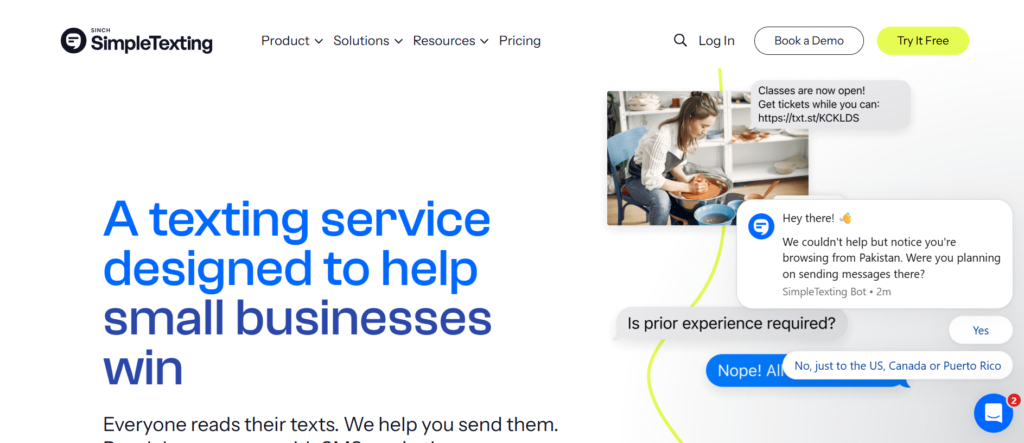
SimpleTexting is often chosen by B2B sales teams that want SMS outreach running quickly without layering complexity on top of their sales process. It is widely used by small to mid sized teams that prioritise speed, visibility, and message consistency over deep technical customisation.
Where SimpleTexting fits best is early to mid funnel outreach. Sales teams use it to follow up inbound leads, confirm meetings, re engage cold prospects, and maintain light but consistent contact across long buying cycles.
Key Features
SimpleTexting focuses on core SMS execution rather than complex infrastructure. Each feature supports day to day sales communication without adding friction for reps or managers.
Campaign Based SMS Messaging
SimpleTexting allows sales teams to group contacts into lists and send targeted messages based on lead source, progress stage, or campaign type. Messages can be sent immediately or scheduled for later delivery.
This is particularly useful for B2B sales teams running outreach tied to webinars, gated content, or outbound prospecting lists. Instead of one off messages, reps can plan communication windows around working hours and buyer availability, keeping outreach consistent without manual effort.
Two Way Conversations with Message History
Every message sent through SimpleTexting supports replies, and all conversation history is stored in a single view. Reps can see past messages before responding, which helps maintain continuity in longer sales discussions.
For B2B sales, this reduces awkward resets where prospects need to repeat themselves. The full message thread remains visible, making follow ups feel informed rather than automated.
Contact Segmentation and Tagging
Contacts inside SimpleTexting can be tagged and segmented based on behaviour, campaign source, or manual criteria set by the sales team. This structure allows more relevant messaging without overcomplicating list management.
Sales managers often use tags to separate prospects who replied, booked meetings, or asked for callbacks. Over time, this creates a clearer picture of which SMS efforts contribute to progress movement.
Compliance and Opt Out Automation
SimpleTexting handles opt outs automatically. When a prospect replies with STOP, the system suppresses that number from future messages without requiring rep intervention.
This is critical for sales teams scaling SMS outreach. Compliance controls reduce risk and prevent accidental follow ups that damage brand trust or deliverability.
Reporting and Message Performance
SimpleTexting provides basic reporting on sent messages, delivery status, and replies. While not built for deep analytics, it gives sales leaders enough visibility to understand engagement trends and rep activity.
Managers commonly review reply rates and response timing to identify which outreach messages resonate most with prospects.
Pros and Cons
| Pros | Cons |
| Easy for reps to adopt | Limited workflow logic |
| Clean interface | Not CRM native |
| Fast setup | Less suited for large teams |
| Predictable pricing | Basic reporting |
Pricing
SimpleTexting uses subscription based pricing.
- Plans start at 29 per month
- Message limits increase with higher tiers
- Add ons available for larger contact lists
This pricing suits teams that want stable monthly costs without usage surprises.
Best For Small to Mid Size B2B Sales Teams
SimpleTexting works best for:
- Inbound sales teams – managing lead follow ups
- Sales managers – needing quick SMS deployment
- Agencies – running simple outreach campaigns
- Founders – handling sales directly
Verdict: SimpleTexting keeps SMS outreach practical and manageable. It suits teams that want consistent communication without technical overhead.
Best Alternate Tool
If CRM integration and rep level inboxes are required, Salesmsg is the stronger alternative.
4. SlickText
Structured SMS campaigns for B2B sales teams running repeatable outreach
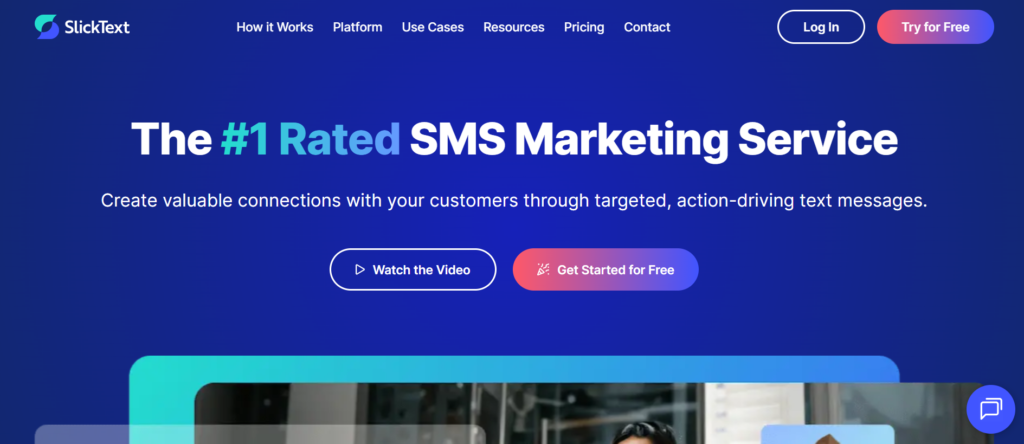
SlickText sits between sales messaging and campaign based communication. While often used in marketing, B2B sales teams adopt SlickText when they want structured messaging flows without building custom systems.
It is commonly used by teams running outbound campaigns tied to product launches, re engagement pushes, or time bound offers aimed at qualified prospects rather than broad audiences.
Key Features
SlickText focuses on campaign logic, automation, and consistency across outbound SMS efforts.
Automated Message Sequences
SlickText allows sales teams to create automated message paths based on time delays or responses. Messages can be sent over days or weeks without manual sending.
For B2B sales, this is often used for re warming cold accounts or following up event attendees. Instead of relying on reps to remember follow ups, sequences keep every prospect receives consistent communication.
Keyword Triggered Responses
Prospects can reply with predefined keywords to receive automated responses. This allows sales teams to route interest without immediate rep involvement.
Common uses include requesting pricing, booking links, or sales calls. Once interest is confirmed, reps can step in with full context.
Contact List Management
SlickText provides list tools that allow sales teams to upload, segment, and manage contacts based on campaign participation.
This helps teams avoid overlapping messages across different campaigns and keeps prospects do not receive conflicting communication from multiple reps.
Message Scheduling and Timing Controls
Messages can be scheduled based on time zones and working hours. This prevents texts from being delivered at inappropriate times and improves response quality.
For B2B outreach, timing often determines whether a message gets a reply or gets ignored.
Delivery and Engagement Reporting
SlickText provides visibility into sent messages, responses, and unsubscribes. Sales managers use this data to adjust message copy and timing.
While not deeply analytical, the reporting supports practical decision making.
Pros and Cons
| Pros | Cons |
| Strong automation | Less personal inbox feel |
| Good for campaigns | Limited CRM depth |
| Clear message flows | Marketing leaning |
| Easy sequence setup | Not rep centric |
Pricing
SlickText pricing starts at:
- Pricing 29 per month
- Higher tiers increase message limits
- Automation included on paid plans
Best For Campaign Driven Sales Outreach
SlickText is best suited for:
- Sales teams – running outbound pushes
- Event – follow up campaigns
- Product – led sales motions
- Re engagement – efforts
Verdict: SlickText works well when sales outreach follows predictable patterns and timing matters more than one to one inbox management.
Best Alternate Tool
If personal rep inboxes are required, Textline is a stronger fit.
5. Textline
Shared SMS inbox built for collaborative B2B sales teams
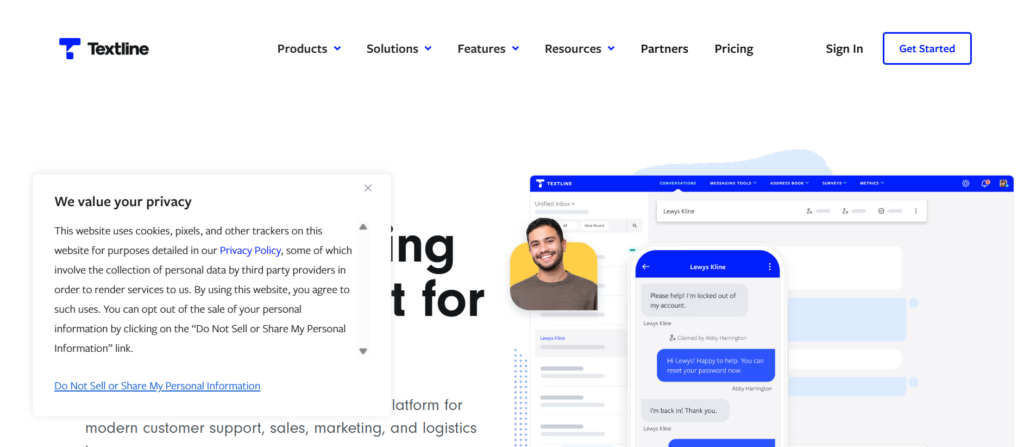
Textline is designed for teams where multiple people manage conversations with the same prospects. Instead of isolated rep inboxes, Textline centralises SMS conversations into shared views.
This approach works well for B2B sales teams handling inbound leads, account based outreach, or long sales cycles involving handoffs between SDRs and account executives.
Key Features
Textline focuses on conversation management and team visibility.
Shared Team Inboxes
Textline allows multiple reps to access and respond from the same SMS inbox. Conversations can be assigned, reassigned, and monitored in real time.
This prevents duplicated responses and missed replies, which are common problems in shared sales environments.
Internal Notes and Conversation Assignment
Reps can leave internal notes within message threads. This keeps context inside the conversation rather than scattered across tools.
Sales managers use assignment features to route replies to the right rep based on territory or account ownership.
CRM Integrations
Textline integrates with popular CRMs so messages appear alongside calls and emails. This keeps SMS aligned with the rest of the sales record.
For B2B teams, this reduces context switching and improves follow up quality.
Compliance and Message Controls
Opt outs are handled automatically, and message logs remain accessible for auditing. This protects teams as SMS usage scales.
Reporting and Oversight
Managers can view response times, message volumes, and rep activity. This supports coaching and performance reviews without micromanagement.
Pros and Cons
| Pros | Cons |
| Strong team visibility | Less suited for solo reps |
| Shared inbox control | Fewer automation tools |
| CRM connected | Per user pricing |
| Clear conversation flow | Not campaign focused |
Pricing
Textline pricing starts at:
- 20 per user per month
- Message usage billed separately
- Team features included on paid plans
Best For Collaborative Sales Teams
Textline is ideal for:
- Inbound – sales teams
- Account – based sales models
- Sales – teams with handoffs
- Support – plus sales environments
Verdict: Textline brings order to SMS conversations where multiple reps need visibility and control.
Best Alternate Tool
If automation and campaign logic matter more than shared inboxes, SlickText is a better alternative.
6. Podium
SMS based sales engagement built around inbound intent and reputation signals
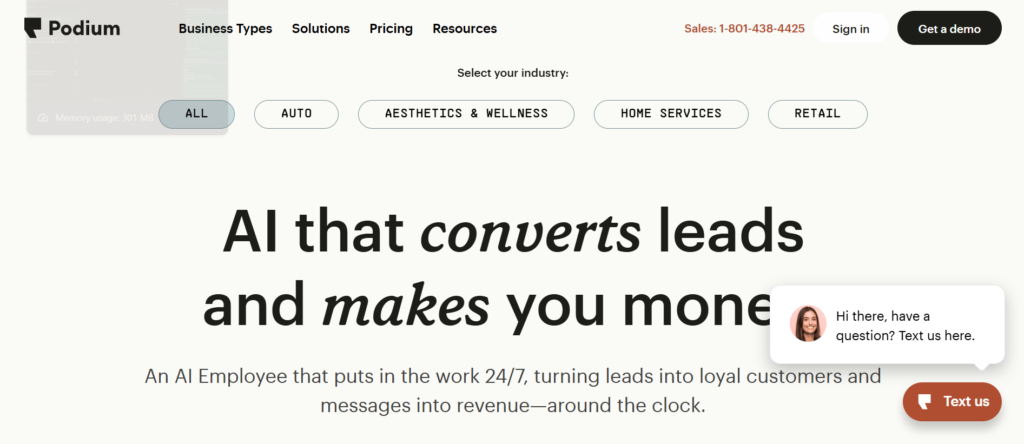
Podium is commonly positioned as a customer interaction platform, but many B2B sales teams adopt it specifically for SMS outreach tied to inbound demand. It is most effective when SMS is used as a response channel rather than pure cold outbound.
Sales teams that work with high intent leads, demo requests, local business enquiries, or account based inbound flows use Podium to reduce response time and secure conversations before prospects disengage.
Key Features
Podium’s SMS functionality is tightly connected to how inbound leads are handled and qualified.
Centralised Messaging Inbox
Podium provides a central inbox where SMS conversations from prospects are received and managed. Messages are routed to teams rather than individual reps by default, which suits inbound sales environments.
This keeps that no enquiry is missed. In B2B sales, response time directly affects conversion rates. Podium allows teams to reply within minutes, often before competitors make contact.
Webchat to SMS Handoff
One of Podium’s strongest features is its ability to convert webchat conversations into SMS threads. When a visitor leaves a website or abandons a chat, the conversation continues via text message.
This is particularly effective for B2B service businesses where prospects browse outside working hours. Sales teams pick up the conversation later without losing context.
Review and SMS Signal Integration
Podium links SMS conversations with review requests and feedback flows. While not directly sales focused, this builds trust during the buying process.
Sales reps often use SMS follow ups after proposals to request feedback, which indirectly improves close rates by reinforcing credibility.
Team Visibility and Assignment
Messages can be assigned to team members, tagged, and tracked. Managers can see which conversations are active and which need follow up.
This structure supports sales teams handling high inbound volumes across multiple products or services.
Compliance and Opt Out Handling
Podium manages opt outs automatically and maintains message logs. This reduces compliance risk when SMS is used heavily for inbound communication.
Pros and Cons
| Pros | Cons |
| Excellent inbound response speed | High starting price |
| Webchat to SMS flow | Less outbound focused |
| Strong team inbox | Limited sequence logic |
| Trust focused features | Not ideal for cold SMS |
Pricing
Podium pricing starts at:
- 249 per month
- SMS included within plans
- Custom pricing for larger teams
Best For Inbound Driven B2B Sales Teams
Podium works best for:
- Service – based B2B sales teams
- Inbound – heavy progress
- High intent – lead handling
- Sales teams – tied to reputation signals
Verdict: Podium excels when SMS is used to respond fast and maintain conversation continuity rather than run outbound prospecting at scale.
Best Alternate Tool
For outbound focused SMS, Salesmsg is the stronger alternative.
7. EZ Texting
Bulk SMS execution for B2B teams running structured outreach
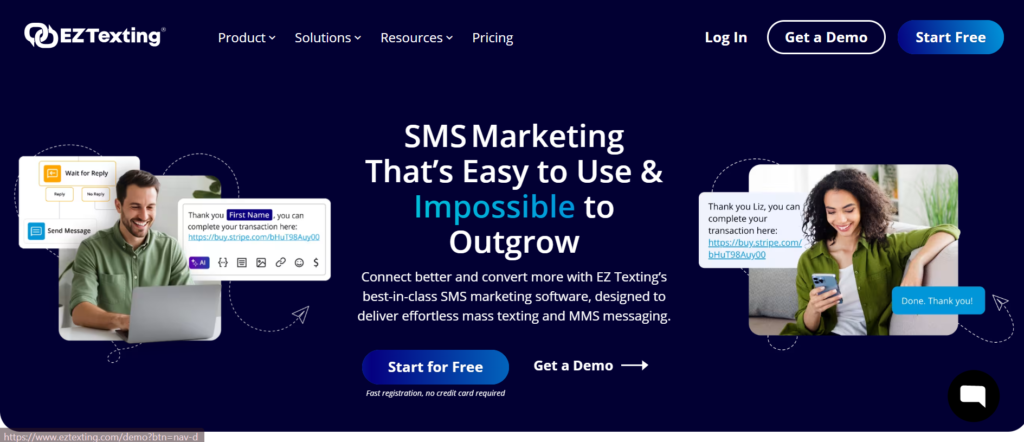
EZ Texting is widely used by B2B teams that need to send large volumes of messages without complex setup. While often associated with marketing, many sales teams use it for re engagement, announcements, and progress wide messaging.
It suits environments where SMS is used to support sales activity rather than replace direct selling.
Key Features
EZ Texting prioritises scale, speed, and list management.
Bulk SMS Messaging
EZ Texting allows sales teams to send messages to large contact lists at once. Messages can be personalised using merge fields, keeping outreach relevant without manual effort.
This is commonly used for webinar reminders, pricing updates, or progress re activation campaigns.
Contact Upload and Segmentation
Sales teams can upload contacts via CSV and segment them based on campaign criteria. This keeps outreach organised and prevents overlapping sends.
Segmentation helps sales teams avoid sending irrelevant messages to prospects in different buying stages.
Scheduled Campaigns
Messages can be scheduled in advance, which supports consistent communication without daily rep involvement.
This is useful for teams running repeatable sales motions tied to events or product launches.
Compliance Controls
Opt outs are handled automatically. Message history is stored for auditing and oversight.
This allows sales teams to scale SMS usage without manual suppression work.
Reporting Dashboard
EZ Texting provides delivery and response reporting at a campaign level. While not granular, it supports decision making around message timing and frequency.
Pros and Cons
| Pros | Cons |
| Easy bulk sending | Limited two way focus |
| Fast onboarding | Less CRM integration |
| Affordable entry | Marketing style UI |
| Predictable pricing | Not rep centric |
Pricing
EZ Texting pricing starts at:
- 20 per month
- Message volume tiers apply
- Advanced features on higher plans
Best For Campaign Based Sales Outreach
EZ Texting fits:
- Sales teams – running bulk follow ups
- Event – based outreach
- Progress – announcements
- Time bound – sales pushes
Verdict: EZ Texting works when scale matters more than conversation depth.
Best Alternate Tool
For two way sales conversations, Textline is a stronger option.
8. MessageBird
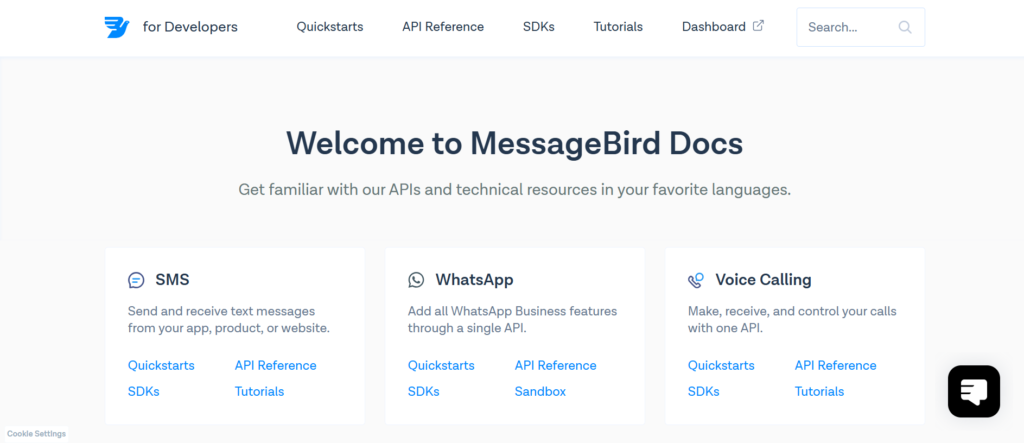
Global SMS infrastructure for B2B sales teams operating across regions
MessageBird is an infrastructure level platform similar to Twilio but with stronger emphasis on international messaging. It is commonly used by B2B sales teams selling across multiple countries.
Teams choose MessageBird when SMS deliverability, number localisation, and routing consistency are critical.
Key Features
MessageBird focuses on reliability and global scale.
Global SMS Routing
MessageBird supports SMS delivery across a wide range of countries with local routing. This improves deliverability and reduces carrier filtering.
For international B2B sales, this keeps prospects receive messages from recognisable local numbers.
API Based Messaging Control
Sales teams with technical resources use MessageBird’s API to embed SMS into CRMs, sales tools, and internal systems.
This supports advanced logic such as stage based messaging and reply routing.
Two Way Messaging Support
Replies can be captured and routed to internal systems or dashboards. This allows SMS to function as a live sales channel rather than a one way alert.
Number Management
Teams can manage multiple sender IDs and phone numbers across regions, reducing volume concentration risks.
Reporting and Logs
Message delivery and status data is available for monitoring performance and diagnosing issues.
Pros and Cons
| Pros | Cons |
| Strong global delivery | Requires technical setup |
| International numbers | No native sales inbox |
| High volume support | Usage based costs |
| Reliable infrastructure | Not beginner friendly |
Pricing
MessageBird pricing starts at:
- 0.005 per SMS
- Number costs apply
- Usage based billing
Best For International B2B Sales Teams
MessageBird suits:
- Global sales operations
- Multi region outreach
- API driven sales stacks
- High volume messaging
Verdict: MessageBird is ideal when SMS must work reliably across borders.
Best Alternate Tool
Twilio is a comparable alternative with broader ecosystem support.
9. Sakari
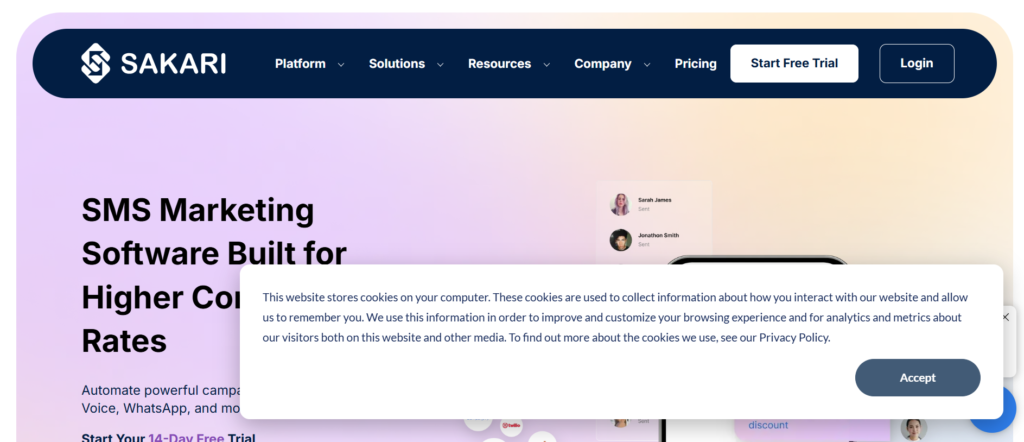
CRM native SMS for sales teams that live inside Salesforce
Sakari is built for sales teams that rely heavily on Salesforce. Rather than operating as a standalone tool, it embeds SMS directly into CRM workflows.
This makes Sakari popular with revenue teams that want SMS activity fully visible inside deal records.
Key Features
Sakari is focused on CRM alignment.
Salesforce Native Messaging
Messages sent and received through Sakari appear directly within Salesforce records. Reps do not switch tools to manage conversations.
This improves follow up quality and keeps sales history complete.
Trigger Based Messaging
SMS can be triggered by Salesforce events such as stage changes or task completion.
This keeps timely communication without relying on rep memory.
Two Way Conversations
Replies are logged and visible to the sales team, maintaining continuity.
Compliance Controls
Opt out handling and consent tracking are built into the system.
Pros and Cons
| Pros | Cons |
| Salesforce native | Limited outside CRM |
| Clean sales visibility | Smaller feature set |
| Simple workflows | Not global focused |
| Good compliance | Requires Salesforce |
Pricing
Sakari pricing starts at:
- 16 per month
- Message costs apply separately
Best For Salesforce Driven Sales Teams
Sakari fits:
- Enterprise sales teams
- CRM focused operations
- Progress driven messaging
Verdict: Sakari works best when Salesforce is the centre of sales activity.
Best Alternate Tool
Salesmsg offers broader CRM options.
10. ClickSend
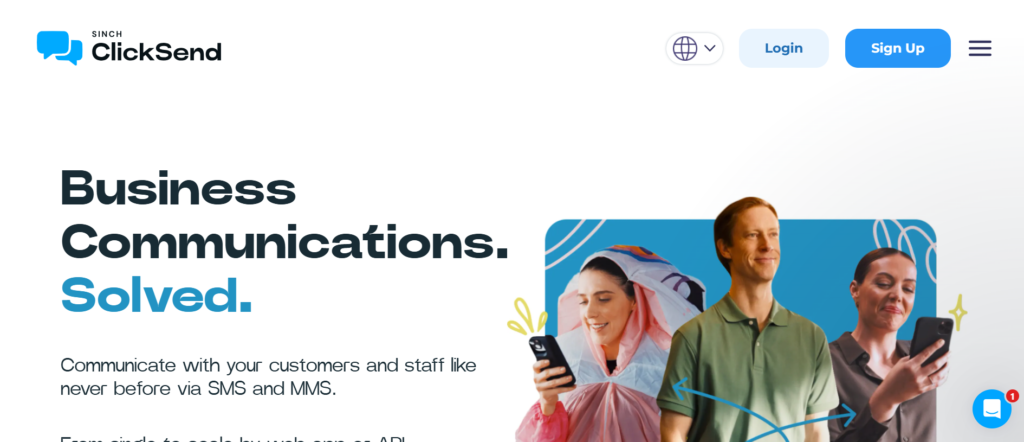
Multi channel messaging for B2B sales teams needing SMS plus more
ClickSend supports SMS alongside email, voice, and direct mail. B2B sales teams use it when outreach spans multiple channels.
Key Features
ClickSend focuses on channel flexibility.
SMS API and Dashboard
Teams can send messages via API or dashboard depending on workflow needs.
Multi Channel Outreach
Sales teams can combine SMS with email and voice drops for layered outreach.
Global Delivery
ClickSend supports international messaging with stable routing.
Reporting and Logs
Message status and delivery logs support oversight and troubleshooting.
Pros and Cons
| Pros | Cons |
| Multiple channels | Less sales focused |
| API access | Basic inbox |
| Global reach | Requires setup |
| Flexible usage | UI less refined |
Pricing
ClickSend pricing starts at:
- 0.045 per SMS
- Usage based billing
Best For Multi Channel Sales Outreach
ClickSend is suited for:
- Outbound heavy sales teams
- Multi channel strategies
- API capable teams
Verdict: ClickSend suits teams combining SMS with other outbound methods.
Best Alternate Tool
MessageBird is stronger for SMS only global delivery.
11. TextMagic
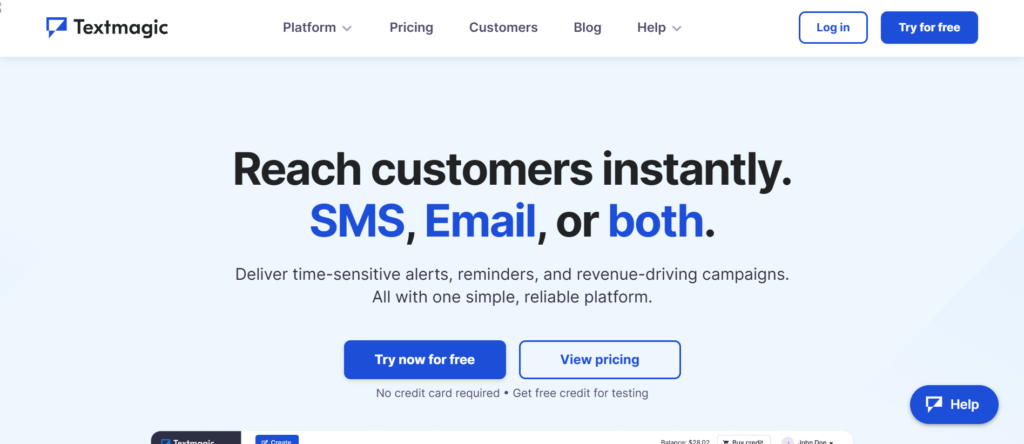
Practical SMS outreach for B2B sales teams that want control without complexity
TextMagic is positioned as a straightforward business texting platform, but its real strength lies in how reliably it supports everyday B2B sales communication. It is commonly adopted by sales teams that want to run SMS outreach alongside email and calls without restructuring their entire tech stack.
Sales teams using TextMagic tend to value clarity, message control, and predictable behaviour over advanced automation. It works well when SMS is treated as a direct conversation channel rather than a high volume broadcast system.
Key Features
TextMagic focuses on dependable execution and visibility, making it suitable for sales teams that rely on consistent follow ups and clear communication trails.
Two Way SMS Conversations with Full History
TextMagic supports true two way messaging, allowing prospects to reply directly to sales messages. Every conversation is stored with full message history, giving reps immediate context before responding.
In B2B sales, where buying cycles stretch across weeks or months, this history matters. Reps do not need to rely on memory or external notes. The entire SMS thread shows previous questions, objections, and next steps, helping conversations move forward without repetition.
Pay As You Go Messaging Control
Unlike subscription heavy platforms, TextMagic operates on a credit based model. Sales teams purchase message credits and use them as needed.
This structure suits teams with fluctuating outreach volume. During busy periods such as product launches or quarter end pushes, messaging increases. During quieter periods, costs remain contained. This pricing approach also makes it easier for finance teams to track SMS usage directly against sales activity.
Contact Management and List Segmentation
TextMagic includes tools for storing contacts, grouping them into lists, and tagging them based on status or campaign type. Sales teams often create lists for inbound leads, outbound prospects, follow ups, or inactive accounts.
Segmentation helps avoid sending irrelevant messages and reduces the risk of over messaging prospects. It also supports more targeted communication without adding technical overhead.
Message Scheduling and Timing
Sales reps can schedule messages to send at specific times, ensuring outreach lands during business hours. This is especially useful for global sales teams working across time zones.
Scheduled messaging also helps sales managers maintain consistency across reps. Follow ups can be planned in advance, reducing reliance on individual memory and improving response rates.
Delivery Reports and Message Status Tracking
TextMagic provides delivery receipts and message status updates. Reps can see whether a message was delivered, failed, or queued.
For B2B sales teams, this visibility helps diagnose engagement issues. If replies slow down, teams can check whether messages are reaching recipients rather than assuming lack of interest.
Compliance and Opt Out Handling
TextMagic automatically processes opt out requests and suppresses numbers from future messaging. Message logs remain available for auditing and internal review.
This allows sales teams to scale SMS outreach without manually tracking consent or managing suppression lists.
Pros and Cons
| Pros | Cons |
| Flexible pay as you go pricing | Limited automation |
| Clear message history | Basic CRM integration |
| Reliable delivery reporting | Less campaign logic |
| Easy onboarding | Not enterprise focused |
Pricing
TextMagic pricing is usage based.
- SMS messages start at 0.04 per message
- Credits are purchased in advance
- No monthly user fees
This pricing suits sales teams that want direct cost control tied to message volume.
Best For Sales Teams That Value Simplicity and Control
TextMagic is well suited for:
- B2B sales teams – managing ongoing conversations
- Account executives – handling long sales cycles
- Agencies – running SMS outreach for multiple clients
- Small to mid size teams – avoiding heavy subscriptions
Verdict: TextMagic delivers dependable SMS outreach without forcing sales teams into rigid workflows. It works best when consistent follow ups and cost visibility matter more than advanced automation.
How Sales Teams Use TextMagic for Deal Progression
A common use case is post meeting follow up. After a sales call, reps schedule a short SMS recap summarising next steps. Because delivery and replies are visible, reps know immediately whether the prospect has seen the message, allowing timely follow up calls or emails.
Best Alternate Tool
If deeper CRM integration or automated sequences are required, Salesmsg is a stronger alternative.
12. Plivo
API driven SMS delivery for B2B sales teams that need precision and scale
Plivo is an API first communications platform used by B2B sales teams that want SMS embedded directly into their existing systems. It is chosen by organisations that treat SMS as part of a broader sales workflow rather than a standalone channel.
Sales teams using Plivo usually operate at higher volume, across multiple regions, or inside products where messaging must respond to behaviour in real time. Instead of reps clicking send, messages are triggered by events such as lead creation, demo booking, trial usage, or deal movement.
Key Features
Plivo’s feature set is built around control, reliability, and visibility at scale. Each capability supports sales operations that require predictable delivery and detailed oversight.
Programmable SMS API with Event Triggers
Plivo provides a robust SMS API that allows teams to send and receive messages programmatically. Messages can be triggered by internal events such as CRM updates, form submissions, or sales engagement actions.
For B2B sales teams, this enables precise timing. A prospect can receive a message seconds after completing a demo request or abandoning a booking page. That timing often determines whether a conversation starts at all.
Two Way Messaging with Webhook Routing
Replies sent by prospects can be routed via webhooks into CRMs, internal dashboards, or sales engagement platforms. This keeps that responses are captured and acted on immediately.
Sales teams often use this setup to route replies based on intent. Positive responses can alert SDRs instantly, while unsubscribe requests or neutral replies are processed automatically without rep involvement.
Number Management and Sender Control
Plivo allows teams to purchase and manage phone numbers across multiple countries. Sender selection can be controlled programmatically, which helps distribute message volume and maintain deliverability.
For B2B sales teams sending high volumes of SMS, this reduces carrier scrutiny and improves long term message acceptance.
Global Delivery Infrastructure
Plivo supports SMS delivery across a wide range of destinations with direct carrier connections. This improves message consistency and reduces delays.
International sales teams benefit from local routing, which increases the likelihood that messages arrive promptly and are recognised as legitimate by recipients.
Delivery Reports and Message Status Data
Plivo provides detailed delivery receipts and message state updates. Teams can track whether messages were sent, delivered, failed, or filtered.
Sales operations teams rely on this data to monitor performance, troubleshoot issues, and adjust sending behaviour when reply rates drop.
Compliance and Opt Out Management
Plivo supports opt out handling through keyword recognition and programmatic suppression. Once a prospect opts out, further messages can be blocked automatically.
This protects sales teams as SMS volume grows and keeps compliance processes scale alongside outreach.
Pros and Cons
| Pros | Cons |
| Strong API reliability | Requires technical resources |
| Global delivery support | No native sales inbox |
| Detailed delivery data | Setup time needed |
| Scales to high volume | Usage based pricing |
Pricing
Plivo uses usage based pricing.
- SMS sending starts at 0.0065 per message
- Phone numbers billed monthly
- Inbound messages billed separately
Costs scale with volume, making it suitable for teams that monitor usage closely.
Best For Sales Teams with Technical Infrastructure
Plivo is best suited for:
- B2B SaaS sales teams embedding SMS into products
- Sales operations teams managing high volume outreach
- International sales organisations
- Engineering led sales environments
Verdict: Plivo provides dependable SMS delivery for sales teams that want messaging controlled by systems rather than manual actions.
How Sales Teams Use Plivo for Trial Conversion
A common approach is sending automated SMS nudges during free trials. When a prospect reaches a usage milestone or goes inactive, Plivo triggers a message offering help or a call. Because replies route directly to sales teams, conversations start at moments of high intent.
Best Alternate Tool
If broader ecosystem integrations are required, Twilio is a comparable alternative.
13. Sinch
Enterprise-grade SMS delivery for B2B sales teams operating at serious volume
Sinch is used by large B2B organisations where SMS is not an experiment but a core revenue communication channel. It sits at the same infrastructure tier as Twilio and Plivo, but is often selected by sales teams that prioritise carrier relationships, message stability, and predictable delivery across high volumes.
Sales teams that adopt Sinch usually operate in regulated industries, multi-region environments, or complex account based sales models where message failure, delays, or inconsistent routing directly impact revenue outcomes.
Key Features
Sinch focuses on reliability, governance, and scale. Each feature supports sales operations where SMS is deeply embedded into revenue workflows.
Direct Carrier Connections for Stable Delivery
Sinch maintains direct connections with mobile carriers across multiple regions. This reduces reliance on intermediaries and improves delivery consistency.
For B2B sales teams sending thousands of messages per day, this stability matters. Messages arrive when expected, reducing the risk of delayed follow ups or missed buying signals that can occur with weaker routing.
High Volume Two Way Messaging
Sinch supports two way SMS at enterprise scale. Replies can be captured and routed into internal systems, CRMs, or sales engagement platforms.
Sales teams often configure reply handling based on keywords or intent signals. Positive replies can notify account owners instantly, while opt out requests are processed automatically.
Sender Identity and Number Control
Sinch allows detailed control over sender IDs, long codes, and short codes. Sales teams can choose sending methods based on region, volume, and campaign type.
This flexibility helps manage carrier thresholds and maintain sender reputation over long sales cycles.
Compliance and Governance Frameworks
Sinch provides strong governance tools around consent management, message auditing, and suppression handling. This is particularly important for B2B sales teams operating in regulated sectors.
Compliance workflows can be built directly into messaging logic, reducing manual checks and errors.
Analytics and Delivery Reporting
Sinch offers detailed reporting on message status, delivery times, and carrier responses. Sales operations teams use this data to monitor performance and investigate delivery issues.
This level of reporting supports long term optimisation of outreach timing and sender strategy without relying on assumptions.
Integration with Sales Systems
Sinch integrates via APIs with CRMs, sales platforms, and internal tools. This allows SMS activity to remain connected to progress data and revenue attribution.
Sales leaders gain visibility into how SMS contributes to meetings booked and deals progressed.
Pros and Cons
| Pros | Cons |
| Enterprise-grade delivery | Requires technical setup |
| Strong carrier relationships | Not self serve |
| High volume support | Usage based pricing |
| Advanced compliance tools | Less SMB focused |
Pricing
Sinch pricing is usage based.
- SMS sending starts at 0.007 per message
- Number and sender costs apply
- Custom rates available at scale
Pricing varies based on region, volume, and sender type.
Best For Large B2B Sales Organisations
Sinch is best suited for:
- Enterprise sales teams handling high message volumes
- Regulated industry sales operations
- Multi region B2B organisations
- Sales teams with dedicated ops and engineering support
Verdict: Sinch is built for scale and reliability. It is most effective when SMS is mission critical to revenue generation rather than an auxiliary channel.
How Sales Teams Use Sinch for Account Based Outreach
Enterprise sales teams often use Sinch to support account based outreach where multiple stakeholders receive coordinated SMS touchpoints. Messages are timed alongside calls and emails, ensuring consistent communication across buying committees without delivery issues.
Best Alternate Tool
For teams seeking similar scale with broader developer documentation, Twilio is a strong alternative.
14. Burst SMS
Structured SMS delivery for B2B sales teams that prioritise reliability and message timing
Burst SMS is widely used by B2B sales teams that want dependable SMS delivery without committing to heavy technical builds. It sits between simple dashboard tools and full API platforms, giving teams enough control to run serious outreach while keeping setup manageable.
Sales teams typically adopt Burst SMS when SMS becomes a regular part of follow ups, progress movement, and account communication, rather than an occasional experiment. It supports both one to one conversations and batch messaging, making it flexible across different sales motions.
Key Features
Burst SMS focuses on message consistency, timing control, and visibility, all of which matter when SMS becomes part of day to day sales operations.
Two Way SMS Messaging with Conversation Tracking
Burst SMS supports two way messaging, allowing prospects to reply directly to sales messages. Replies appear within the platform with full conversation history visible.
For B2B sales teams managing multiple accounts, this prevents fragmented communication. Reps can review previous messages before responding, keeping conversations coherent and relevant across longer buying cycles.
Batch Messaging with Personalisation
Sales teams can send batch messages while still personalising content using contact fields. This allows outreach at scale without messages feeling generic.
This is commonly used for progress wide follow ups, event reminders, or outreach to dormant accounts where individual sending would be inefficient.
Message Scheduling and Delivery Windows
Burst SMS allows precise scheduling of messages and control over delivery windows. Sales teams can keep messages are sent during business hours, improving response quality and reducing opt outs.
This feature is particularly valuable for teams operating across regions or managing outreach around prospect availability.
Contact Management and Segmentation
Contacts can be stored, grouped, and segmented within the platform. Sales managers often segment contacts by deal stage, industry, or engagement status.
This organisation supports more relevant messaging and reduces the risk of sending inappropriate follow ups.
Compliance and Opt Out Automation
Burst SMS handles opt out keywords automatically and maintains suppression lists. This protects sales teams as message volume increases and keeps outreach remains compliant.
Message logs remain accessible for internal review and auditing.
Reporting and Message Insights
The platform provides delivery reports, response tracking, and basic engagement metrics. While not deeply analytical, this data helps sales leaders understand which messages drive replies and which do not.
Teams use these insights to refine copy and timing without overcomplicating analysis.
Pros and Cons
| Pros | Cons |
| Reliable delivery | Limited CRM integration |
| Easy batch messaging | Fewer automation triggers |
| Clear scheduling controls | Not API first |
| Predictable usage | UI less modern |
Pricing
Burst SMS pricing is usage based.
- SMS messages start at 0.04 per message
- Credits purchased upfront
- No per user fees
This pricing model works well for sales teams that want direct cost control tied to outreach volume.
Best For Sales Teams Running Regular Follow Ups at Scale
Burst SMS is well suited for:
- B2B sales teams managing recurring outreach
- Account based sales with batch follow ups
- Teams prioritising timing control
- Sales operations wanting predictable costs
Verdict: Burst SMS delivers consistent SMS performance for sales teams that value reliability and message timing over advanced automation.
How Sales Teams Use Burst SMS for progress Re Engagement
A common use case is re engaging stalled deals. Sales teams send scheduled check in messages to inactive prospects, often prompting replies that reopen conversations without aggressive selling.
Best Alternate Tool
If CRM native messaging is required, Sakari is a stronger alternative.
15. FireText
Controlled SMS outreach for B2B sales teams that rely on timing and consistency
FireText is used by B2B sales teams that want dependable SMS delivery with strong control over timing, cadence, and list management. It is not built for complex technical workflows or deep CRM logic. Instead, it focuses on making sure the right message reaches the right prospect at the right time, every time.
Sales teams that choose FireText usually have structured outreach routines. These include scheduled follow ups, progress check ins, and event driven messaging where consistency matters more than personal inbox style conversations.
Key Features
FireText prioritises message planning, repeatability, and oversight. Each feature supports sales teams that want predictable outreach without manual effort.
Scheduled SMS Campaigns with Full Timing Control
FireText allows sales teams to schedule messages days or weeks in advance. Messages can be aligned to specific dates, working hours, or campaign timelines.
For B2B sales teams, this removes reliance on individual reps remembering follow ups. Progress wide messages can be planned once and executed automatically, keeping outreach consistent across prospects.
Contact List Management and Segmentation
Contacts can be uploaded, organised, and segmented based on campaign type, deal stage, or engagement status. Sales teams often maintain separate lists for new leads, warm prospects, and inactive accounts.
Segmentation keeps messages stay relevant. Prospects in later buying stages receive different communication from early stage leads, reducing disengagement.
Two Way Messaging for Prospect Replies
FireText supports replies from prospects, allowing conversations to continue when interest is shown. Replies are visible within the platform and can be actioned by sales teams.
While not designed as a full rep inbox system, this capability allows sales teams to capture buying signals without switching tools.
Message Templates for Consistent Outreach
Sales teams can create reusable templates for common scenarios such as meeting reminders, proposal follow ups, or re engagement messages.
Templates reduce copy inconsistency across reps and help newer team members maintain approved messaging standards.
Compliance and Opt Out Automation
FireText automatically processes opt out requests and maintains suppression lists. Once a prospect opts out, further messages are blocked without manual intervention.
This protects sales teams as outreach volume grows and reduces the risk of accidental follow ups.
Delivery Reporting and Campaign Insights
The platform provides visibility into sent messages, delivery status, and response activity. Sales managers use this information to review outreach timing and adjust schedules where replies slow down.
While reporting is straightforward, it supports practical decision making rather than surface level metrics.
Pros and Cons
| Pros | Cons |
| Strong scheduling controls | Limited CRM integration |
| Easy campaign planning | Less conversational focus |
| Clear list management | Not API driven |
| Predictable costs | UI more functional than modern |
Pricing
FireText pricing starts at:
- 25 per month
- Message volume tiers apply
- No per user fees
This pricing model suits sales teams running regular campaigns without fluctuating headcount.
Best For Sales Teams Running Planned Outreach Cycles
FireText works best for:
- B2B sales teams with repeatable follow up routines
- Account based sales motions using scheduled messaging
- Sales managers enforcing consistent outreach timing
- Teams prioritising planning over improvisation
Verdict: FireText delivers reliable SMS outreach for sales teams that value structure, timing, and consistency more than advanced automation or deep integrations.
How Sales Teams Use FireText for Deal Nurturing
Sales teams often use FireText to nurture long cycle deals by scheduling periodic check in messages that maintain visibility without pressure. This keeps conversations warm until prospects are ready to move forward.
Best Alternate Tool
If shared inbox collaboration is required, Textline is a stronger alternative.
16. SMSGlobal
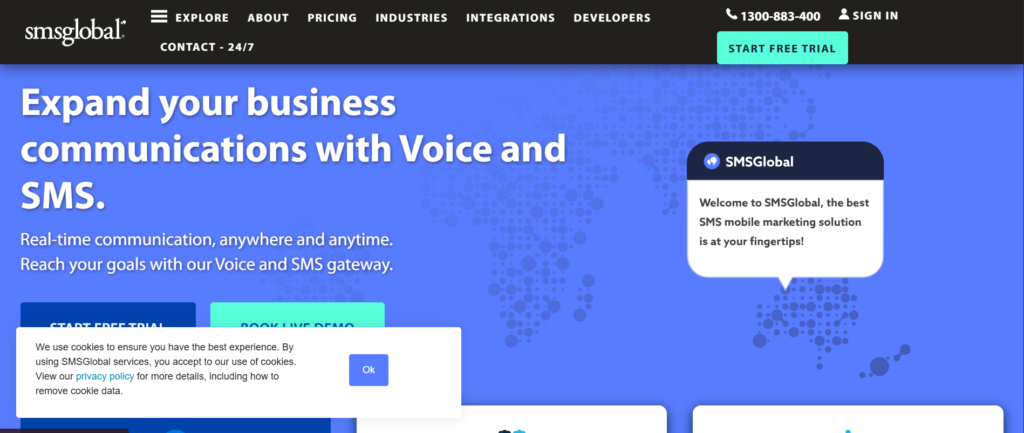
International SMS delivery for B2B sales teams managing cross-border outreach
SMSGlobal is designed for organisations that need SMS to work reliably across multiple countries without complex infrastructure. It is frequently used by B2B sales teams selling into international markets where message delivery, sender reputation, and regional compliance vary widely.
Sales teams adopt SMSGlobal when outbound and follow-up SMS must reach prospects in different regions with minimal delivery friction. Rather than focusing on inbox experience or advanced automation, SMSGlobal concentrates on message reach, routing stability, and cost control at scale.
Key Features
SMSGlobal’s feature set supports sales operations where geography, volume, and reliability matter more than interface design.
Global SMS Routing with Local Delivery Paths
SMSGlobal supports SMS delivery to a wide range of countries using local routing where available. Messages are sent through regional pathways that reduce carrier filtering and improve arrival consistency.
For B2B sales teams operating across borders, this improves the likelihood that messages land correctly and are recognised as legitimate rather than blocked or delayed.
Two Way Messaging for Sales Conversations
The platform supports two way SMS, allowing prospects to reply directly to messages. Replies are captured within the system and can be reviewed by sales teams or passed into internal tools.
This keeps SMS can be used for live sales conversations rather than one way notifications, which is essential for qualification and follow ups.
Sender ID and Number Management
SMSGlobal allows control over sender IDs, long numbers, and short codes depending on destination country requirements. Sales teams can align sender identity with regional expectations.
This flexibility helps maintain sender reputation and reduces the chance of delivery failures caused by mismatched sender formats.
High Volume Messaging Support
SMSGlobal is built to handle large message volumes without throttling issues. Sales teams running re engagement campaigns, event follow ups, or progress wide notifications rely on this stability.
Consistent throughput keeps campaigns execute as planned rather than being staggered unpredictably.
Delivery Reports and Message Logs
Detailed delivery receipts and message logs are available for every send. Sales operations teams use this data to confirm message arrival and investigate delivery issues when response rates change.
This visibility supports ongoing refinement of outreach timing and destination targeting.
Compliance and Opt Out Handling
SMSGlobal supports opt out keywords and suppression handling. Once a recipient opts out, further messages are blocked automatically.
This reduces manual work and supports compliance as SMS activity increases across regions.
Pros and Cons
| Pros | Cons |
| Strong international reach | Limited native CRM tools |
| High volume stability | Less sales focused UI |
| Sender ID flexibility | Requires setup effort |
| Usage based pricing | Not inbox driven |
Pricing
SMSGlobal pricing is usage based.
- SMS messages start at 0.04 per message
- Pricing varies by destination
- Credits purchased in advance
This pricing model suits sales teams that want message costs tied directly to outreach volume.
Best For B2B Sales Teams Selling Internationally
SMSGlobal is well suited for:
- International B2B sales teams
- Multi region outbound campaigns
- Account based outreach across countries
- Sales operations managing large lists
Verdict: SMSGlobal delivers dependable international SMS for sales teams that need reach and consistency across borders rather than advanced inbox features.
How Sales Teams Use SMSGlobal for Regional Follow Ups
Sales teams often use SMSGlobal to follow up event attendees or inbound leads from different countries. Messages are sent from appropriate sender IDs, improving reply rates and reducing carrier blocks during critical post-event windows.
Best Alternate Tool
If deeper API control and developer flexibility are required, MessageBird is a strong alternative.
17. Textedly
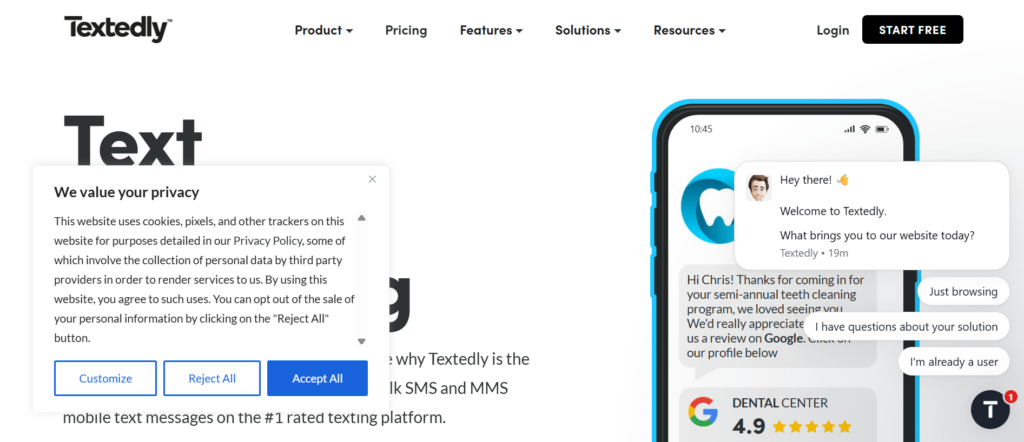
High volume SMS outreach for B2B sales teams that rely on repeatable messaging
Textedly is used by B2B sales teams that depend on consistent, repeatable SMS outreach across large contact lists. It is particularly common in environments where SMS supports lead follow ups, appointment confirmations, and re engagement campaigns rather than deep one to one sales conversations.
Sales teams adopt Textedly when they need a balance between volume and control. It offers more structure than basic texting tools while remaining accessible to teams without technical resources.
Key Features
Textedly is designed to keep SMS outreach organised, predictable, and easy to manage across campaigns.
Bulk SMS Campaign Management
Textedly allows sales teams to send SMS messages to large groups of contacts in a single campaign. Messages can include personalisation fields, which helps maintain relevance even when outreach is scaled.
This is commonly used for webinar follow ups, pricing announcements, or outreach to dormant leads. Sales teams save time by sending messages in batches while still maintaining a professional tone.
Two Way Messaging and Auto Replies
Prospects can reply directly to messages, and Textedly captures those responses within the platform. Sales teams can also configure automatic replies based on keywords or triggers.
Auto replies are often used to confirm receipt, share booking links, or qualify interest before a rep steps in. This reduces manual work while keeping conversations moving.
Contact Upload and Segmentation
Contacts can be imported via CSV and segmented into lists based on campaign type, engagement level, or sales stage. This helps teams avoid overlapping outreach and keep prospects receive messages relevant to their position in the buying journey.
Sales managers often use segmentation to separate new leads from active opportunities, allowing different messaging strategies for each group.
Message Scheduling and Time Controls
Textedly supports message scheduling, allowing sales teams to plan outreach around business hours. This prevents messages from being sent at inappropriate times and improves response rates.
Scheduled sending also helps standardise outreach across teams, ensuring consistent timing regardless of individual rep habits.
Compliance and Opt Out Handling
Opt out requests are handled automatically. When a prospect replies with an unsubscribe keyword, their number is suppressed from future messaging.
This allows sales teams to scale SMS usage without manually managing compliance processes.
Reporting and Campaign Insights
Textedly provides reporting on sent messages, delivery status, replies, and opt outs. While reporting is campaign focused rather than rep focused, it gives sales leaders enough insight to refine outreach strategies.
Teams often review response rates by campaign to adjust copy and sending cadence.
Pros and Cons
| Pros | Cons |
| Strong bulk messaging | Limited CRM depth |
| Easy campaign setup | Less suited for long conversations |
| Auto replies available | Not API focused |
| Predictable pricing | Marketing style workflows |
Pricing
Textedly pricing starts at:
- 26 per month
- Message limits vary by plan
- No per user fees
This pricing suits sales teams that want stable monthly costs without usage surprises.
Best For Sales Teams Running Campaign Led Outreach
Textedly is best suited for:
- B2B sales teams sending high volume follow ups
- Event driven sales outreach
- Lead re engagement campaigns
- Sales teams prioritising consistency
Verdict: Textedly works best when SMS outreach follows structured campaigns rather than free flowing conversations. It supports scale, scheduling, and compliance with minimal friction.
How Sales Teams Use Textedly for Lead Re Engagement
Sales teams often use Textedly to re engage old leads with short check in messages. Prospects who reply are then routed to reps for direct follow up, allowing teams to revive progress without heavy manual effort.
Best Alternate Tool
If two way conversational depth and shared inbox collaboration are required, Textline is a stronger alternative.
18. JustCall
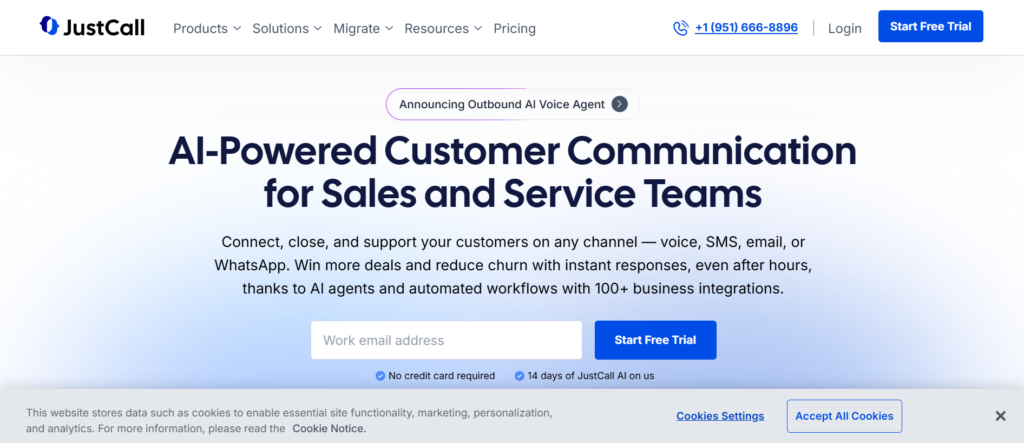
SMS outreach layered directly into calling workflows for B2B sales teams
JustCall is primarily known as a cloud phone system, but its SMS capability is a major reason B2B sales teams adopt it. Rather than treating SMS as a separate channel, JustCall places texting alongside calls, voicemails, and call logs inside one interface.
Sales teams that rely heavily on outbound calling often use JustCall to fill the gaps when calls go unanswered. A missed call is followed by an SMS. A voicemail drop is paired with a short text. This tight connection between voice and SMS creates continuity across outreach attempts.
Key Features
JustCall’s SMS features are designed to support calling-first sales motions while keeping message context intact.
SMS and Calling in a Single Sales Workspace
JustCall allows reps to call and text prospects from the same number and interface. Every SMS conversation sits alongside call history, recordings, and notes.
For B2B sales teams, this means fewer disconnected touchpoints. Reps can see exactly when a prospect was last called, whether a voicemail was left, and which messages were sent after. This context improves follow ups and prevents repetitive outreach.
Automatic SMS After Missed Calls
One of JustCall’s most used features is automated SMS follow ups after unanswered calls. When a call goes unanswered, the system can send a predefined text message immediately or after a delay.
Sales teams use this to acknowledge the call attempt and keep the conversation moving. These messages often receive replies even when calls do not, helping reps secure callbacks or alternative contact times.
Two Way Texting with Conversation History
Prospects can reply directly to SMS messages, and all replies are logged within the conversation thread. Reps can continue the conversation without switching tools or losing context.
This is especially valuable in longer B2B sales cycles where multiple calls and texts occur over time. The full interaction history stays visible in one place.
CRM Integration for Sales Visibility
JustCall integrates with major CRMs, allowing SMS and call activity to appear inside contact and deal records. Sales managers gain visibility into outreach activity without relying on manual updates from reps.
This supports progress reviews, coaching, and accountability across teams.
Local and International Numbers
Sales teams can purchase local or international numbers to match their target markets. Using local numbers improves pickup rates and reply likelihood.
Number assignment also helps reps maintain consistent identity across calls and texts.
Analytics and Rep Activity Reporting
JustCall provides reporting on calls, messages, response times, and rep activity. Sales leaders use these insights to identify outreach patterns and performance gaps.
While reporting focuses on activity rather than deep engagement metrics, it supports practical sales management needs.
Compliance and Opt Out Handling
Opt out requests are handled automatically, and suppressed numbers are blocked from further messaging. This reduces compliance risk as SMS usage scales.
Message logs remain accessible for internal oversight.
Pros and Cons
| Pros | Cons |
| SMS and calling unified | Less SMS-only automation |
| Strong CRM integration | Requires calling focus |
| Auto SMS after calls | Per user pricing |
| Clear conversation context | Not bulk messaging oriented |
Pricing
JustCall pricing starts at:
- 29 per user per month
- SMS usage included within plans
- Additional costs for higher call volumes and numbers
This pricing model works well for sales teams where headcount aligns closely with outreach volume.
Best For Call Centric B2B Sales Teams
JustCall is best suited for:
- Outbound SDR teams making daily call volumes
- Account executives mixing calls and texts
- Sales managers tracking rep activity
- Teams replacing legacy phone systems
Verdict: JustCall is ideal when SMS is meant to support calling rather than replace it. It keeps conversations connected and reduces friction between outreach channels.
How Sales Teams Use JustCall to Increase Reply Rates
Sales teams often send a short SMS immediately after a missed call referencing the attempted contact. Prospects who ignore calls frequently reply to these messages, creating an opening to book follow ups without repeated dial attempts.
Best Alternate Tool
If SMS is the primary outreach channel rather than calling, Salesmsg is a stronger alternative.
19. RingCentral
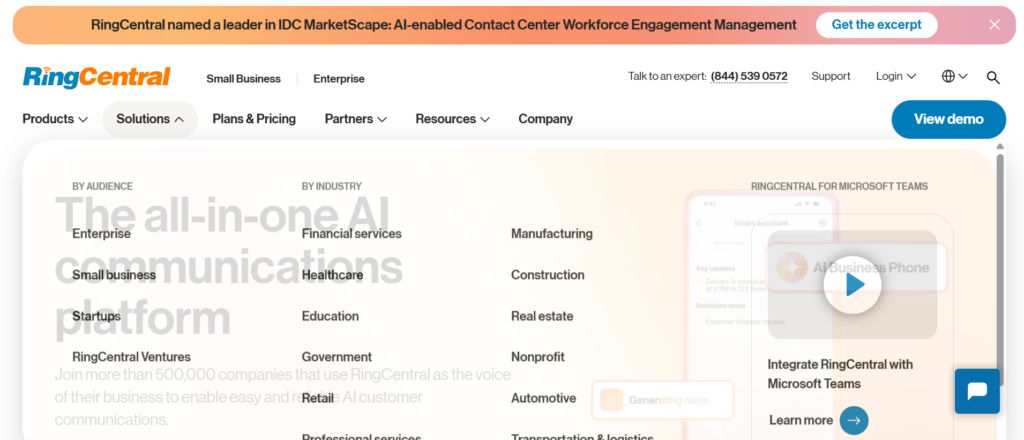
Unified SMS and voice communication for structured B2B sales teams
RingCentral is a full communications platform that combines voice, SMS, and internal messaging into a single system. B2B sales teams adopt RingCentral when they want SMS to sit inside a wider communication framework rather than operate as a standalone outreach tool.
Sales organisations using RingCentral typically prioritise stability, governance, and team wide consistency. It is often rolled out across entire revenue teams, not just sales, which makes it suitable for environments where sales, account management, and support interact with the same prospects.
Key Features
RingCentral’s SMS capabilities are designed to support structured sales communication at scale while maintaining oversight and consistency.
SMS and Voice from a Unified Number
RingCentral allows sales reps to call and text prospects using the same business number. This continuity helps maintain recognition across touchpoints and reduces confusion for prospects.
For B2B sales teams, this creates a single communication identity. Prospects recognise the number whether they receive a call, a text, or a voicemail, which supports trust and response rates over long sales cycles.
Centralised Messaging Across Teams
SMS conversations are accessible within the RingCentral platform, allowing teams to view message history alongside call activity. Managers can monitor communication without interfering in live conversations.
This is particularly useful in regulated or enterprise sales environments where oversight is required. Communication remains transparent and auditable without slowing reps down.
CRM Integration for Sales Activity Tracking
RingCentral integrates with leading CRMs, enabling SMS and call activity to appear inside contact and opportunity records. Sales leaders gain visibility into how communication efforts align with progress movement.
This integration also reduces admin work for reps. Communication logs are captured automatically rather than relying on manual note taking.
Message Routing and Team Assignment
Incoming SMS messages can be routed to specific users or teams based on rules. This supports shared responsibility models where inbound replies need to reach the right person quickly.
Sales teams handling inbound enquiries or account based responses benefit from this structured routing.
Compliance and Message Retention
RingCentral includes compliance controls, message retention policies, and audit trails. This is critical for B2B sales teams operating in industries with strict communication requirements.
Opt out handling and message suppression are managed centrally, reducing individual rep risk.
Analytics and Performance Monitoring
The platform provides reporting on call volumes, message activity, and response timing. While not deeply focused on SMS engagement metrics, it supports operational oversight and performance reviews.
Sales managers use these insights to identify activity gaps and enforce communication standards.
Pros and Cons
| Pros | Cons |
| Unified voice and SMS | Less SMS automation |
| Strong governance controls | Higher cost structure |
| CRM integration | Not bulk SMS focused |
| Enterprise stability | Setup can be complex |
Pricing
RingCentral pricing starts at:
- 20 per user per month
- SMS included within plans
- Additional costs for advanced features and numbers
This pricing suits organisations standardising communications across departments.
Best For Structured and Regulated B2B Sales Teams
RingCentral works best for:
- Enterprise sales organisations
- Sales teams needing governance
- Account management plus sales setups
- Businesses standardising communication tools
Verdict: RingCentral is best suited for B2B sales teams that value consistency, oversight, and unified communication more than specialised SMS outreach features.
How Sales Teams Use RingCentral for Account Management
Sales and account teams often use RingCentral to maintain ongoing contact with active customers. SMS is used for quick check ins and confirmations, while calls handle deeper discussions, all from the same number and platform.
Best Alternate Tool
If SMS is the primary outreach channel rather than part of a unified system, Salesmsg is a stronger alternative.
20. Klaviyo
Lifecycle SMS messaging for B2B sales teams working warm leads and existing demand
Klaviyo is usually associated with lifecycle messaging rather than outbound sales, but many B2B sales teams rely on it to support SMS outreach once prospects have shown intent. It is not designed for cold prospecting. Instead, it is used to manage SMS conversations after leads enter the funnel through sign ups, demos, content downloads, or product usage.
Sales teams adopt Klaviyo when SMS needs to work alongside email and behaviour based triggers. It becomes especially valuable in longer B2B buying cycles where timing, relevance, and message context determine whether conversations continue or fade.
Key Features
Klaviyo’s SMS functionality is deeply tied to contact behaviour, segmentation, and event tracking. Each feature supports sales teams that prioritise relevance over volume.
Behaviour Triggered SMS Messaging
Klaviyo allows SMS messages to be triggered by specific actions such as form submissions, demo bookings, content engagement, or product usage milestones.
For B2B sales teams, this means SMS can be sent at moments when prospects are already paying attention. A message sent immediately after a demo request or pricing page visit often receives a reply because intent is high.
Advanced Segmentation for Sales Outreach
Contacts in Klaviyo can be segmented based on behaviour, attributes, and engagement history. Sales teams use this to separate early stage leads from active opportunities or re engage contacts who have gone quiet.
Segmentation keep that messages remain relevant. Prospects do not receive generic outreach. Instead, messages reflect what they have already seen or done, which supports more natural conversations.
Two Way SMS with Reply Management
Klaviyo supports replies to SMS messages, allowing prospects to respond directly. Replies can be routed to internal inboxes, alerts, or CRM systems depending on setup.
Sales teams often use this to capture buying signals before handing conversations to account executives. Replies indicating interest are escalated, while neutral responses can trigger additional nurturing.
Message Scheduling and Cadence Control
SMS messages can be scheduled based on contact behaviour or time delays. This allows sales teams to control frequency and avoid overwhelming prospects.
Cadence control is particularly important in B2B sales, where excessive messaging damages trust. Klaviyo’s scheduling tools help maintain consistent but measured contact.
Consent and Compliance Management
Klaviyo includes built in consent tracking and opt out handling. Contacts who opt out are suppressed automatically across future messages.
This centralised compliance management allows sales teams to scale SMS usage without managing suppression manually.
Reporting and Engagement Visibility
Klaviyo provides visibility into message sends, replies, and engagement patterns. While reporting is more lifecycle focused than sales activity focused, it helps teams understand how SMS supports lead movement through the funnel.
Sales leaders often review engagement trends to adjust messaging timing and content.
Pros and Cons
| Pros | Cons |
| Strong behavioural targeting | Not cold outreach focused |
| SMS plus email coordination | Requires setup time |
| Advanced segmentation | Less rep inbox control |
| Built in compliance | Pricing tied to contact volume |
Pricing
Klaviyo pricing starts at:
- 20 per month
- SMS usage billed separately
- Pricing increases with contact volume
This model suits teams with defined lead flows and predictable list growth.
Best For B2B Sales Teams Working Warm and Active Leads
Klaviyo works best for:
- B2B SaaS sales teams handling demo driven funnels
- Product led sales motions
- Lifecycle focused sales teams
- Revenue teams aligning sales and marketing messaging
Verdict: Klaviyo is most effective when SMS is used to support ongoing conversations with interested prospects rather than initiate cold outreach. It fits sales teams that rely on timing and relevance to move deals forward.
How Sales Teams Use Klaviyo to Support progress Momentum
Sales teams often use Klaviyo to send short SMS reminders after key engagement moments such as proposal views or trial inactivity. These messages prompt replies without feeling intrusive because they align with recent behaviour.
Best Alternate Tool
If SMS needs to be used for direct rep driven conversations, Salesmsg is a better fit.
How B2B Sales Teams Use SMS Outreach to Close More Deals with Precision
At Pearl Lemon Sales, we work directly with B2B sales teams that want SMS outreach to produce replies, meetings, and revenue rather than noise. Most teams already have the tools. What they lack is structure, message discipline, and a system that aligns SMS with their actual sales process.
Our approach focuses on building SMS outreach that fits how your sales team already works. That means aligning SMS with calling, CRM activity, deal stages, and follow ups instead of running it as a disconnected channel. We help teams decide where SMS belongs in the sales cycle, when it should be used, and how it should sound at each stage.
Sales teams we support typically use SMS to:
- Recover missed calls and unanswered emails
- Re engage stalled opportunities without pressure
- Qualify inbound leads faster
- Support account based sales activity
- Shorten the time between first contact and booked meetings
Rather than relying on volume, we focus on relevance, timing, and consistency. SMS outreach works best when it feels like a natural continuation of a sales conversation, not an interruption. That is where most teams go wrong and where we step in.
If you want SMS outreach that supports your progress instead of distracting your reps, this is where a structured sales led approach makes the difference.
Frequently Asked Questions
1. Is SMS outreach suitable for B2B sales or only consumer sales?
SMS outreach works well in B2B sales when used correctly. It is most effective for follow ups, inbound lead responses, meeting confirmations, and re engaging stalled opportunities. It should support calls and email, not replace them entirely.
2. When should SMS be used in the B2B sales cycle?
SMS performs best after initial awareness. This includes post form fills, missed calls, demo follow ups, proposal nudges, and account based check ins. Cold SMS without context usually underperforms and increases opt outs.
3. How many SMS messages should a sales team send per prospect?
Most B2B sales conversations require fewer than five messages across the entire deal cycle. Over messaging reduces reply quality and damages sender reputation. Timing and relevance matter more than frequency.
4. Do sales teams need prospect consent before sending SMS?
Yes. Consent is critical. This can be explicit, such as a form opt in, or implied through an existing business relationship depending on context. All tools covered include opt out handling to manage this properly.
5. What is the difference between SMS marketing tools and sales SMS tools?
Sales SMS tools focus on two way conversations, CRM visibility, and rep workflows. Marketing tools prioritise bulk sends and campaigns. Using the wrong type usually leads to poor replies or lost context.
6. Should SMS messages come from shared numbers or individual reps?
Individual rep numbers tend to perform better in B2B sales. They create continuity and accountability. Shared numbers work better for inbound teams or centralised qualification.
7. How do SMS tools integrate with CRM systems?
Most sales focused SMS tools sync messages directly into CRM contact and deal records. This keeps SMS activity is visible during progress reviews and forecasting without manual updates.
8. Can SMS outreach be automated without hurting sales quality?
Yes, when automation is event driven. Messages triggered by calls, meetings, or engagement actions usually feel relevant. Blind automation based on time alone often reduces response quality.
9. What metrics should sales teams track for SMS outreach?
Reply rate, response time, opt out rate, and meetings booked are more useful than delivery counts. SMS is a conversation channel, not a broadcast metric.
10. Which type of sales team benefits most from SMS outreach?
Teams with longer sales cycles, multiple follow ups, inbound demand, or account based strategies usually see the strongest results when SMS is used with discipline.
Final Thoughts on Choosing the Right SMS Outreach Tools
SMS outreach has become a practical part of modern B2B sales when it is used with intent and restraint. The tools covered in this guide serve different purposes, from infrastructure platforms that power large scale operations to sales inbox tools designed for daily rep activity.
The right choice depends on how your sales team works, where SMS fits in the sales cycle, and how much control or simplicity you need. Teams that treat SMS as a conversation channel rather than a volume tactic consistently see better replies and stronger progress movement.
At Pearl Lemon Sales, we help B2B teams implement SMS outreach in a way that aligns with their sales process, not against it. When SMS supports timing, context, and accountability, it becomes a reliable part of revenue generation rather than another tool to manage.