
In the ever-evolving world of e-commerce, maintaining strong relationships with customers is key to driving sales and keeping long-term business success. As e-commerce platforms expand, so does the need for effective customer relationship management (CRM) systems. These tools help businesses streamline their processes, automate communication, and manage sales progress, all while providing critical data insights. With the right CRM in place, e-commerce businesses can improve customer engagement, enhance sales performance, and optimise overall growth.
What are the Best CRMs for E-Commerce Sales in 2026?
In 2026, the landscape of CRM tools for e-commerce is more dynamic than ever. Whether you’re just starting out or scaling up your online business, there are a multitude of CRM options available. In this article, we’ll highlight some of the best CRMs for e-commerce sales in 2026 and compare their key features to help you find the best fit for your business needs.
As e-commerce businesses face increasingly complex customer demands and competition, the right CRM system can be the key to maintaining a competitive edge. The best CRMs for e-commerce go beyond basic customer management; they integrate with your sales, marketing, and support systems to provide a unified experience. With the growing emphasis on personalisation, automation, and data-driven decision-making, choosing the right CRM can empower businesses to build stronger relationships with customers, increase retention, and improve overall efficiency.
Whether you’re a small business looking for an affordable yet powerful tool, or an enterprise-level company in need of a sophisticated system to handle large volumes of customer data, there’s a CRM that fits your specific needs. In 2026, CRM solutions are more advanced, offering AI-powered insights, automation, and seamless integrations with e-commerce platforms like Shopify, WooCommerce, and BigCommerce. Additionally, many of these tools feature advanced reporting and analytics, enabling businesses to track customer behaviours, sales trends, and marketing effectiveness.
Selecting the right CRM involves considering factors such as your budget, business size, feature requirements, and scalability. It’s important to choose a solution that aligns with your business goals while offering room for growth. With so many CRM options available, understanding the unique features, pros, and cons of each tool can make all the difference in driving your e-commerce success.
In the next section, we’ll compare 20 of the best CRMs for e-commerce businesses in 2026. Each of these CRMs offers distinct advantages customised to different types of e-commerce needs, helping you to choose the one that fits your business the best.
Comparison of 20 Best CRMs for E-Commerce Sales in 2026
Below is a comparison table highlighting the key features, pricing, and best-use scenarios for the top 20 CRMs for e-commerce businesses in 2026. This table will help you quickly identify the CRM that best aligns with your business needs.
| CRM Tool | Best For | Key Features | Pricing | Free Trial/Plan | Rating |
| HubSpot CRM | Small to medium-sized e-commerce stores | Contact management, email tracking, sales progress automation, marketing automation, free tier | Free, Paid plans from £38/month | Yes, Free Plan | 4.5/5 |
| Salesforce | Large businesses, enterprises | AI-powered analytics, custom dashboards, advanced segmentation, sales forecasting, integrations | From £25/user/month | No | 4.8/5 |
| Zoho CRM | Budget-conscious businesses | Lead management, customisable workflows, multi-channel communication, mobile app | From £12/user/month | Yes, Free Plan | 4.4/5 |
| Klaviyo | E-commerce businesses focused on marketing | Email and SMS marketing automation, segmentation, customer lifecycle tracking, integration with Shopify | From £20/month | Yes, Free Plan | 4.7/5 |
| Freshsales | Small to mid-sized businesses | Lead scoring, sales automation, progres management, custom workflows, integration with Shopify | From £15/user/month | Yes, Free Plan | 4.5/5 |
| Pipedrive | Sales-focused businesses | Sales progress management, lead tracking, sales reporting, email tracking | From £12.50/user/month | Yes, 30-day trial | 4.6/5 |
| BigCommerce CRM | BigCommerce users | Integration with BigCommerce, customer segmentation, marketing automation, lead management | Custom pricing | No | 4.3/5 |
| ActiveCampaign | Marketing-focused e-commerce stores | CRM and sales automation, email segmentation, lead scoring, integrations with e-commerce platforms | From £9/month | Yes, 14-day trial | 4.7/5 |
| SugarCRM | Businesses needing custom solutions | Highly customisable, AI-powered insights, marketing automation, integration with third-party platforms | Custom pricing | Yes, 30-day trial | 4.5/5 |
| Insightly | Businesses with project management needs | Project/task management, sales progress, customisable reporting, lead management | From £12/user/month | Yes, Free Plan | 4.4/5 |
| Nimble | Small businesses and startups | Social media integration, smart contact profiles, lead management, email tracking | From £20/user/month | No | 4.3/5 |
| Keap | Small businesses seeking automation | Lead capture, sales progress , marketing automation, integration with Shopify, custom reports | From £36/user/month | Yes, 14-day trial | 4.4/5 |
| Zendesk Sell | E-commerce businesses focused on customer support | Sales automation, integration with Zendesk support platform, email tracking, custom reports | From £15/user/month | Yes, 14-day trial | 4.6/5 |
| Drift | Businesses focused on conversational marketing | Live chat, chatbot automation, email/SMS follow-ups, lead scoring, integrations with e-commerce platforms | From £40/month | Yes, 14-day trial | 4.4/5 |
| Monday.com CRM | E-commerce teams with project management | Custom workflows, sales progress management, lead tracking, reporting and analytics | From £10/user/month | Yes, Free Plan | 4.5/5 |
| Tidio | E-commerce businesses using live chat | Live chat, chatbot automation, sales progress management, integrations with Shopify, multi-channel communication | From £18/month | Yes, Free Plan | 4.5/5 |
| Copper | Google Workspace users | Seamless integration with Google Workspace, sales progress automation, custom dashboards | From £19/user/month | Yes, 14-day trial | 4.7/5 |
| Agile CRM | Small to medium-sized e-commerce businesses | Contact management, email marketing, lead tracking, custom reports, integrations with e-commerce platforms | From £8.99/user/month | Yes, Free Plan | 4.3/5 |
| Close CRM | Businesses looking for robust sales management | Sales progress management, email/SMS follow-ups, advanced reporting, automation | From £25/user/month | No | 4.6/5 |
| Sellsy | Sales teams looking for integration with invoicing tools | Sales progress, invoicing, quote management, CRM reporting, task management | From £22/user/month | Yes, 14-day trial | 4.3/5 |
| Ontraport | E-commerce businesses looking for marketing automation | Lead tracking, email marketing, sales automation, customer behaviour tracking | From £65/month | Yes, 14-day trial | 4.⅘ |
List of Tools
- HubSpot CRM
- Salesforce
- Zoho CRM
- Klaviyo
- Freshsales
- Pipedrive
- BigCommerce CRM
- ActiveCampaign
- SugarCRM
- Insightly
- Nimble
- Keap
- Zendesk Sell
- Drift
- Monday.com CRM
- Tidio
- Copper
- Agile CRM
- Close CRM
- Sellsy
1. HubSpot CRM
Best For: Small to medium-sized e-commerce stores
Key Features:
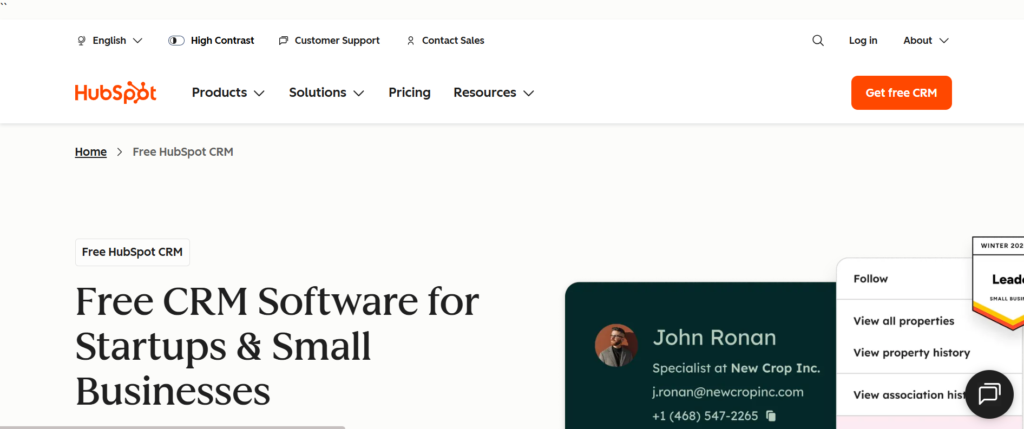
HubSpot CRM is widely known for its ease of use and functionality, making it an excellent choice for small and medium-sized e-commerce stores that want to streamline their customer relationship management processes. The platform offers a comprehensive free tier, making it accessible to businesses just starting their CRM journey. Core features include contact management, progress management, and a robust marketing automation suite that allows businesses to nurture leads and increase conversions. With HubSpot CRM, businesses can also benefit from detailed reporting, email tracking, and customer segmentation features to target customers more effectively.
Additionally, HubSpot CRM is highly integrative with other HubSpot tools, such as HubSpot Marketing Hub and HubSpot Sales Hub, creating a seamless experience for users looking to manage their entire marketing, sales, and customer service processes within one platform. The platform also provides users with a visual interface that helps them manage leads, track interactions, and automate tasks to save time.
Pricing:
HubSpot CRM offers a free plan that includes basic tools, making it suitable for small businesses with straightforward CRM needs. Paid plans start from £38/month and provide additional features, such as custom reporting, increased storage, and expanded marketing automation capabilities.
Pros:
- The free plan offers many essential features
- Easy-to-use interface that doesn’t require a steep learning curve
- Powerful sales and marketing automation tools
- Integration with various third-party apps, including Shopify
- Excellent reporting and analytics tools to track performance
- Support for multiple progress and workflows
Cons:
- Some advanced features, such as custom reporting and automation workflows, are limited to higher-tier plans
- It can get expensive as you scale and require more advanced features
- Limited customisation options in the free version
Best For:
Small to medium-sized e-commerce businesses looking for an accessible, user-friendly CRM with strong automation capabilities, especially those that are starting their CRM journey and are seeking a free option to begin with.
2. Salesforce
Best For: Large businesses, enterprises, or growing e-commerce businesses
Key Features:
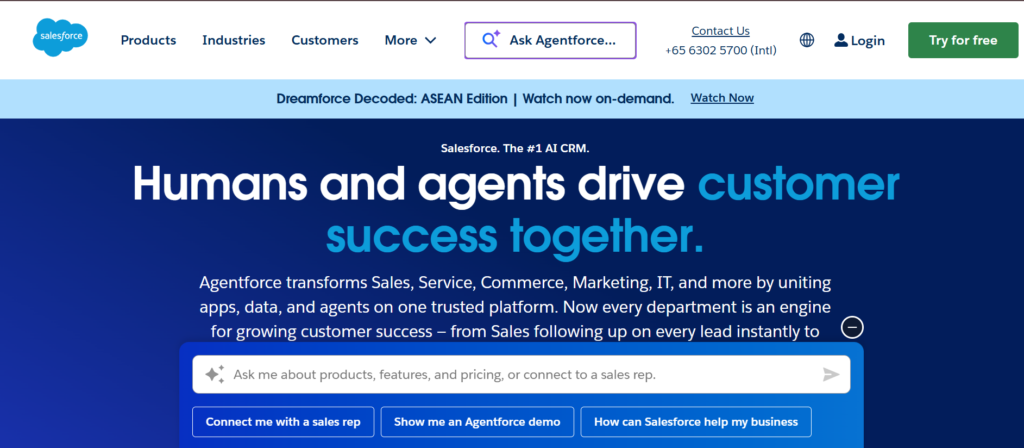
Salesforce is often considered the gold standard in the CRM space, offering a robust, feature-rich platform suitable for larger e-commerce businesses or those with complex needs. Salesforce stands out for its customisation options, allowing businesses to tailor the CRM to their specific processes, whether it’s sales, marketing, or customer service. The platform is powered by AI-driven insights, providing actionable data to improve sales forecasting, customer segmentation, and personalised marketing.
Salesforce’s extensive suite of tools includes sales progress management, detailed customer reports, automated workflows, and a complete customer service module that helps businesses manage support tickets and service requests. It also integrates with a variety of third-party apps, making it highly adaptable to various e-commerce platforms, such as Shopify, WooCommerce, and BigCommerce.
Salesforce offers Salesforce Commerce Cloud, which is specifically built for e-commerce businesses to manage customer interactions, product recommendations, and sales campaigns. The system provides a comprehensive view of customer data, helping businesses build more personalised shopping experiences for their customers.
Pricing:
Salesforce’s pricing structure is tiered based on the size and needs of your business. The most basic plans start at £25/user/month, but more advanced plans with added features like automation, analytics, and AI-powered insights can go well beyond this.
Pros:
- Highly customisable to meet specific business needs
- AI-driven insights for better decision-making
- Advanced reporting and sales forecasting features
- Excellent scalability to grow with your business
- Integration with a wide range of third-party e-commerce tools
- Full suite for customer service, marketing, and sales
Cons:
- Can be expensive, particularly for small businesses
- Steep learning curve for new users due to its complexity
- Higher-tier plans may come with hidden costs for advanced features
Best For:
Large e-commerce businesses or enterprises that need a CRM capable of handling complex workflows, extensive integrations, and providing deep data insights for personalised customer experiences and scalable growth.
3. Zoho CRM
Best For: Budget-conscious businesses and small to medium-sized enterprises
Key Features:
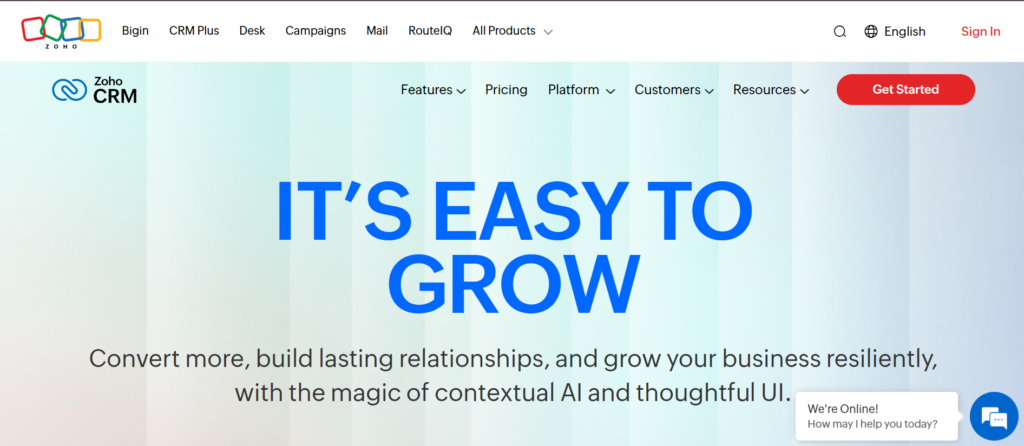
Zoho CRM is an affordable yet powerful solution that is particularly appealing to small and medium-sized e-commerce businesses looking for a feature-rich platform without the high price tag. Zoho’s key features include lead management, sales forecasting, reporting tools, and multi-channel communication, which integrates email, social media, and live chat.
The platform’s workflow automation tools allow businesses to automate repetitive tasks such as lead nurturing, follow-ups, and task assignment, saving valuable time for sales and marketing teams. Zoho CRM also includes a mobile app, making it easy for businesses to manage customer interactions and track sales activities on the go. The platform’s email marketing features allow businesses to create and send targeted email campaigns based on customer behaviour and interests.
With the ability to integrate with other popular e-commerce platforms like Shopify and WooCommerce, Zoho CRM keeps that businesses can efficiently manage their customer relationships and sales progress from a single platform. The system also includes advanced reporting and analytics tools to help businesses optimise their sales process.
Pricing:
Zoho CRM offers a free plan for up to three users. Paid plans start at £12/user/month, offering additional features like workflow automation, custom dashboards, and more robust reporting tools.
Pros:
- Affordable pricing, especially for small businesses
- Easy integration with popular e-commerce platforms like Shopify and WooCommerce
- Customisable workflows and automation tools
- Strong lead and sales progress management
- Good reporting and analytics tools
- Multi-channel communication and mobile access
Cons:
- The user interface can be overwhelming for beginners
- Some advanced features require higher-tier plans
- Limited integration with third-party apps outside the e-commerce space
Best For:
Small to medium-sized e-commerce businesses looking for an affordable yet comprehensive CRM that offers robust features and integrations, particularly those with limited budgets.
4. Klaviyo
Best For: E-commerce businesses focused on marketing automation
Key Features:
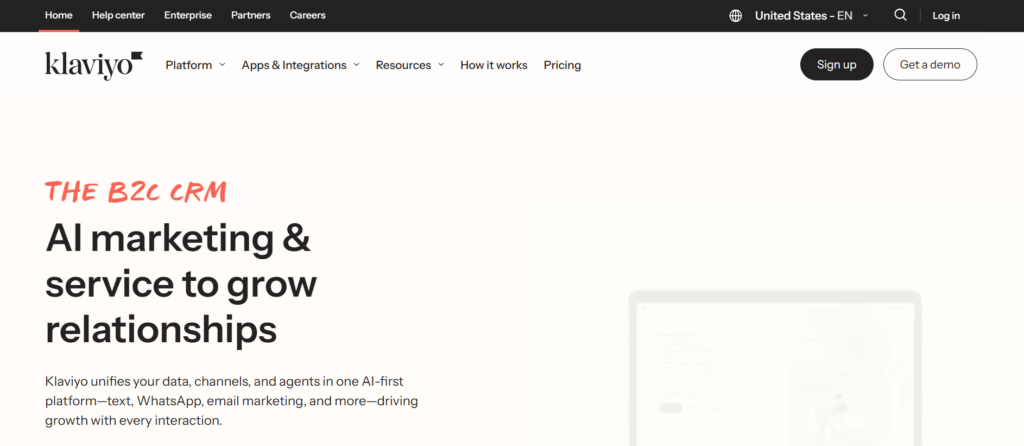
Klaviyo is an e-commerce-focused CRM that excels in marketing automation, making it the go-to choice for businesses looking to enhance their email and SMS marketing strategies. Klaviyo integrates seamlessly with e-commerce platforms like Shopify, BigCommerce, and WooCommerce, allowing businesses to target customers with personalised and automated campaigns based on their behaviours and purchase history.
The platform offers advanced segmentation capabilities, enabling businesses to create highly targeted lists based on customer data, such as browsing history, purchase patterns, and demographics. Klaviyo’s flow builder allows businesses to set up automated email sequences for different stages of the customer journey, from welcome emails to post-purchase follow-ups.
Klaviyo also provides detailed reporting and analytics to track the effectiveness of your campaigns, with real-time data on open rates, click-through rates, and sales conversions. Its powerful A/B testing features help optimise email campaigns to achieve better results.
Pricing:
Klaviyo offers a free plan for up to 250 subscribers and 500 email sends. Paid plans start at £20/month, with pricing based on the number of contacts and email sends.
Pros:
- Excellent for e-commerce businesses focused on email and SMS marketing
- Advanced segmentation and customer targeting features
- Integrates easily with popular e-commerce platforms like Shopify and BigCommerce
- Automated workflows for customer engagement
- In-depth reporting and A/B testing capabilities
Cons:
- Can become expensive as your subscriber list grows
- Limited features outside of marketing automation
- Some users may find it more complex than other CRM tools
Best For:
E-commerce businesses looking for an email and SMS marketing-focused CRM that can help automate customer communication and create highly targeted marketing campaigns based on customer data.
5. Freshsales
Best For: Small to mid-sized businesses seeking an all-in-one CRM solution
Key Features:
Freshsales is an intuitive, all-in-one CRM that combines sales automation, lead management, and customer relationship tools in one easy-to-use platform. It is designed for businesses looking for a simple yet effective solution to manage their sales progress, nurture leads, and optimise customer communication.
Freshsales offers AI-powered lead scoring, which helps sales teams prioritise leads based on their likelihood to convert. The CRM also includes email tracking, task automation, and customisable workflows to automate everyday tasks like follow-ups and reminders. With the mobile app, sales teams can manage customer interactions while on the go.
The platform integrates seamlessly with e-commerce platforms such as Shopify, WooCommerce, and BigCommerce, enabling businesses to manage their customer relationships and sales data from a single interface. Freshsales also offers advanced reporting features to track sales performance, lead conversion rates, and other key metrics.
Pricing:
Freshsales offers a free plan with basic CRM features. Paid plans start at £15/user/month, providing access to more advanced features like workflow automation, advanced reporting, and customisable fields.
Pros:
- User-friendly interface that’s easy to set up and use
- AI-powered lead scoring to prioritise high-value leads
- Email tracking and task automation to streamline workflows
- Integrates with popular e-commerce platforms
- Mobile app for on-the-go CRM management
Cons:
- Some users may find the reporting features limited in the free version
- Advanced features like custom reporting and automation require higher-tier plans
- Limited integrations with third-party apps outside of e-commerce
Best For:
Small to mid-sized e-commerce businesses looking for an easy-to-use CRM with strong sales automation and reporting capabilities that integrates well with popular e-commerce platforms.
6. Pipedrive
Best For: Sales-focused e-commerce businesses
Key Features:
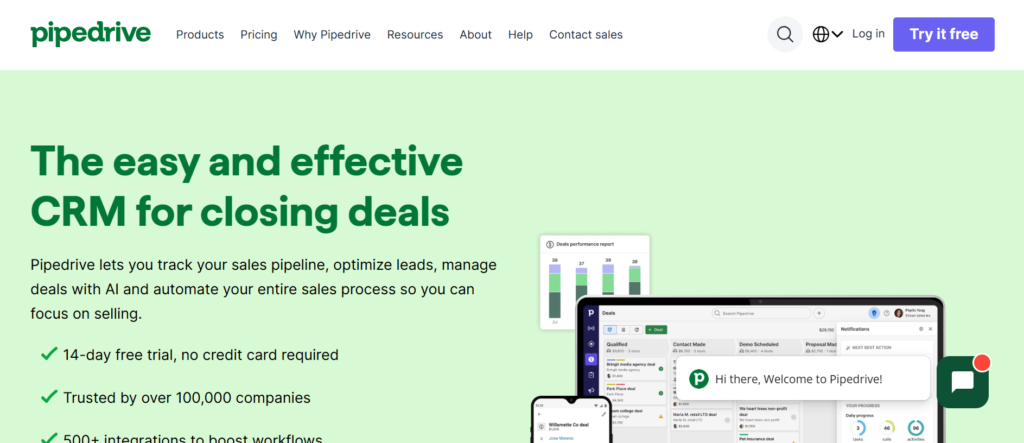
Pipedrive is a CRM platform designed with sales teams in mind. It’s built to help e-commerce businesses track and manage their sales progress, streamline lead tracking, and keep no opportunities slip through the cracks. One of the standout features of Pipedrive is its simple, visual progress management interface, which allows businesses to see the entire sales process in one view. The tool enables users to track deals, set reminders for follow-ups, and automate repetitive sales tasks, helping teams focus on closing deals.
Pipedrive’s strong lead management features allow businesses to capture and qualify leads, segment them based on criteria like purchase intent or location, and track the progress of each opportunity. The platform offers detailed reporting and sales forecasting features, allowing e-commerce businesses to gain insights into sales trends and predict future performance. The integration with email, calendar, and other communication tools helps businesses keep everything in one place, improving efficiency.
Additionally, Pipedrive integrates with popular e-commerce platforms like Shopify and WooCommerce, making it easier to manage customer relationships and track sales activities directly from your online store.
Pricing:
Pipedrive offers various pricing tiers, with the most affordable starting at £12.50/user/month. The higher-tier plans include additional features like workflow automation, advanced reporting, and integrations with more third-party tools.
Pros:
- Visual sales progress management with easy-to-understand interface
- Simple to set up and use, with minimal training required
- Strong sales reporting and forecasting capabilities
- Workflow automation to reduce manual tasks
- Easy integration with Shopify, WooCommerce, and other e-commerce platforms
Cons:
- Limited marketing automation features, as the focus is more on sales
- The number of integrations is more limited compared to other CRMs
- Some advanced features are only available in higher-tier plans
Best For:
E-commerce businesses that need a simple yet powerful CRM to manage and optimise their sales progress , track leads, and increase conversion rates.
7. BigCommerce CRM
Best For: BigCommerce users
Key Features:
BigCommerce CRM is designed specifically for businesses using the BigCommerce platform, making it an excellent choice for e-commerce businesses already integrated into the BigCommerce ecosystem. This CRM provides a range of features that streamline the management of customer relationships, sales, and marketing efforts. BigCommerce CRM offers advanced customer segmentation tools, allowing businesses to categorise customers based on their purchasing behaviour, location, and other criteria.
The platform also offers email marketing automation and personalised communication, helping businesses send targeted emails to customers based on their interactions with the online store. Additionally, BigCommerce CRM integrates seamlessly with third-party applications and tools, keeping that all customer and sales data is easily accessible across various systems.
BigCommerce’s reporting capabilities allow businesses to track key metrics, including sales performance, customer lifetime value, and order history, giving them a complete view of their e-commerce operations. This comprehensive data helps businesses tailor their strategies and improve customer retention rates.
Pricing:
BigCommerce CRM is included as part of BigCommerce’s subscription, with pricing based on the chosen plan. Pricing starts at £25/month for the standard plan.
Pros:
- Designed specifically for BigCommerce users
- Advanced customer segmentation and targeted marketing automation
- Easy integration with third-party apps and tools
- Comprehensive sales and customer reporting capabilities
- Scalable as your business grows
Cons:
- Limited to users of BigCommerce, making it unsuitable for those using other e-commerce platforms
- The platform may feel restrictive for users who need greater customisation
- Pricing can be on the higher side for small businesses
Best For:
E-commerce businesses using BigCommerce as their platform, looking for a CRM that integrates seamlessly with their existing systems and provides powerful customer segmentation and marketing automation tools.
8. ActiveCampaign
Best For: Marketing-focused e-commerce businesses
Key Features:
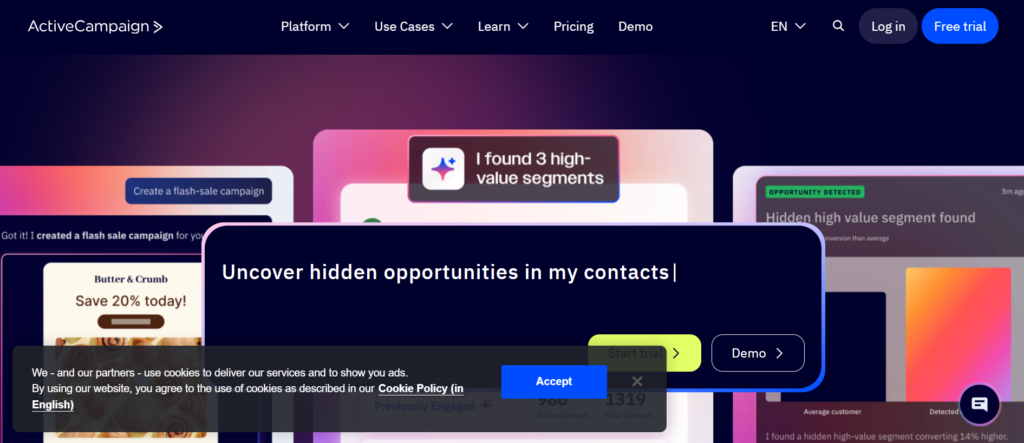
ActiveCampaign is an excellent CRM for e-commerce businesses that are heavily focused on email marketing and marketing automation. It combines CRM functionality with advanced email marketing and customer relationship tools, allowing businesses to build detailed customer profiles and create highly personalised marketing campaigns. With ActiveCampaign, businesses can automate tasks such as email follow-ups, lead nurturing, and post-purchase engagement, helping to maximise customer retention and sales.
The CRM offers robust segmentation and targeting features, enabling businesses to send the right messages to the right customers based on their preferences, behaviour, and purchase history. ActiveCampaign also provides a powerful email builder, A/B testing capabilities, and detailed analytics to track the effectiveness of your campaigns.
In addition to email, ActiveCampaign supports SMS marketing and integrates with a range of e-commerce platforms, such as Shopify and WooCommerce, making it easier to manage your campaigns directly from your online store.
Pricing:
ActiveCampaign offers pricing plans starting at £9/month for basic features. The platform’s pricing scales up based on the number of subscribers and additional features such as automation, advanced reporting, and custom branding.
Pros:
- Excellent for email and SMS marketing automation
- Powerful customer segmentation and targeting features
- A/B testing to optimise campaigns
- Integrates with e-commerce platforms like Shopify and WooCommerce
- Detailed analytics and reporting tools
Cons:
- Can become expensive as your subscriber list grows
- May not be suitable for businesses looking for a CRM with broader features beyond marketing
- Some users may find the interface overwhelming at first
Best For:
E-commerce businesses focused on automating email and SMS marketing campaigns, using customer data for targeted marketing, and optimising sales through advanced customer segmentation.
9. SugarCRM
Best For: Businesses needing highly customisable CRM solutions
Key Features:
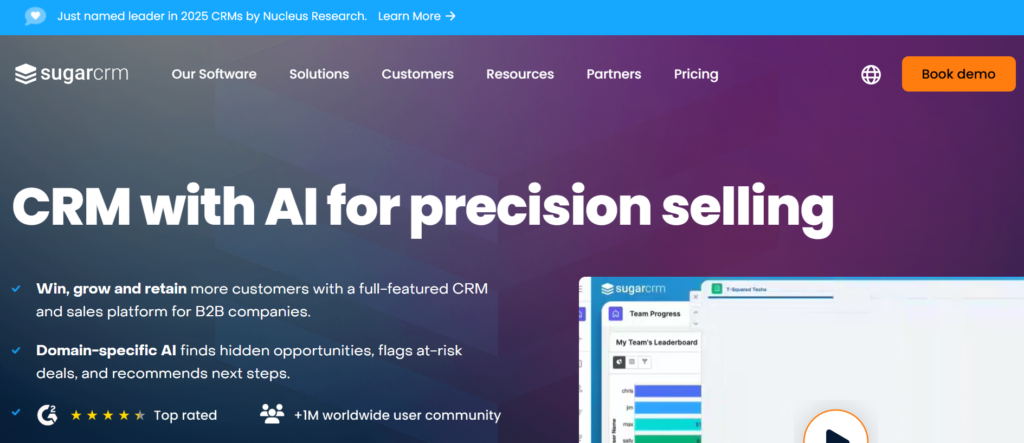
SugarCRM is a powerful CRM platform known for its high degree of customisation, making it ideal for e-commerce businesses with unique requirements. Whether you need to create custom workflows, tailor reports, or integrate with third-party apps, SugarCRM allows businesses to fully customise the platform to meet their specific needs. SugarCRM offers a comprehensive suite of features, including sales automation, lead management, customer support, and marketing automation tools.
One of the key strengths of SugarCRM is its AI-powered analytics, which provide businesses with actionable insights to improve sales processes and enhance customer experiences. The platform’s flexible architecture keeps that businesses can scale their CRM as they grow, adding new features and integrations as required.
SugarCRM also offers strong integrations with popular e-commerce platforms like Shopify and WooCommerce, as well as tools for managing customer service, making it a great option for businesses that need both CRM and customer support tools in one platform.
Pricing:
Pricing is custom based on the specific needs and size of your business, with plans customised to your requirements.
Pros:
- Highly customisable to meet specific business needs
- AI-powered insights and sales automation
- Advanced reporting and analytics capabilities
- Scalable for businesses of all sizes
- Integrates with a wide range of third-party apps
Cons:
- The customisation options can require a learning curve
- Can be expensive for smaller businesses
- Limited support for some e-commerce platforms compared to other CRMs
Best For:
E-commerce businesses with complex needs that require a highly customisable CRM with advanced reporting, automation, and integration capabilities.
10. Insightly
Best For: E-commerce businesses with project management needs
Key Features:
Insightly is a CRM that combines traditional customer relationship management with project and task management capabilities. This makes it an excellent option for e-commerce businesses that need to manage both sales progress and project workflows within the same platform. With Insightly, businesses can track leads, manage customer interactions, and oversee project timelines and tasks all in one place.
The platform offers a variety of features such as lead and contact management, email marketing, and workflow automation. Insightly also provides robust reporting and analytics tools to help businesses track sales performance and customer engagement. Additionally, it integrates with e-commerce platforms like Shopify and WooCommerce, enabling businesses to keep their sales and customer data connected.
Insightly’s project management features allow businesses to collaborate with teams, assign tasks, and set deadlines, making it easier to manage projects associated with customer orders or marketing campaigns.
Pricing:
Insightly offers plans starting at £12/user/month, with additional features such as project management, customisable reporting, and team collaboration available in higher-tier plans.
Pros:
- Combines CRM and project management features
- Easy to use and intuitive interface
- Sales progress management, email marketing, and automation
- Integrates with popular e-commerce platforms
- Strong reporting and analytics capabilities
Cons:
- Limited project management features compared to dedicated project management tools
- Advanced features require higher-tier plans
- May not be as powerful for larger businesses with complex needs
Best For:
E-commerce businesses that need a CRM with strong project management features to handle both sales processes and internal team collaboration on customer-related projects
11. Nimble
Best For: Small businesses and startups
Key Features:
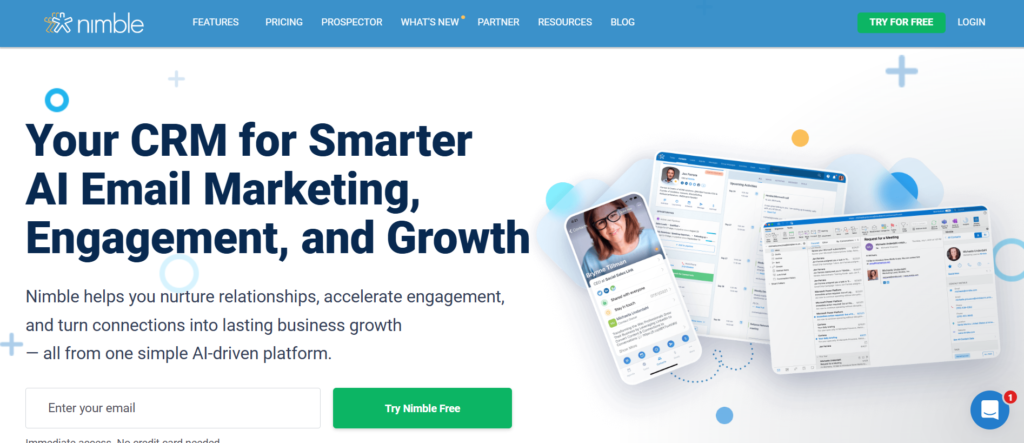
Nimble is a CRM designed with small businesses and startups in mind, offering an easy-to-use and affordable solution for managing customer relationships. One of the standout features of Nimble is its social media integration. It allows businesses to automatically capture customer and lead information from social media platforms such as LinkedIn, Twitter, and Facebook, making it easy to track and engage with customers directly from the CRM. This is particularly beneficial for e-commerce businesses that rely heavily on social media interactions.
Nimble also provides tools for contact management, lead tracking, and sales progress management. It allows businesses to segment leads and customers, track communication history, and automate follow-up tasks. The CRM includes task management features, allowing users to set reminders and schedule activities to keep timely follow-ups. Additionally, Nimble offers easy integration with other tools, such as Google Workspace, Microsoft 365, and e-commerce platforms like Shopify.
Another useful feature of Nimble is its Smart Contact Profiles, which aggregate customer data from social media and other platforms, allowing businesses to have a comprehensive view of their customers in one place. This makes it easier to build personalised and meaningful relationships with customers.
Pricing:
Nimble offers a 14-day free trial, with paid plans starting at £20/user/month.
Pros:
- Strong social media integration for capturing customer data
- Easy-to-use interface that is ideal for small businesses and startups
- Affordable pricing, making it accessible for businesses with limited budgets
- Contact management and lead tracking tools
- Smart Contact Profiles that aggregate customer data from multiple sources
Cons:
- Limited features compared to more comprehensive CRM platforms
- Some users may find the interface a little basic for larger businesses
- Limited integrations outside of Google Workspace and Microsoft 365
Best For:
Small e-commerce businesses and startups that rely heavily on social media for lead generation and customer engagement, and need an affordable CRM that integrates well with social media platforms and basic sales processes.
Best For: Small businesses seeking automation and CRM in one
Key Features:
Keap (formerly Infusionsoft) is a CRM that combines customer relationship management with powerful automation tools, making it ideal for small businesses looking to optimise their sales and marketing processes. Keap’s standout feature is its lead capture and follow-up automation. The CRM allows businesses to capture leads through forms and landing pages, then automatically nurture them using a series of pre-configured email and SMS follow-ups.
One of the key features that set Keap apart is its visual sales progress, which allows businesses to track and manage deals at each stage of the sales process. With built-in automation tools, businesses can automatically assign tasks, send follow-up emails, and move leads through the progress based on specific criteria. Keap also includes tools for invoicing, quote creation, and payment collection, making it an excellent choice for e-commerce businesses that need to streamline the entire customer journey from lead capture to payment.
Keap integrates well with a variety of e-commerce platforms, including Shopify and WooCommerce, and provides customisable reporting to help businesses track performance and sales results.
Pricing:
Keap offers a 14-day free trial, with pricing plans starting at £36/user/month for basic CRM features. More advanced features like automation and custom reports are available in higher-tier plans.
Pros:
- Powerful automation features for lead nurturing and sales follow-ups
- Visual sales progress for tracking deals and managing leads
- Integration with e-commerce platforms like Shopify and WooCommerce
- Invoicing and payment collection features for streamlining transactions
- Excellent for small businesses that need both CRM and marketing automation tools
Cons:
- Can be expensive for small businesses as you scale
- The platform may feel overwhelming for businesses that only need basic CRM functions
- Limited third-party integrations outside of e-commerce platforms
Best For:
Small e-commerce businesses looking for an all-in-one CRM with strong automation capabilities that manage everything from lead capture to payment processing.
13. Zendesk Sell
Best For: E-commerce businesses focused on customer service and support
Key Features:
Zendesk Sell, a part of the Zendesk suite, is a CRM customised for businesses that prioritise customer service alongside sales processes. The platform integrates seamlessly with Zendesk’s customer support platform, enabling businesses to provide a unified experience for both sales and support teams. Zendesk Sell offers robust sales progress management features, including lead tracking, deal progression, and task automation.
What makes Zendesk Sell stand out is its deep integration with Zendesk Support, allowing businesses to provide superior customer service. Sales teams can quickly access customer support tickets, view customer interactions, and get detailed context about any customer issue directly from within the CRM. This integration helps businesses provide a more personalised experience and keeps that customer service and sales teams are on the same page.
Zendesk Sell includes advanced reporting and analytics tools, providing businesses with insights into sales performance, customer interactions, and team productivity. The platform also integrates with popular e-commerce platforms like Shopify, enabling businesses to manage sales and customer service processes from one interface.
Pricing:
Zendesk Sell offers a 14-day free trial, with paid plans starting at £15/user/month for basic CRM features. Higher-tier plans include advanced features like automation, reporting, and integrations.
Pros:
- Deep integration with Zendesk Support for seamless customer service and sales coordination
- Sales progress management and task automation features
- Reporting and analytics to track sales performance and team productivity
- Integration with e-commerce platforms like Shopify
- Excellent for businesses that require both CRM and customer support functionality
Cons:
- Can be more expensive compared to other CRMs with basic features
- Limited features for businesses that need complex customisation
- May not be as intuitive for businesses not already using Zendesk Support
Best For:
E-commerce businesses that want to integrate sales and customer service processes into a unified platform, keeping seamless communication and customer support alongside sales management.
14. Drift
Best For: E-commerce businesses focused on conversational marketing
Key Features:
Drift is a CRM that centres around conversational marketing, providing businesses with tools to engage customers through chat, live messaging, and automated chatbots. This CRM is ideal for e-commerce businesses looking to connect with customers in real-time, answer queries, and drive conversions during the customer journey. Drift’s chatbots allow businesses to automate lead qualification, keeping that sales teams only spend time engaging with qualified prospects.
In addition to its chatbot functionality, Drift includes live chat features for real-time customer support and sales assistance. Drift’s integration with e-commerce platforms like Shopify allows businesses to track customer interactions, segment leads, and target customers with personalised messages based on their browsing and purchase history. The platform also includes powerful reporting features to track customer engagement, conversion rates, and sales performance.
Pros:
- Focuses on conversational marketing with live chat and chatbots
- Automates lead qualification and engagement
- Integrates with Shopify and other e-commerce platforms
- Powerful segmentation and customer targeting capabilities
- Real-time customer support and sales assistance
Cons:
- Can be expensive, especially for small businesses or those with fewer resources
- Limited features beyond chatbots and live chat functionality
- May not be suitable for businesses needing more traditional CRM features
Best For:
E-commerce businesses seeking to engage customers in real time via live chat and chatbots, helping them convert leads into customers and improve overall engagement.
15. Monday.com CRM
Best For: E-commerce teams with project management needs
Key Features:
Monday.com CRM is known for its ability to combine project management features with customer relationship management tools. For e-commerce businesses that need to manage both sales and customer service workflows, Monday.com provides an excellent solution. The CRM offers customisable workflows that can be customised to a business’s specific needs, including sales progress management, lead tracking, and task automation.
What sets Monday.com apart is its flexibility. It allows users to create workflows that integrate with various project management and team collaboration tools, keeping that all team members can work together seamlessly. Monday.com includes features like task assignment, progress tracking, and due date management, which helps teams stay organised and on track.
The CRM also offers a visual interface, where teams can view project timelines, customer interactions, and sales progress in an intuitive, easy-to-understand format. Monday.com integrates well with e-commerce platforms like Shopify and WooCommerce, allowing businesses to manage customer relationships alongside project workflows.
Pricing:
Monday.com offers pricing plans starting at £10/user/month. Higher-tier plans provide more customisation options, integrations, and additional features for advanced users.
Pros:
- Combines CRM functionality with project management features
- Customisable workflows that can adapt to any business process
- Visual interface for tracking sales progress and team collaboration
- Integration with popular e-commerce platforms like Shopify and WooCommerce
- Excellent for businesses that need both sales and project management tools in one
Cons:
- Can be overwhelming for businesses that need only basic CRM features
- Limited CRM-specific functionality compared to dedicated CRM tools
- Higher-tier plans can be expensive
Best For:
E-commerce businesses that require both customer relationship management and project management features in one platform, particularly useful for teams working collaboratively on customer-related projects.
16. Tidio
Best For: E-commerce businesses using live chat and automation
Key Features:
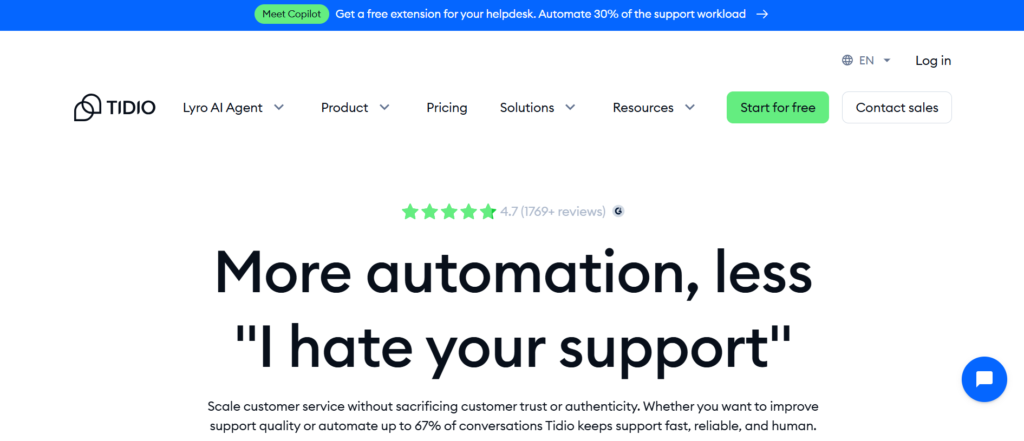
Tidio is a versatile CRM that focuses on customer communication, specifically through live chat and automated chatbots. It provides e-commerce businesses with an easy way to connect with customers in real-time, answer questions, and resolve issues as they arise. Tidio’s chatbots are designed to automate lead qualification, capture customer details, and answer frequently asked questions, reducing the workload for customer support teams.
The live chat feature allows businesses to engage with website visitors instantly, guiding them through the buying process, and increasing conversion rates. Additionally, Tidio integrates with Shopify, WooCommerce, and other e-commerce platforms, allowing businesses to track customer interactions, provide timely support, and deliver a personalised experience.
Tidio also offers email marketing automation, where businesses can send automated follow-up emails, newsletters, or promotions, and segment their customers based on behaviour and interactions.
Pricing:
Tidio offers a free plan with basic features for up to 3 users. Paid plans start at £18/month, with more advanced features such as chatbot automation and reporting available at higher tiers.
Pros:
- Live chat and chatbot features to engage customers in real-time
- Easy integration with Shopify, WooCommerce, and other e-commerce platforms
- Email marketing automation and segmentation tools
- Affordable pricing for small businesses
- Customisable chatbots and automated workflows
Cons:
- The free plan is limited in terms of features and users
- Can become costly as your business grows and requires more advanced automation
- Some advanced features only available in higher-tier plans
Best For:
E-commerce businesses looking for a cost-effective CRM that enhances customer communication through live chat and chatbots while offering email marketing automation.
17. Copper
Best For: E-commerce businesses using Google Workspace (formerly G Suite)
Key Features:
Copper CRM is designed for businesses that rely heavily on Google Workspace, offering deep integration with Google tools such as Gmail, Google Calendar, Google Docs, and more. This integration makes Copper a great choice for e-commerce businesses already using Google’s suite of tools for their daily operations. Copper automates a range of tasks, from email follow-ups to customer segmentation, allowing businesses to track customer interactions seamlessly within the Google ecosystem.
Copper also offers advanced sales progress management, lead tracking, and reporting capabilities. It provides detailed analytics that allow e-commerce businesses to track sales performance and customer engagement across multiple channels. With customisable workflows, businesses can automate tasks, set reminders, and manage their customer data effectively. The platform also offers a visual dashboard, making it easy to track sales progress and team productivity in real-time.
Pricing:
Copper’s pricing starts at £19/user/month. The platform is more expensive than some competitors, but it provides in-depth Google Workspace integration, which can be a significant advantage for businesses that rely on Google tools.
Pros:
- Deep integration with Google Workspace tools
- Advanced sales progress and lead management features
- Customisable workflows for automating tasks
- Real-time reporting and analytics tools
- Visual dashboards for tracking sales and customer interactions
Cons:
- Expensive compared to other CRMs without Google Workspace integration
- More suitable for businesses already using Google Workspace
- Limited third-party integrations outside of Google tools
Best For:
E-commerce businesses that are heavily embedded in the Google ecosystem and need a CRM that integrates seamlessly with Google Workspace tools to track sales, manage leads, and automate tasks.
18. Agile CRM
Best For: Small to medium-sized e-commerce businesses looking for a simple, budget-friendly CRM
Key Features:
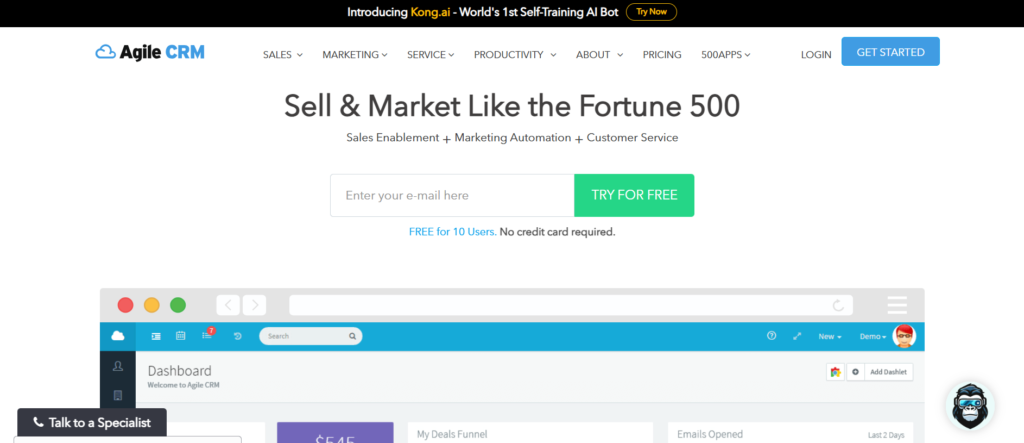
Agile CRM is an affordable and user-friendly CRM designed for small to medium-sized businesses. It provides the essential CRM tools needed to manage customer relationships, including contact management, email marketing, and sales progress tracking. Agile CRM also includes features like lead scoring, customisable reports, and task management.
A standout feature of Agile CRM is its marketing automation tools, which allow businesses to create email campaigns, track interactions, and follow up with leads automatically. The platform supports social media integrations, so businesses can engage with customers across multiple channels. It also integrates with popular e-commerce platforms like Shopify and WooCommerce, providing a seamless experience for managing sales and customer data.
Pricing:
Agile CRM offers a free plan with basic features for up to 10 users. Paid plans start at £8.99/user/month, which includes advanced marketing automation, reporting, and customer segmentation.
Pros:
- Affordable pricing, especially for small businesses
- User-friendly interface that requires minimal training
- Marketing automation tools for email campaigns and lead follow-ups
- Integrates with popular e-commerce platforms
- Contact management, lead scoring, and customisable reporting
Cons:
- Limited functionality compared to more robust CRM platforms
- Lacks advanced reporting features in the lower-tier plans
- Some users may find the automation tools to be basic
Best For:
Small to medium-sized e-commerce businesses looking for an affordable and simple CRM that offers essential features like email marketing, lead tracking, and sales progress management.
19. Close CRM
Best For: E-commerce businesses with a focus on sales and lead conversion
Key Features:
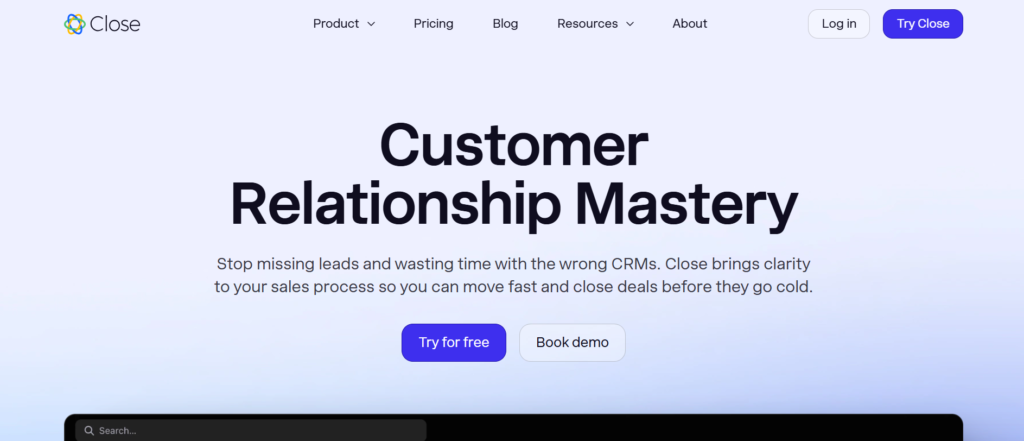
Close CRM is a sales-centric platform that focuses on helping businesses convert leads into customers efficiently. It’s designed to streamline the sales process by automating repetitive tasks, managing leads, and offering sales progress management tools. Close CRM’s standout feature is its communication-focused capabilities. It supports calling, texting, and email communication directly from the platform, which helps sales teams stay engaged with customers without needing to switch between tools.
The CRM also includes lead management features, such as lead scoring and prioritisation, which allows sales teams to focus on high-value leads. Close CRM integrates with Shopify, WooCommerce, and other e-commerce platforms, making it easy for businesses to track customer interactions and sales opportunities.
In addition to sales management, Close CRM offers detailed analytics and reporting tools, helping businesses optimise their sales processes and track performance metrics like call activity, email responses, and conversion rates.
Pricing:
Close CRM offers a 14-day free trial. Paid plans start at £25/user/month, with more advanced plans offering features like automation, reporting, and integrations.
Pros:
- Focus on sales with communication tools like email, text, and calling
- Lead management and progress automation features
- Integration with e-commerce platforms like Shopify and WooCommerce
- Detailed analytics and reporting tools
- Easy-to-use interface that prioritises sales team productivity
Cons:
- Lacks some features for customer support and marketing automation
- Can be expensive for small businesses, particularly as you scale
- Limited customisation options in lower-tier plans
Best For:
E-commerce businesses that need a CRM with a strong focus on sales management, lead conversion, and communication tools, ideal for businesses with dedicated sales teams.
20. Sellsy
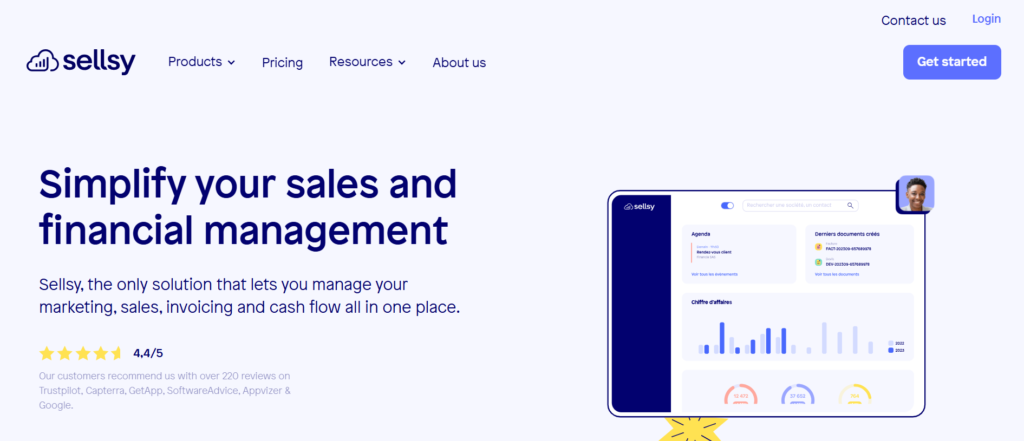
Best For: E-commerce businesses needing an all-in-one solution for sales, invoicing, and customer management
Key Features:
Sellsy is an all-in-one CRM that combines sales management, invoicing, and customer relationship tools into one platform. It is designed to help e-commerce businesses streamline their sales processes, from initial contact with leads to post-purchase customer follow-up. Sellsy includes features like contact management, email marketing, and lead tracking, along with tools for creating quotes, invoices, and managing payments.
The platform offers a user-friendly interface with easy-to-use tools for automating tasks, managing tasks and workflows, and tracking performance. Sellsy also provides advanced reporting tools, enabling businesses to track sales performance, customer behaviour, and invoicing trends. Integrations with popular e-commerce platforms like Shopify, WooCommerce, and others make it easy to track customer data and sales in real-time.
Pricing:
Sellsy offers a free 14-day trial, with paid plans starting at £22/user/month. Higher-tier plans offer more advanced features, such as custom workflows and integrations.
Pros:
- Combines sales management, invoicing, and CRM in one platform
- User-friendly interface with intuitive tools
- Integration with Shopify, WooCommerce, and other platforms
- Automated task management and email marketing tools
- Advanced reporting features for sales performance and invoicing
Cons:
- Limited third-party integrations compared to larger CRM platforms
- The invoicing feature may not be as advanced as dedicated invoicing tools
- Higher-tier plans can be costly for small businesses
Best For:
E-commerce businesses seeking an all-in-one solution for managing sales, invoicing, and customer relationships, ideal for businesses that need to combine CRM with financial management tools.
Why Choosing the Right CRM is Crucial for Your E-Commerce Success
Choosing the right CRM for your e-commerce business is essential for managing customer relationships, increasing sales, and streamlining your operations. As we’ve explored in this list of the top 20 CRMs for e-commerce in 2026, there are a variety of options customised to different business sizes, needs, and budgets. Whether you’re looking for an affordable and user-friendly solution like HubSpot CRM, a feature-rich platform like Salesforce, or a specialised tool like Klaviyo for marketing automation, there’s a CRM that fits your unique business requirements.
Ultimately, the key to success is aligning the features and functionalities of a CRM with your business goals. From lead management and sales automation to customer support and marketing automation, each CRM offers unique advantages. By selecting the right CRM, you can improve operational efficiency, drive revenue, and enhance customer satisfaction, keeping long-term success for your e-commerce business.
Conclusion
The e-commerce landscape is becoming more competitive each day, and having the right tools in place to manage customer interactions, sales processes, and marketing campaigns is vital. CRMs are no longer just tools for tracking customer data; they are comprehensive platforms that can automate workflows, analyse customer behaviours, and integrate seamlessly with e-commerce platforms.
From HubSpot CRM’s ease of use for small businesses to Salesforce’s powerful, customisable features for large enterprises, the variety of options available means that there is a CRM for every business, no matter its size or scope. The best CRM for your business will depend on factors such as your budget, the complexity of your sales process, and your need for integrations with e-commerce platforms like Shopify and WooCommerce.
No matter your choice, remember that the right CRM will help you not only maintain customer relationships but also enhance them, leading to increased sales and customer loyalty.
Frequently Asked Questions
1. What is the best CRM for small e-commerce businesses?
The best CRM for small e-commerce businesses would be HubSpot CRM due to its free tier, ease of use, and robust sales and marketing features. It’s particularly ideal for businesses that want a simple yet effective CRM without the high upfront costs.
2. How much does a CRM cost for e-commerce businesses?
CRM costs can range from free to several hundred pounds per month, depending on the features and scale. For example, HubSpot CRM offers a free plan, while Salesforce and Zendesk Sell start at around £25/user/month. Costs typically scale with the number of users and the features required, such as automation, reporting, and integrations.
3. Can I integrate a CRM with my existing e-commerce platform?
Yes, many CRMs offer integrations with popular e-commerce platforms like Shopify, WooCommerce, and BigCommerce. Tools like Klaviyo, Zoho CRM, and Freshsales integrate seamlessly with these platforms, keeping that customer data and sales information flow smoothly between systems.
4. What are the benefits of using a CRM for an e-commerce business?
A CRM helps e-commerce businesses manage customer data, track interactions, automate sales processes, improve marketing campaigns, and enhance customer service. With a CRM, businesses can personalise customer experiences, streamline workflows, and ultimately drive more sales.
5. Is it necessary for an e-commerce business to have a CRM?
While it’s not strictly necessary, having a CRM for an e-commerce business is highly beneficial. As your business grows, managing customer relationships manually becomes more difficult. A CRM keeps that no lead or customer is overlooked, streamlines sales processes, and helps you deliver better customer experiences.
6. What’s the difference between a CRM and an e-commerce platform?
An e-commerce platform (like Shopify or WooCommerce) allows you to build and manage your online store, handle payments, and manage inventory. A CRM, on the other hand, focuses on managing customer relationships, tracking sales interactions, and automating marketing tasks. Both systems complement each other to improve overall business operations.
7. Can I automate marketing with a CRM?
Yes, many CRMs, such as Klaviyo, ActiveCampaign, and Zoho CRM, offer marketing automation tools that allow you to create and send targeted email campaigns, automate social media posts, and set up customer segmentation based on buying behaviours, interactions, and demographics.
8. How do I choose the right CRM for my business?
To choose the right CRM, you should consider your business size, budget, customer management needs, and desired features. If you’re a small business, you may want a simple CRM like HubSpot or Zoho CRM. Larger businesses may benefit from a more feature-rich system like Salesforce or Zendesk Sell.
9. Are CRM systems difficult to use?
Most modern CRM platforms are designed with user-friendliness in mind, especially those like HubSpot CRM and Freshsales. These systems offer intuitive interfaces and drag-and-drop features, which makes them easy for both beginners and experienced users. However, more complex systems like Salesforce may require some training.
10. How can a CRM improve customer retention for e-commerce businesses?
A CRM improves customer retention by helping businesses manage relationships, track purchase histories, and communicate effectively with customers through personalised email campaigns, follow-ups, and support. By automating these tasks, businesses can maintain consistent contact with customers and improve their overall satisfaction, which leads to higher retention rates.
Support Your E-Commerce Business with the Right CRM
Choosing the best CRM for your e-commerce business is an essential step toward building strong customer relationships, improving sales performance, and keeping long-term growth. By understanding your business needs, budget, and the unique features of each CRM, you can select the right tool that will streamline operations, automate repetitive tasks, and provide you with valuable insights into customer behaviour. As the digital landscape evolves, having a CRM that integrates seamlessly with your e-commerce platform and scales with your business is more crucial than ever before. With the right CRM, you’ll be equipped to deliver better customer experiences, increase sales, and ultimately grow your business.